
 Pakistan’s leaders hail first astronaut aboard Chinese craft: ‘Proud one of us has gone into space’
 British tourist travels 29 hours from Mumbai to Amritsar for ₹5,461, rates Indian Railways 10/10 | Viral video
 The Supreme Court will decide whether assault weapons bans violate the Second Amendment
 A Critic of Beijing Falls Short in Taiwan’s Key Mayoral Election
 EPA says no rise in contamination after Army detonates lead azide stockpile in Iowa
Trump Flaunts Camaraderie With Xi and Putin but Has Little to Show for It
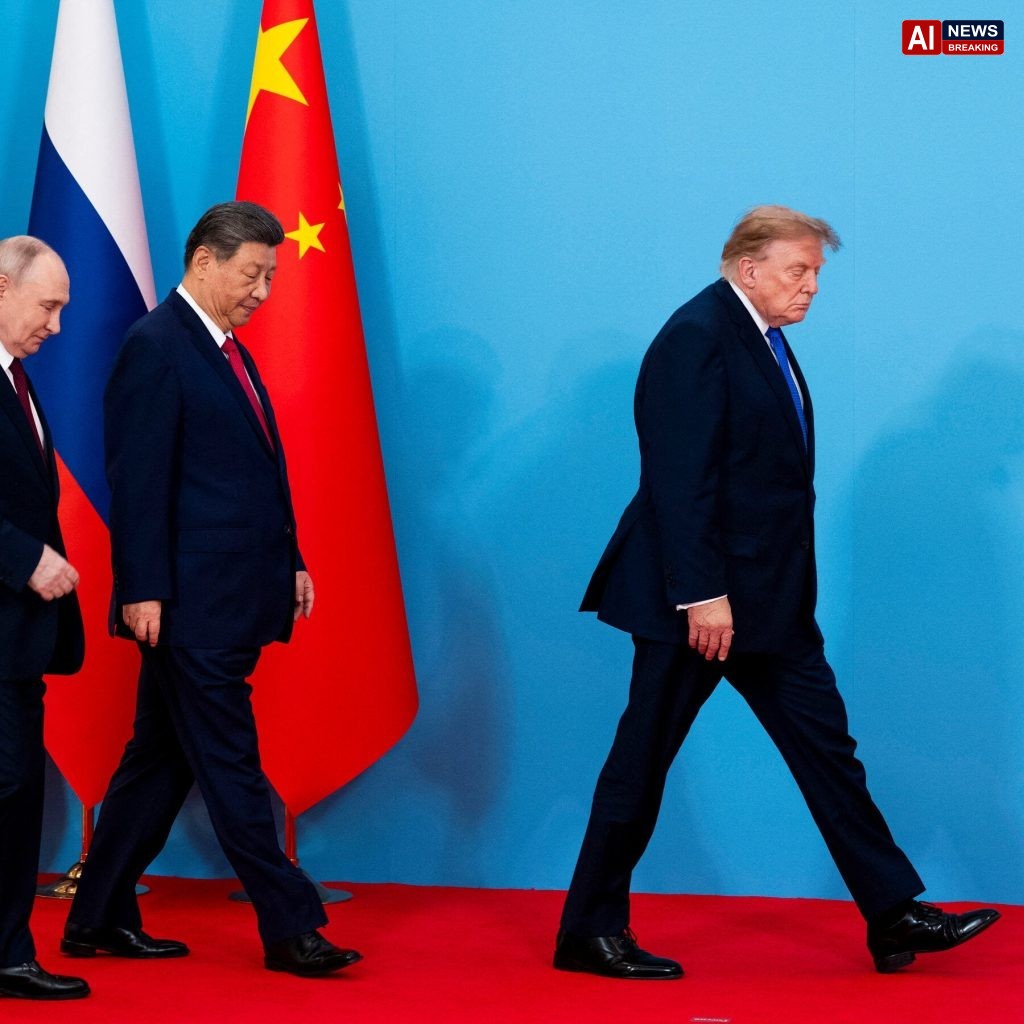
Trump Flaunts Camaraderie With Xi and Putin but Has Little to Show for It - AI News Breaking
trump flaunts camaraderie putin:
President Donald Trump has, in recent public statements, highlighted the personal warmth he feels with world leaders such as Chinese President Xi Jinping and Russian President Vladimir Putin, describing them as “friends.” He also praised the “warm welcome” he received during the historic first‑ever trilateral summit that brought the United States, China and Russia together in a single forum. Yet despite the rhetoric of friendship and the promise of a more collaborative global order, there has been little evidence of substantive progress on the most pressing issues facing the international community.In an interview with a prominent broadcast network, Trump described his meeting with Xi in a tone that seemed to focus on the interpersonal rapport rather than on concrete policy outcomes. He noted that the Chinese leader was “a very warm person,” and that the two had “a good rapport.” When pressed about the future of U.S.-China relations, Trump said that he “will be talking about trade, climate, and cybersecurity.” While those topics are indeed crucial, no official joint statements or policy documents emerged from the summit that outlined new commitments or measurable steps forward..
The United States and China have long struggled to reconcile divergent interests, particularly over trade imbalances, human rights concerns and the technology race.Similarly, Trump’s characterization of Putin as a “friend” has raised eyebrows among foreign policy analysts. Russia’s involvement in the war in Ukraine has resulted in widespread condemnation and the imposition of significant sanctions by the United States and its allies. Despite the personal connection Trump claims to have with the Russian president, there was no indication that the U.S..
would ease or lift sanctions, or that any diplomatic engagement would lead to a credible de‑escalation of the conflict. In fact, the United States continues to support Ukraine with military aid and economic assistance, while maintaining a firm stance against Russian aggression.The summit, while high‑profile, was largely ceremonial. It featured a joint press conference and a small dinner, but no in‑depth discussions on contentious issues..
The United Nations, the Organization for Security and Cooperation in Europe, and other multilateral institutions have called for more substantive dialogue. Yet the outcomes remained largely symbolic, with no new treaties or agreements announced that could shift the strategic balance in the Indo‑Pacific, Europe or the Arctic.The nuclear control agenda is another area where the rhetoric of friendship does not match the reality on the ground. The United States and Russia have long maintained a complex relationship that hinges on nuclear deterrence and the mutual interest of preventing proliferation..
During the summit, Trump alluded to discussions about nuclear control and disarmament. However, the United States and Russia have not entered into any new nuclear arms control agreements in the past decade, and the United Nations has not seen any new initiatives that could be credited to this meeting. The lack of progress is particularly troubling given the growing concerns over emerging nuclear technologies and the potential for new actors to acquire weapons.The United Nations has been repeatedly called upon to step in to address the global crisis..
Yet the United Nations General Assembly’s recent resolutions on the war in Ukraine and the global economic downturn have been largely symbolic. The organization has yet to provide a concrete plan or a binding treaty that could help resolve these issues. Critics argue that the UN is in need of a stronger mechanism to enforce its resolutions, but such mechanisms would require cooperation from major powers such as the United States and Russia..
In the absence of such cooperation, the UN’s effectiveness in tackling global crises remains limited.Another area where Trump’s claims of friendship seem to have little impact is in the realm of artificial intelligence (AI). The United States and China have both been investing heavily in AI technology, and the world’s leaders are concerned about the implications of AI for national security, privacy and economic competition. The summit did not produce any new agreements or guidelines that could shape the future of AI..
While Trump spoke about the need to “keep America ahead” in AI, no concrete measures were announced, such as joint research initiatives or data sharing protocols that could prevent a race to the bottom in AI ethics.The economic dimension of the summit also did not result in tangible outcomes. Trump’s administration has long sought to renegotiate trade deals and to address the trade deficit with China. Yet the summit did not produce any new trade agreements or tariff adjustments..
Instead, the discussion seemed to revolve around general economic cooperation, without addressing key issues such as intellectual property rights, market access or digital trade. This lack of concrete progress has left many observers concerned that the United States’ trade policy remains unchanged.The international community has been watching the United States’ foreign policy with increasing scrutiny. Critics argue that the current administration’s emphasis on personal relationships with foreign leaders is at odds with the need for a more disciplined approach to diplomacy..
The United Nations and other international organizations have repeatedly called for a renewed commitment to multilateralism, but the current administration appears more focused on individual friendships and personal charisma. This approach may undermine the United States’ credibility on the world stage and could potentially weaken its alliances with key partners.The United States has a long history of engaging with China and Russia on a wide range of issues, from climate change to global health. While the current administration’s rhetoric has focused on personal friendship, the practical outcome of that relationship remains unclear..
The United States will need to move beyond rhetoric and take concrete steps to address the pressing global challenges that threaten stability and prosperity. The international community will be watching closely to see if the United States can translate its statements into meaningful action and, in doing so, regain the trust that it has lost in recent years..
Updated: November 20, 2026
Trump’s “friendship” speeches read more like a social media post than a policy briefing, signaling a personal brand that eclipses the hard work of diplomacy. Without concrete agreements, the summit risks becoming a ceremonial backdrop that leaves the U.S. reputation—and global stability—hanging in the






