
 The Supreme Court will decide whether assault weapons bans violate the Second Amendment
 A Critic of Beijing Falls Short in Taiwan’s Key Mayoral Election
 EPA says no rise in contamination after Army detonates lead azide stockpile in Iowa
 Israeli Strike Kills 2 Workers at Gaza Clinic, Doctors Without Borders Says
 McQueen Pre-Fall 2027
San Francisco warns
**
San Francisco braces for massive tides, mayor urges residents to reconsider travel - AI News Breaking
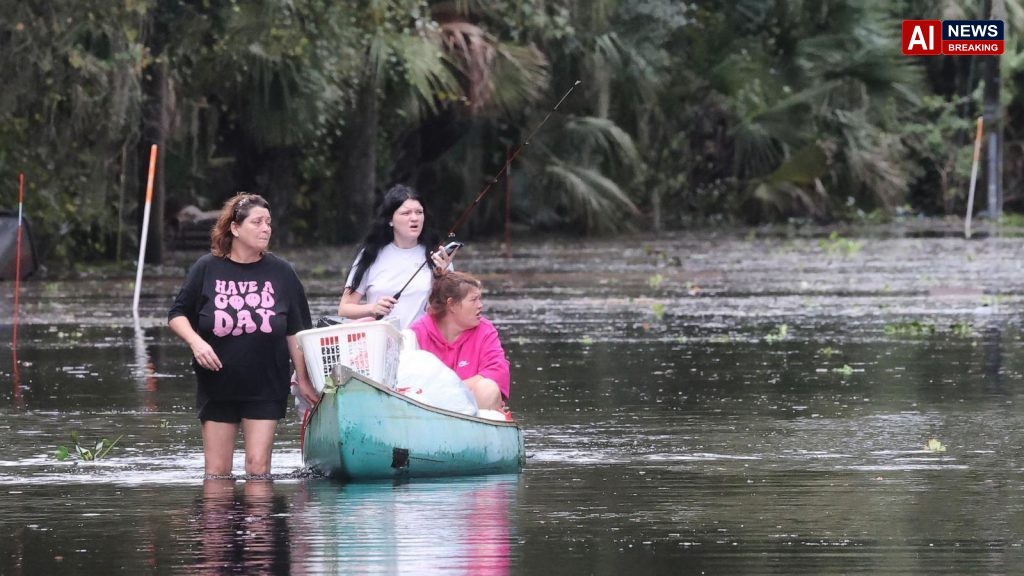
San Francisco is preparing for what officials are calling an “unprecedented” tidal surge that could coincide with a heavy rainstorm just days before the Thanksgiving holiday, prompting the city’s mayor to urge residents to reconsider travel plans and take precautionary measures. Meteorologists at the National Weather Service have issued a rare coastal flood advisory for the Bay Area, warning that a combination of a strong north‑easterly wind, a full moon and a deep low‑pressure system moving inland could push water levels well above the normal high‑tide line. The forecast predicts that the surge could reach up to 4.5 feet above mean sea level at the Embarcadero, a height that would inundate low‑lying streets, waterfront parks and several sections of the historic waterfront district that are already vulnerable to regular flooding.The warning comes after a string of severe weather events across the United States, including scattered rain that has intensified historic flooding in central Florida..
While the situation on the East Coast has dominated headlines, the Bay Area’s own weather pattern is evolving into a potentially catastrophic scenario. The storm system, dubbed “Pacific Storm 27,” is expected to arrive late Tuesday night and persist through Thursday, bringing sustained rainfall of 0.5 to 1.0 inch per hour in some neighborhoods. The combination of heavy rain and a high astronomical tide, set to peak on Thursday morning, is raising concerns among emergency managers that drainage systems could be overwhelmed, leading to flash flooding in densely populated districts such as the Mission, SoMa and the Richmond waterfront.Mayor London Breed addressed the media in a brief press conference on Tuesday afternoon, emphasizing the need for residents to stay informed and avoid non‑essential travel..
“We are looking at a perfect storm of wind, tide and rain that could affect the safety of our communities,” she said. “If you can postpone trips, especially those that involve crossing the Bay Bridge or navigating low‑lying streets, please do so. Our priority is to keep San Franciscans safe and to ensure that emergency services can respond effectively if conditions deteriorate.” The mayor’s office has activated the city’s Emergency Operations Center and dispatched additional personnel to the Department of Public Works, the Fire Department and the Police Department to coordinate a unified response.City officials have also ordered the temporary closure of several major thoroughfares that are prone to flooding..
The Embarcadero, Bay Bridge approaches, and sections of the Golden Gate Parkway are slated to be shut down from midnight Wednesday through Friday morning, depending on water levels. Public transportation agencies, including Muni and Bay Area Rapid Transit, are preparing contingency plans that could see certain bus routes and the F‑Market streetcar line suspended for up to twelve hours. In a statement released by the Bay Area Transit Authority, officials warned that “service disruptions are likely, and riders should allow extra travel time or consider alternative routes.”The potential impact on commerce is already a point of concern for business owners along the waterfront..
Retail shops, restaurants and hotels that line the Embarcadero rely heavily on tourist traffic, particularly during the holiday season. The San Francisco Chamber of Commerce issued an advisory urging merchants to secure inventory, move equipment to higher ground and review insurance coverage for flood damage. “We understand the challenges this poses for our members,” said Chamber President Karen Liu..
“We are working with the city to provide resources and support, but we also ask the public to be patient and understand that safety comes first.”Utility companies are also on high alert. Pacific Gas and Electric (PG&E) has announced that crews will be on standby to address possible power outages caused by floodwaters reaching underground substations. The company’s spokesperson, Aaron Martinez, indicated that “pre‑emptive inspections have been conducted on vulnerable infrastructure, and we will prioritize restoration efforts should any disruptions occur.” Water and sewer services are similarly preparing for increased strain; the San Francisco Public Utilities Commission warned that combined sewer overflows could become a risk if heavy rain exceeds the capacity of existing drainage tunnels.Emergency shelters are being readied in anticipation of potential evacuations..
The city has identified three primary shelter locations: the Moscone Center, the San Francisco Airport’s North Terminal and the San Francisco State University campus. These sites are equipped to provide basic necessities, including food, water and medical assistance, for up to 5,000 individuals. The Department of Emergency Management has urged residents in flood‑prone neighborhoods to register for shelter alerts and to keep personal emergency kits stocked with essential items such as flashlights, batteries, non‑perishable food and prescription medications.In the scientific community, climatologists are pointing to a broader trend of rising sea levels and more intense storm events along the West Coast..
Elena Ramirez, a professor of atmospheric sciences at the University of California, Berkeley, noted that “the convergence of a full moon, a deep low‑pressure system and a strong onshore wind is a textbook example of how climate variability can amplify coastal flood risk.” She added that while such events have been relatively rare in the historical record, the increasing frequency of similar scenarios underscores the need for long‑term adaptation strategies, including the elevation of critical infrastructure and the expansion of natural flood‑absorbing habitats such as wetlands.Residents who have already experienced flooding in past years are recalling the challenges of navigating inundated streets and dealing with water‑damaged property. Long‑time Mission District homeowner Carlos Alvarez recounted, “When the water got past the curb, it was like the city turned into a shallow lake. My garage filled up, and it took weeks to dry everything out..
I’m hoping this time the city can act faster, so we don’t have to go through that again.” Community groups have begun mobilizing volunteers to assist vulnerable populations, including the elderly and those with limited mobility, offering help with sandbag placement, temporary relocation and the distribution of emergency supplies.As the forecast tightens, the city’s Emergency Management Office is urging the public to stay tuned to official channels for real‑time updates. Residents are encouraged to sign up for the “SF Alert” text‑message system, follow the San Francisco Fire Department’s social‑media feeds, and monitor local news outlets for road‑closure notifications. The mayor’s office has also set up a dedicated hotline, 311, to field questions about shelter locations, utility outages and travel advisories..
In an effort to reduce traffic congestion on the Bay Bridge, the California Department of Transportation (Caltrans) has issued a recommendation for drivers to consider alternative crossings such as the Richmond‑San Rafael Bridge, although that route may also be subject to flooding in low‑lying sections.While the exact magnitude of the tidal surge remains uncertain, the convergence of meteorological factors makes this event a noteworthy test of the Bay Area’s preparedness for compound climate.
Updated: November 21, 2026







