The Supreme Court will decide whether assault weapons bans violate the Second Amendment
 A Critic of Beijing Falls Short in Taiwan’s Key Mayoral Election
 EPA says no rise in contamination after Army detonates lead azide stockpile in Iowa
 Israeli Strike Kills 2 Workers at Gaza Clinic, Doctors Without Borders Says
 McQueen Pre-Fall 2027
U.S. and Mexican forces arrest CJNG senior leader Me
**
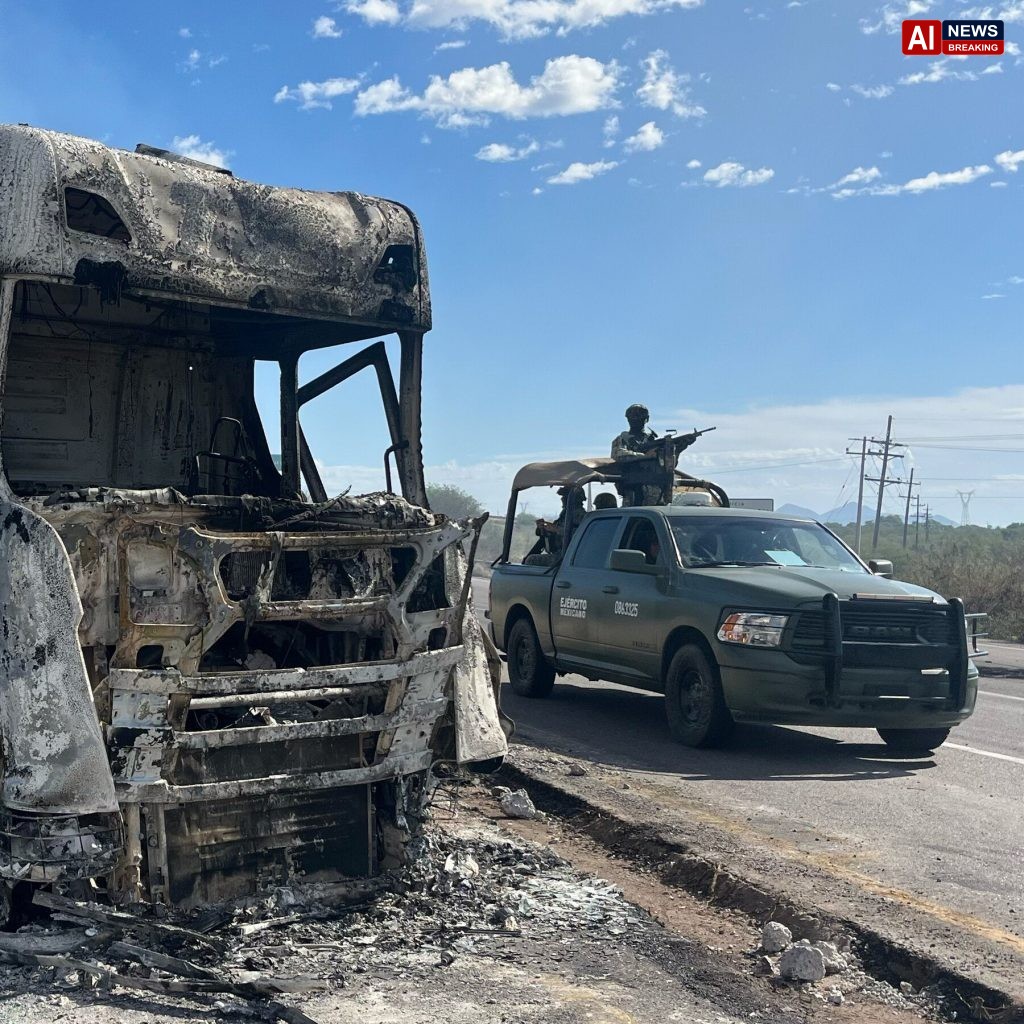
Drones, Texts and Diversions: How Mexico Captured a Most Wanted Man - AI News Breaking
and Mexican agencies have announced the capture of Fausto Isidro Meza Flores, a senior figure in the Jalisco New Generation Cartel (CJNG), after an operation that combined aerial surveillance, electronic monitoring and coordinated ground raids across several states. The joint effort, which began with intelligence sharing in early 2023, culminated in Meza Flores’s arrest on 19 November in the municipality of Tequila, Jalisco, a region long associated with the cartel’s logistical networks. Officials described the operation as the result of “months of meticulous planning and real‑time data analysis,” underscoring the growing reliance on technology in transnational law‑enforcement.Meza Flores, 38, rose through the CJNG’s ranks after joining the organization in his teens, eventually overseeing the group’s narcotics trafficking routes that stretch from the Pacific coast to the United States border..
officials have long considered him one of the most dangerous individuals operating in Mexico, citing his alleged involvement in multiple high‑profile murders, large‑scale drug shipments and sophisticated money‑laundering schemes. Department of State’s Rewards for Justice program offered up to $5 million for information leading to his capture, a bounty that, according to investigators, helped secure crucial tips from community members fearful of cartel reprisals.The operation’s initial phase relied on a network of unmanned aerial vehicles that hovered over known CJNG strongholds, capturing high‑resolution images of convoy movements and temporary command posts. These drones, operated from a joint U.S.–Mexico command centre in Mexico City, provided live feeds that were cross‑referenced with satellite imagery to pinpoint patterns of activity..
Analysts identified a series of recurring routes used to transport cocaine and methamphetamine to distribution hubs in Sinaloa and Baja California, routes that Meza Flores was believed to supervise directly.Parallel to the aerial surveillance, cyber‑units intercepted encrypted text messages exchanged between Meza Flores and his lieutenants. By exploiting a vulnerability in a popular messaging app, agents were able to decode fragments of conversation that revealed meeting times, safe‑house locations and the identities of couriers handling high‑value shipments. The decrypted messages indicated that Meza Flores would attend a “family gathering” in Tequila on 18 November, a detail that proved pivotal in narrowing the search window..
Authorities have not disclosed the exact method used to break the encryption, citing operational security concerns.Once the target’s location was confirmed, a coordinated raid was launched involving the Federal Police, the Navy’s special operations unit (SEMAR) and a contingent of U.S. Drug Enforcement Administration (DEA) agents. The teams entered the compound under the cover of darkness, employing non‑lethal flashbangs to disorient any resistance..
According to a statement from the Mexican Attorney General’s Office, Meza Flores surrendered without a shot being fired after being confronted with incontrovertible evidence of his involvement in the cartel’s leadership. No other arrests were made during the operation, though several vehicles and large quantities of cash were seized.The arrest marks a significant blow to the CJNG, which has expanded its influence across much of western Mexico since its emergence in 2010. Analysts suggest that removing a figure who coordinated both the cartel’s supply chain and its financial operations could disrupt the organization’s ability to move drugs and launder proceeds, at least temporarily..
However, they caution that the cartel’s decentralized structure allows other leaders to fill the vacuum quickly, and that sustained pressure will be required to prevent a rapid re‑consolidation of power.In the aftermath, U.S. officials emphasized the broader implications of the capture for bilateral security cooperation. The operation demonstrated the effectiveness of sharing real‑time intelligence, combining assets from both countries, and employing emerging technologies to track high‑value targets..
A senior DEA representative said the success “reinforces our commitment to a joint strategy that blends human intelligence with cutting‑edge surveillance to dismantle transnational criminal networks.” Mexican authorities echoed this sentiment, pledging to continue collaborative efforts and to pursue other high‑ranking cartel members still at large.Human‑rights groups, while acknowledging the importance of disrupting drug trafficking, raised concerns about the methods employed during the raid. They urged transparent investigations into whether any civilian rights were infringed upon, particularly given the use of drones and electronic interception in populated areas. The Mexican National Human Rights Commission announced it would monitor the case, seeking assurances that the operation adhered to domestic legal standards and international norms governing surveillance and privacy.Legal experts note that Meza Flores faces a complex judicial process that will involve both Mexican courts and potential extradition proceedings to the United States..
Under the 1996 extradition treaty, the United States can request his transfer to stand trial on charges that include drug trafficking, organized crime and conspiracy to commit violent acts. Mexican law requires that any extradition request be reviewed by the federal judiciary, with the possibility of appeal extending the timeline. Until then, Meza Flores will remain in custody at a high‑security federal prison in the state of Jalisco, where he is expected to be held pending trial.The capture of Fausto Isidro Meza Flores illustrates the evolving landscape of law‑enforcement tactics against sophisticated criminal enterprises..
By integrating aerial drones, cyber‑forensics and cross‑border intelligence, authorities were able to locate and apprehend a figure once deemed elusive. While the arrest is a notable achievement, experts stress that lasting impact will depend on continued coordination, the dismantling of the cartel’s financial infrastructure, and the ability of judicial systems to deliver effective prosecutions. As the CJNG adapts to new pressures, the fight against organized crime in Mexico remains a dynamic and ongoing challenge..
Updated: November 22, 2026
U.S. and Mexican forces captured CJNG senior operative Fausto Isidro Meza Flores in Tequila, Jalisco, after a tech‑driven raid that blended drones, cyber‑interception and cross‑border intel. Officials say his arrest, long pursued under a $5 million bounty, deals a temporary blow to the cartel’s drug‑shipping and money‑laundering network, though the group’s decentralized structure may enable a swift leadership reshuffle.
Insight: The high‑tech, binational takedown signals a new era where cartels may face strategic disruption but also incentivizes them to adopt even more encrypted, decentralized networks. Sustained judicial rigor and transparent oversight will be the decisive factor in converting such tactical victories into lasting blows against organized crime.