
 Pakistan’s leaders hail first astronaut aboard Chinese craft: ‘Proud one of us has gone into space’
 British tourist travels 29 hours from Mumbai to Amritsar for ₹5,461, rates Indian Railways 10/10 | Viral video
 The Supreme Court will decide whether assault weapons bans violate the Second Amendment
 A Critic of Beijing Falls Short in Taiwan’s Key Mayoral Election
 EPA says no rise in contamination after Army detonates lead azide stockpile in Iowa
Jharkhand chief minister urges rapid appointment of new chief justice.
** Jharkhand’s chief minister, Hemant Soren, has sent a letter to the Chief Justice of India urging a swift appointment of a permanent chief justice for the state’s high court. The appeal highlights a series of acting chief justices since Justice Goutam Bhaduri’s retirement in 2022, causing case delays, administrative instability, and mounting public concern over the judiciary’s effectiveness.
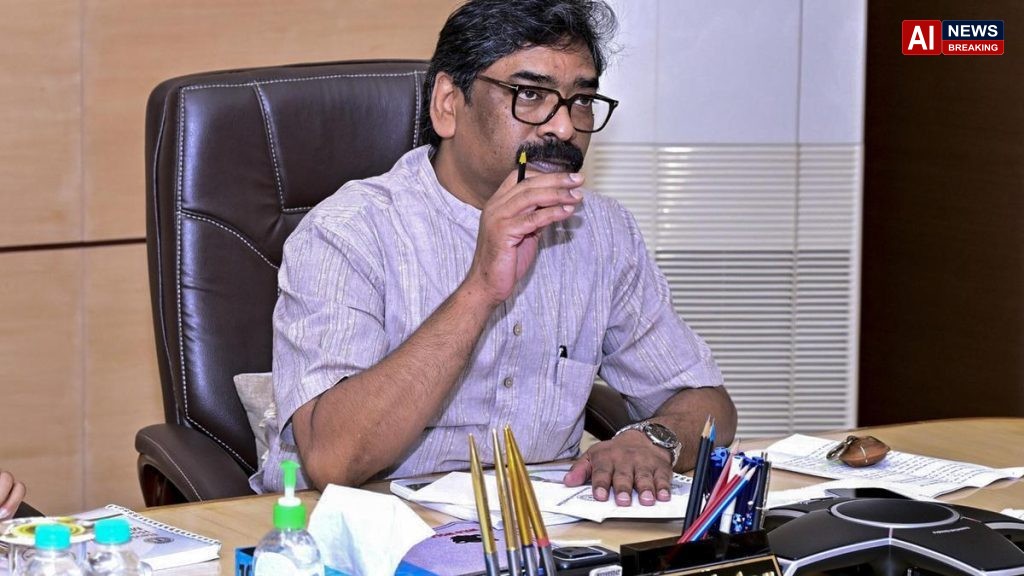
Hemant Soren writes to CJI to urgently appoint Jharkhand HC Chief Justice successor - AI News Breaking
The governor of Jharkhand has received a letter from the state’s chief minister, Hemant Soren, urging the chief justice of India to intervene swiftly in the appointment of a new chief justice for the Jharkhand High Court. The correspondence, addressed to the chief justice of India, outlines a series of administrative disruptions that the state’s judiciary has endured over the past two years, and it stresses the urgency of installing a permanent head to restore stability and public confidence in the legal system. Soren’s appeal comes at a time when the Supreme Court is grappling with a backlog of pending appointments across several high courts, and it adds further pressure on the collegium to prioritize the Jharkhand bench.In his letter, Soren points to the fact that since the retirement of Justice Goutam Bhaduri in December 2022, the Jharkhand High Court has been led intermittently by acting chief justices, each serving for only a few months before being transferred or promoted elsewhere..
He notes that the court has had three acting chief justices in as many months, a pattern that he describes as “untenable” for the effective administration of justice. According to the chief minister, the short tenures have led to delays in case management, hindered long‑term policy planning, and created uncertainty among the bench and the bar.The chief minister’s appeal also references a series of high‑profile cases that have been stalled due to the lack of a permanent chief justice. Among these are ongoing land acquisition disputes tied to the state’s ambitious industrial corridors, a series of environmental petitions concerning the mining sector, and several criminal matters involving senior police officers..
Soren argues that the absence of a stable leadership figure has impeded the court’s ability to issue timely rulings, thereby affecting the rights of citizens and the execution of government programmes. He further emphasizes that the situation has placed an additional burden on the existing judges, who must juggle administrative duties while handling a growing docket.Soren’s request is framed within the broader context of the collegium system, which traditionally recommends appointments to the Supreme Court and high courts. He urges the chief justice of India to use the “exceptional circumstances” clause to expedite the appointment, citing precedent where similar interventions have been made when prolonged vacancies threatened the functioning of a high court..
The letter references the 2021 appointment of a permanent chief justice for the Nagaland High Court after a prolonged period of acting leadership, suggesting that the Jharkhand situation warrants comparable action.The governor, who acts as the constitutional head of the state and is responsible for forwarding such communications to the Union government, has not publicly commented on the contents of the letter. However, insiders close to the office indicate that the governor’s ariat has already prepared a briefing note for the Ministry of Law and Justice, outlining the chief minister’s concerns and recommending that the Union Law Minister raise the matter with the chief justice of India at the earliest opportunity. The note also highlights the potential political ramifications of a delayed appointment, noting that public perception of judicial inefficiency could erode confidence in the state’s governance.Legal experts observing the development note that the Jharkhand High Court’s situation is symptomatic of a wider trend across India, where many high courts have faced extended periods under acting chief justices..
According to a recent study by the Indian Law Institute, over 30 per cent of high courts have experienced at least one acting chief justice tenure exceeding six months in the last five years. Scholars argue that the collegium’s procedural delays, combined with the central government’s role in finalizing appointments, have created a bottleneck that hampers the timely filling of these critical posts. They warn that without systemic reforms, similar crises could recur in other states, undermining the judiciary’s independence and efficiency.The Supreme Court’s own docket reflects the pressure on the collegium..
In a recent hearing, several senior advocates raised concerns about the backlog of pending high‑court appointments, urging the chief justice of India to prioritize the issue. While the court has not disclosed specific timelines, a senior clerk familiar with the proceedings indicated that the collegium is expected to convene within the next two weeks to consider the Jharkhand request alongside other pending nominations. The clerk added that the collegium’s decision will factor in the merit and seniority of eligible judges, as well as the operational needs of the respective high courts.Opposition parties in the Jharkhand Legislative Assembly have seized upon the chief minister’s letter to critique the central government’s handling of judicial appointments..
In a heated debate, the leader of the main opposition party accused the Union government of “politicising” the process and called for a transparent, time‑bound mechanism to fill vacancies. The opposition’s stance underscores the political sensitivity surrounding the judiciary, especially in states where coalition governments depend on the smooth functioning of law‑and‑order institutions to implement development agendas.Civil‑society organisations, including the Jharkhand Bar Association and several human‑rights NGOs, have also voiced support for the chief minister’s appeal. A joint statement released by these groups described the succession crisis as a “serious impediment to access to justice” and urged the Supreme Court to act expeditiously..
The statement further called for the establishment of a permanent “succession plan” to prevent future disruptions, proposing that high‑court chief justice appointments be made for a minimum term of three years, subject to performance review, rather than relying on interim arrangements.As the case moves toward resolution, the next steps will hinge on the chief justice of India’s response to Soren’s letter. If the chief justice decides to recommend an immediate appointment, the Union government will still need to issue a warrant of appointment and the president will have to sign it into law. Conversely, a decision to maintain the status quo could exacerbate the already mounting criticism from both political leaders and the legal fraternity, potentially prompting further interventions from the Supreme Court..
The outcome will likely set a precedent for how similar succession disputes are managed in other high courts, shaping the future of India’s judicial appointment process..
Jharkhand’s appointment deadlock exposes how the collegium’s sluggishness can morph procedural delays into political flashpoints, eroding public trust in both the judiciary and the state’s governance. If the Supreme Court steps in now, it may set a de‑facto precedent that forces a re‑examination






