Pakistan’s leaders hail first astronaut aboard Chinese craft: ‘Proud one of us has gone into space’
 British tourist travels 29 hours from Mumbai to Amritsar for ₹5,461, rates Indian Railways 10/10 | Viral video
 The Supreme Court will decide whether assault weapons bans violate the Second Amendment
 A Critic of Beijing Falls Short in Taiwan’s Key Mayoral Election
 EPA says no rise in contamination after Army detonates lead azide stockpile in Iowa
How Stringent Anti-A.I. Cheating Rules Brought Down an Education Minister
**
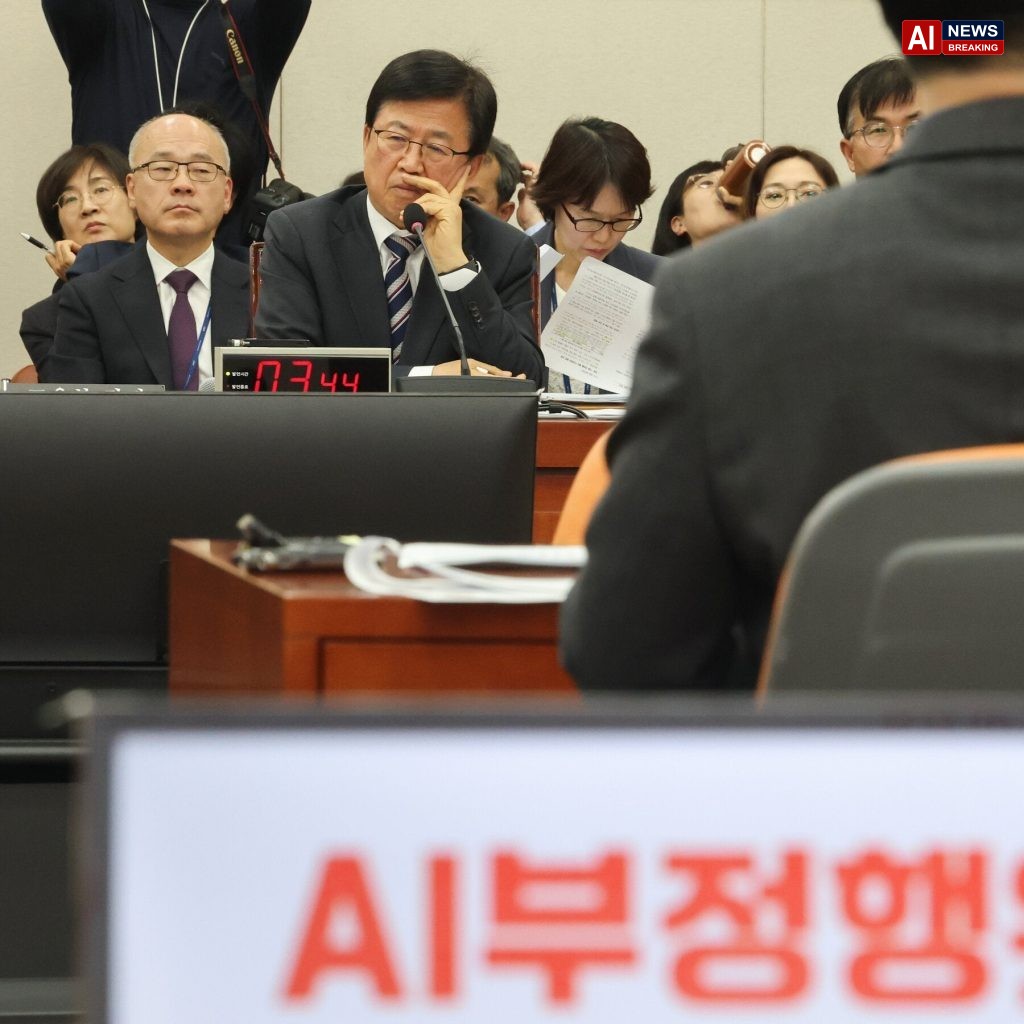
stringent antiai cheating rules:
Title: How Stringent Anti‑A.I. Cheating Rules Brought Down an Education Minister Two days before South Korea’s college entrance exam, new measures were announced, including loud phone alerts and mandatory eye‑glasses inspections. Public backlash came fast, turning what was meant to be a deterrent into a political bombshell..
The Ministry of Education’s head, Minister Kim Yong‑seok, faced mounting pressure from students, parents, and opposition parties. Within hours of the announcement, a wave of criticism swept across the nation, questioning the feasibility and fairness of the new regulations. The crackdown on artificial‑intelligence‑assisted cheating had been in the works for months..
According to the Ministry, the policy would “eliminate any form of technological facilitation during the exam.” A new law mandated that all mobile devices emit a loud alarm if used, and that examiners physically inspect every pair of glasses for hidden cameras. The regulations were billed as a safeguard against the “surge in AI‑driven tutoring” that had allegedly been tipping the playing field. Students responded with a mix of outrage and amusement..
“If my phone is going to ring off‑screen, I’ll just bring a toy car to cover it up,” joked a senior at a high‑school in Seoul. Many parents saw the measures as an overreach, fearing that parents’ phones and laptops would be turned into surveillance devices. Social media erupted, with memes and live‑streamed protests..
The Ministry’s social media account posted a hastily‑drafted clarification, but the damage was already done. The policy’s legal basis was questioned by civil‑rights advocates. “These rules infringe on students’ privacy and basic human rights,” said Lee Soo‑jin, director of the Korean Freedom of Information Society..
“There is no evidence that a phone alarm or glasses check is an effective deterrent, but it is a clear violation of personal autonomy.” The government’s legal team argued that the measures were temporary and tied to a specific event, but opposition lawmakers called the move an “unnecessary intrusion into private life.” Within a day, the opposition Democratic Party launched an inquiry into the policy’s formulation. They accused the Education Ministry of rushing decisions without adequate consultation. “We do not have a democratic process in place to assess the impact of these sweeping restrictions,” said opposition leader Park Ji‑yeon..
Her statement echoed sentiments from the public, who demanded a more transparent approach. The ruling party defended Kim Yong‑seok, stating that “the Ministry is committed to ensuring a fair exam environment.” In an attempt to quell the uproar, Minister Kim held a press conference on the night of the announcement. He repeated the rationale for the new measures, citing the rapid rise in AI‑assisted exam fraud..
He also pledged a full review of the policy, offering to “listen to the concerns of all stakeholders.” However, his demeanor and tone were widely criticized as defensive and dismissive. By morning, the opposition had already tabled a motion to remove him from office. The opposition’s motion quickly gathered momentum..
With the National Assembly split, the motion was moved to a vote. The result: a narrow majority in favour of removing Kim Yong‑seok from his post. The vote was described as a “political watershed moment” for Korean education policy..
It also highlighted the fragile nature of policy-making in a highly competitive educational system. The resignation of Kim Yong‑seok was a blow to the ruling party. In a statement, the party’s chairman, Lee Chang‑ho, said the government “regrets the misstep” and that a “new minister will be appointed immediately.” He added that the government would “re‑examine the policy framework for exam security.” The opposition seized the opportunity to propose alternative measures, such as increased funding for AI‑ethics training and stricter penalties for cheating..
Meanwhile, exam organisers announced that the 2026 college entrance exams would proceed as scheduled, but with a revised set of security protocols. The new guidelines would rely more on human oversight and less on intrusive technological mandates. “We are listening to the students’ concerns and will implement a more balanced approach,” said the exam board’s spokesperson..
The board also promised to roll out a pilot program to test the efficacy of AI‑detection software before the full launch. The policy’s fallout has prompted a nationwide debate on the role of technology in education. Several universities have started to incorporate AI‑ethics modules into their curricula, urging students to understand the moral implications of AI misuse..
Educational NGOs have called for a national strategy that balances innovation with integrity. The Ministry of Education, now under new leadership, is working closely with these groups to develop a comprehensive framework. In the weeks that followed, the new Education Minister, Park Se‑jin, presented a revised policy plan..
It included stricter monitoring of exam content, the deployment of AI‑detection tools, and a robust whistle‑blower system. Park also committed to a transparent consultation process that would involve students, teachers, parents, and data‑privacy experts. The plan was welcomed by many but still faced scepticism from those who felt the changes were too little, too late..
As the nation braces for the next cycle of college entrance exams, the incident has left a lasting legacy. It underscored the risks of hastily enacted policies that fail to consider the lived realities of students. More importantly, it highlighted the power of public opinion in shaping policy..
Whether the new approach will succeed in maintaining exam integrity while respecting privacy remains to be seen, but one thing is clear: the debate around AI, education, and civil liberties has entered a new, more cautious chapter..
Updated: November 22, 2026
South Korea’s education minister resigned after a controversial anti‑AI cheating crackdown—requiring phone alarms and glasses checks—sparked nationwide backlash and a parliamentary vote. The new ministry will roll out a revised, more privacy‑respectful security plan while keeping the 2026 college entrance exams on schedule.
South Korea’s AI‑cheat crackdown shows that rushing tech‑centric rules can backfire faster than any algorithm can detect a hidden camera. The backlash proves public trust in education hinges more on transparent dialogue than on flashy deterrents.