A Critic of Beijing Falls Short in Taiwan’s Key Mayoral Election
 EPA says no rise in contamination after Army detonates lead azide stockpile in Iowa
 Israeli Strike Kills 2 Workers at Gaza Clinic, Doctors Without Borders Says
 McQueen Pre-Fall 2027
 Mushfiqur Rahim to retire from Test cricket in February 2027
Chennai Mayor to take legal action over AI-generated video
**
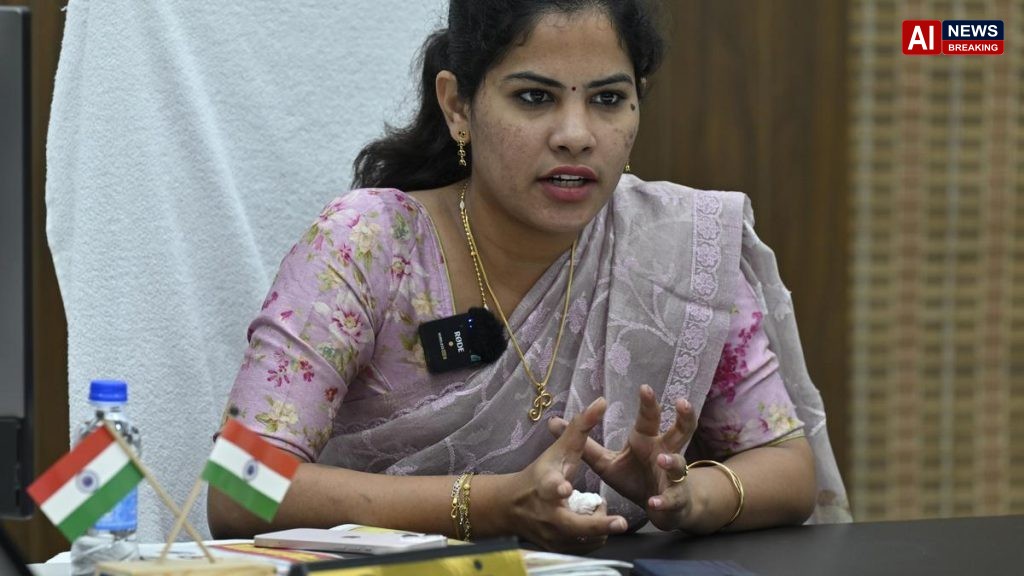
Chennai Mayor to take legal action over AI-generated video - AI News Breaking
chennai mayor take legal:
The mayor of Chennai, Priya Ramaswamy, announced on Thursday that she will pursue legal remedies after an artificial‑intelligence‑generated video depicting her in a compromising situation was circulated on social media. The clip, which appeared on several platforms including Instagram, Twitter and WhatsApp, showed a digitally manipulated version of the mayor engaging in conduct that was both defamatory and obscene. Ramaswamy, who has served as the city’s chief executive since 2022, described the material as a deliberate attempt to tarnish her reputation and undermine public confidence in municipal governance.The video was first posted by a user identifying themselves as a member of the Tamil Nadu political outfit known as the TVK or “Vulgar Warriors,” a group that has previously been linked to provocative online campaigns targeting political figures..
In the accompanying caption, the user claimed the clip was “proof” of the mayor’s alleged moral failings, urging followers to share it widely. Within hours, the post had been shared thousands of times, prompting a wave of comments that ranged from outrage to calls for the mayor’s resignation. The rapid spread of the content highlighted the challenges that Indian officials face in combating deep‑fake technology, which can produce hyper‑realistic yet wholly fabricated audiovisual material.Ramaswamy’s office responded by issuing a statement that condemned the video as “a malicious, AI‑generated fabrication designed to intimidate and silence a public servant.” The statement also noted that the mayor had filed a formal complaint with the Chennai Cyber Crime Police Station, invoking provisions of the Information Technology Act, 2000, and the Indian Penal Code that criminalise defamation, obscene content and the creation of false electronic records..
The mayor’s legal team indicated that they would seek both criminal sanctions against the individuals responsible for the original posting and civil damages for the reputational harm caused.Legal experts say that the case could set a precedent for how Indian courts handle deep‑fake content. Professor Arvind Sharma of the National Law School of India, New Delhi, observed that while the existing legal framework provides mechanisms to punish defamation and the dissemination of obscene material, the rapid evolution of AI‑driven media creates gaps in enforcement. “The law must adapt to address the intent and the technological sophistication behind such fabrications,” Sharma noted, adding that prosecutors will need to demonstrate both the malicious purpose and the technical process used to create the deep‑fake in order to secure a conviction.The incident has reignited a broader debate about the regulation of artificial intelligence in India..
In March, the Ministry of Electronics and Information Technology released a draft policy aimed at establishing a regulatory sandbox for AI, mandating transparency disclosures for synthetic media, and imposing penalties for misuse. Critics argue that the guidelines are insufficiently detailed, especially concerning the detection and removal of harmful deep‑fakes from online platforms. Meanwhile, technology firms such as Meta, Google and Indian start‑ups have begun developing detection tools that can flag manipulated videos, but their effectiveness remains limited without cooperation from social‑media operators and clear legal directives.Social‑media companies have faced mounting pressure to act decisively against synthetic media that spreads misinformation or defames individuals..
In response to the Chennai mayor’s complaint, representatives from two major platforms indicated that they had initiated internal reviews of the content and were working with local law enforcement to identify the originating account. However, the anonymous nature of many online profiles and the use of virtual private networks complicate efforts to trace the perpetrators. The platforms also highlighted the difficulty of balancing content moderation with freedom of expression, a tension that has been at the forefront of global debates on digital rights.Public reaction in Chennai has been mixed..
While many citizens expressed solidarity with the mayor, organising online petitions and posting supportive messages, a segment of the population questioned whether the legal approach might set a chilling precedent for political speech. A local civil‑society group, the Chennai Democratic Forum, issued a statement urging the authorities to ensure that any investigation respects due process and does not become a tool for silencing legitimate criticism. The forum emphasized that, while deep‑fakes are undeniably harmful, the response must be proportionate and safeguard democratic discourse.The mayor’s office also highlighted that this was not the first time Ramaswamy had been targeted by coordinated online attacks..
In 2023, a coordinated smear campaign circulated fabricated images suggesting financial impropriety, which were later debunked by independent fact‑checkers. Those incidents, according to Ramaswamy’s spokesperson, were part of a broader pattern of digital harassment aimed at women in leadership positions. The mayor’s decision to pursue legal action, the spokesperson argued, was intended to send a clear message that such tactics would no longer be tolerated.As the case moves forward, law‑enforcement officials are expected to gather forensic evidence from the servers that hosted the video, analyze metadata to trace the creation and distribution chain, and interview witnesses who may have been involved in the orchestration of the campaign..
The investigation will likely involve collaboration between the Chennai Cyber Crime Police, the state’s cyber‑security cell, and national agencies equipped to handle sophisticated digital offences. Should the perpetrators be identified, they could face penalties ranging from fines to imprisonment, depending on the specific charges proved in court.The episode underscores the urgent need for a coordinated response that blends legal, technological and policy measures to curb the misuse of AI in the public sphere. As deep‑fake technology becomes more accessible, officials like Mayor Ramaswamy are navigating uncharted territory where personal reputation, public trust and democratic accountability intersect..
Whether the legal action pursued by the Chennai mayor will deter future assaults on public figures remains to be seen, but the case is poised to become a benchmark for how India confronts the challenges posed by synthetic media in the digital age..
Updated: November 27, 2026
Insight: The Chennai mayor’s legal push could become India’s first litmus test for whether punitive tech‑law can outpace the speed of deep‑fake creation, forcing courts to reckon with intent encoded in code rather than just the content itself.
If the verdict leans toward