A Critic of Beijing Falls Short in Taiwan’s Key Mayoral Election
 EPA says no rise in contamination after Army detonates lead azide stockpile in Iowa
 Israeli Strike Kills 2 Workers at Gaza Clinic, Doctors Without Borders Says
 McQueen Pre-Fall 2027
 Mushfiqur Rahim to retire from Test cricket in February 2027
Walmart lets Meta Muse shop on its site for Black Friday.
**
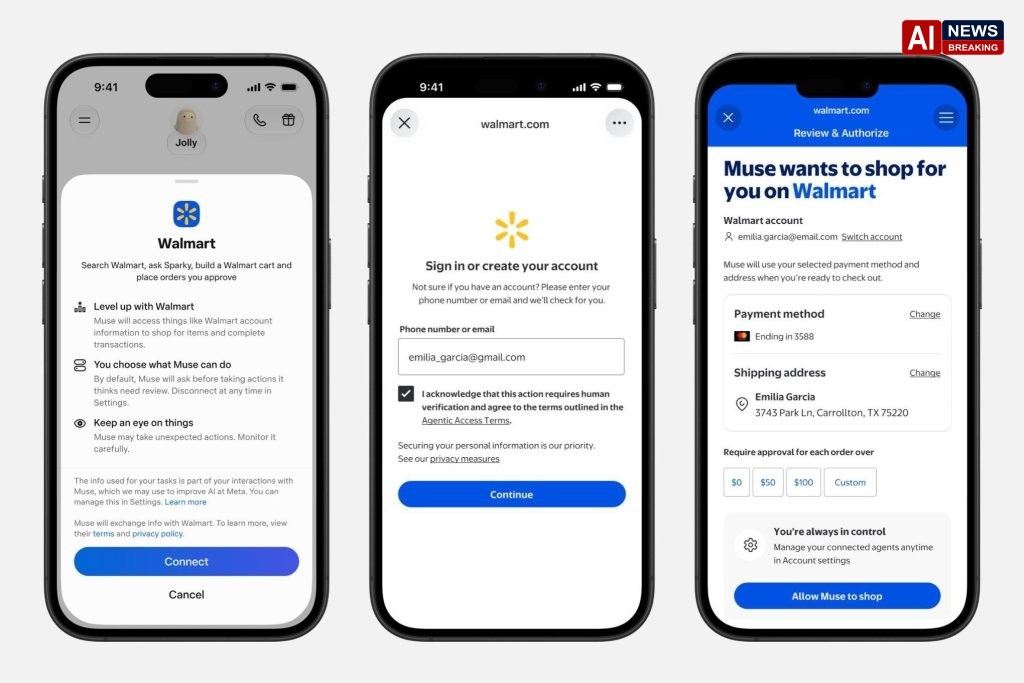
Walmart lets Meta Muse shop on its site for Black Friday. - AI News Breaking
Meta Muse can now do your Black Friday shopping at Walmart Walmart has taken a bold step into the world of artificial intelligence by allowing Meta’s Muse to shop on its website on behalf of customers. The partnership, announced this week, enables the AI‑driven personal assistant to locate, compare and purchase items during the high‑stakes Black Friday period. According to a statement from Walmart, the service is built on the company’s newly‑launched Agent Gateway, a platform designed to let third‑party AI agents interact with the retailer’s catalogue while keeping shoppers’ personal data separate..
The move marks the first large‑scale rollout of an AI shopping assistant on a major U.S. The technical backbone of the service is the Agent Gateway, unveiled by Walmart last month as a way to standardise how external AI tools access product data. The gateway creates a sandboxed environment where agents can query inventory, price and availability without ever seeing a consumer’s purchase history..
Walmart says the architecture complies with its existing privacy policies and with the broader regulatory framework governing consumer data. By isolating the agent from personal identifiers, the company aims to reassure shoppers that the convenience of AI does not come at the cost of privacy. Muse operates within a dedicated “Agent Profile” that is linked to each Walmart customer account..
This profile is a separate sub‑account that records only the interactions between the AI and the retailer. Shoppers can set spending limits, require manual approval for each transaction, or enable fully automated purchases for items that meet predefined criteria. The profile also logs a complete purchase history that is visible to the user, allowing them to audit every item Muse has added to their cart..
This level of control is intended to address concerns that AI could make impulsive or unwanted purchases. The rollout coincides with the busiest shopping weekend of the year, when consumers flock to both physical stores and online platforms in search of steep discounts. Walmart expects the Muse integration to streamline the hunt for Black Friday bargains, especially for shoppers who lack the time to sift through thousands of listings..
Early testing showed that Muse could locate up to 30 per cent more qualifying deals than a typical human shopper, according to internal metrics shared by the retailer. The AI also factors in price‑history data, alerting users when a “deal” is actually a standard discount. Critics, however, caution that the convenience of AI‑driven purchasing may have unintended side effects..
Consumer‑rights groups have warned that automated buying could exacerbate overspending, especially among younger users who are more likely to trust algorithmic recommendations. Walmart’s spending‑limit feature is meant to mitigate this risk, but the company acknowledges that it will monitor usage patterns closely throughout the holiday season. The retailer also plans to publish quarterly reports on the volume and value of AI‑facilitated transactions to maintain transparency..
From a commercial perspective, the partnership could open new revenue streams for both parties. Meta gains a real‑world commerce channel for its Muse platform, while Walmart benefits from increased basket sizes and higher conversion rates driven by AI efficiency. Industry analysts predict that retailers that successfully integrate AI assistants may see a modest uplift in average order value, as the technology can suggest complementary products that a human shopper might overlook..
Walmart’s senior vice president of e‑commerce noted that Muse’s recommendations are “context‑aware,” meaning the AI can suggest accessories or warranties that align with the primary purchase. The initiative also about the future of retail employment. While Walmart emphasizes that Muse is a tool to augment, not replace, human staff, the company admits that certain customer‑service functions could be automated..
In particular, the AI’s ability to answer product‑specific queries and navigate inventory could reduce the workload on call‑center agents during peak periods. Walmart has pledged to retrain affected employees for roles that involve overseeing AI interactions, data analysis and exception handling, signaling an attempt to balance technological advancement with workforce considerations. Data security remains a central concern as the system scales..
Walmart assures that all communications between Muse and its servers are encrypted end‑to‑end, and that the Agent Profile does not store credit‑card numbers or other sensitive payment information. Instead, purchases are executed using tokenised payment methods linked to the shopper’s primary account, a practice that mirrors existing mobile‑wallet safeguards. Independent security audits are scheduled for the first quarter of next year to verify that the isolation mechanisms function as intended..
Consumers who opt into the service must first link their Walmart account to a Meta identity, a step that involves granting limited permissions through an OAuth flow. The consent screen clearly outlines the data that Muse can access, namely product catalogues, price points and the user’s Agent Profile settings. Walmart’s privacy notice reiterates that Muse does not gain access to past orders, shipping addresses or personal identifiers unless the shopper explicitly authorises a transaction..
This granular permission model is designed to comply with emerging AI‑specific regulations in the United States and Europe. Initial user feedback has been mixed but generally positive. Early adopters praised the speed with which Muse identified high‑discount items, noting that the AI even surfaced flash sales that appeared and disappeared within minutes..
Some users, however, expressed frustration when Muse’s automated selections conflicted with brand preferences, such as opting for a generic alternative over a name‑brand product. Walmart’s support team has responded by enhancing the preference settings, allowing shoppers to specify brand loyalty, price thresholds and even sustainability criteria that Muse must respect when curating recommendations. The collaboration is part of a broader trend among major retailers to embed AI agents into the shopping experience..
Competitors such as Amazon and Target have been experimenting with voice‑activated assistants and chatbot‑driven deals, but Walmart.
Updated: November 23, 2026
Walmart has integrated Meta’s Muse AI assistant into its site, letting the bot browse, compare and buy Black‑Friday deals while keeping shopper data isolated through a new “Agent Gateway.” The service offers customizable spending limits and audit trails to address privacy and overspending concerns, marking the first large‑scale AI‑driven shopping tool on a major U.S. retailer.
Insight: By letting Meta’s Muse hunt for Black‑Friday bargains, Walmart is betting that the speed of an algorithm will outpace human shoppers and lift its conversion rate—while the sandboxed Agent Gateway keeps the risk of data leaks and impulsive purchases in check. Still, the partnership hints at a future where the