Pakistan’s leaders hail first astronaut aboard Chinese craft: ‘Proud one of us has gone into space’
 British tourist travels 29 hours from Mumbai to Amritsar for ₹5,461, rates Indian Railways 10/10 | Viral video
 The Supreme Court will decide whether assault weapons bans violate the Second Amendment
 A Critic of Beijing Falls Short in Taiwan’s Key Mayoral Election
 EPA says no rise in contamination after Army detonates lead azide stockpile in Iowa
Human-centric organisational design key to navigate AI, says INSEAD professor
**
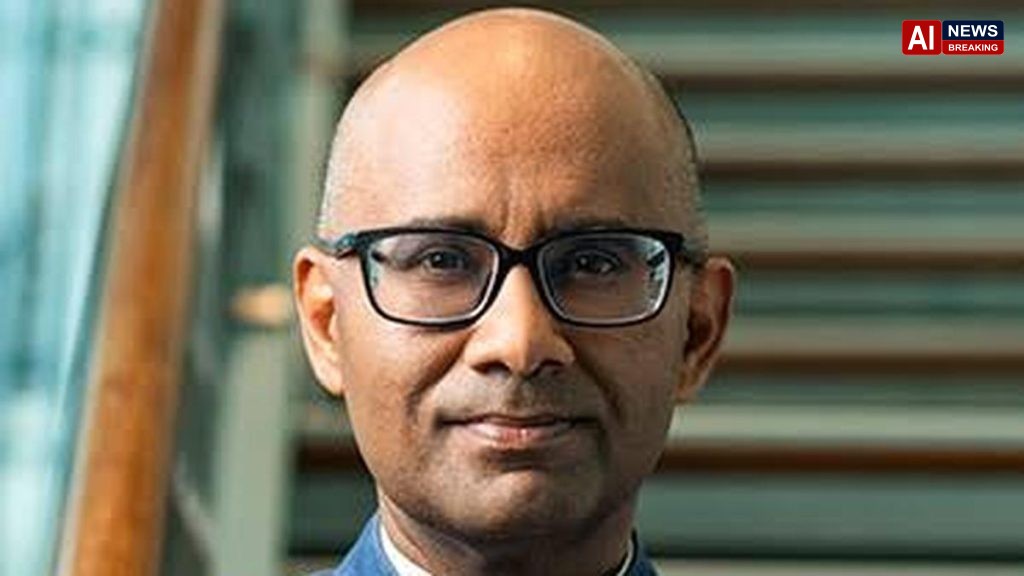
Human-centric organisational design key to navigate AI, says INSEAD professor - AI News Breaking
humancentric organisational design navigate:
The fourth edition of the ISB Insights Forum, convened on 20 November, brought together a cross‑section of researchers, senior business executives, policymakers and philanthropists to examine how organisations can adapt to the accelerating tide of artificial intelligence. Central to the discussions was the argument of Professor Karim R. Lakhani of INSEAD, who warned that the rush to embed AI into corporate processes would be futile unless companies redesign their structures around people rather than technology..
His remarks, echoed by several speakers, underscored a shift from a purely efficiency‑driven mindset to one that places human agency, purpose and ethical stewardship at the core of organisational design.Professor Lakhani opened his address by recalling the early days of the industrial revolution, when mechanisation reshaped factories but left the human worker largely invisible in design considerations. “We are witnessing a comparable disruption now,” he said, “only the catalyst is algorithmic decision‑making rather than steam power.” He argued that the prevailing impulse to deploy AI as a plug‑in solution—layered atop existing hierarchies and performance metrics—ignores the fact that algorithms inherit the biases, incentives and cultural norms embedded in the data they consume. Consequently, organisations that fail to re‑evaluate reporting lines, reward systems and decision‑making authority risk amplifying systemic inequities while eroding employee trust.The forum’s panel on “Human‑Centred AI Governance” expanded on this premise, highlighting case studies from multinational firms that have restructured their governance bodies to include ethicists, data scientists and frontline staff..
One senior executive from a European consumer‑goods company described how the creation of an “AI stewardship council” gave employees a direct channel to raise concerns about algorithmic outputs that affected pricing, supply‑chain logistics or customer engagement. “When the council flagged an unintended bias in our demand‑forecasting model, we were able to recalibrate the algorithm before it distorted inventory allocations in emerging markets,” she recounted. The panelists agreed that such mechanisms not only mitigate risk but also reinforce a culture where employees feel ownership over AI outcomes.A recurring theme throughout the forum was the importance of “purpose alignment” as a lever for successful AI integration..
Professor Lakhani cited research indicating that firms with clearly articulated social missions tend to achieve higher rates of AI adoption without compromising employee morale. He pointed to a technology startup that embedded its sustainability goal—reducing carbon emissions by 30 percent over five years—into the very architecture of its AI‑driven logistics platform. By translating the abstract mission into quantifiable algorithmic targets, the company enabled its engineers and operations staff to see a direct line between their daily work, the AI system’s recommendations and the broader societal impact..
This alignment, he argued, transforms AI from a black‑box tool into a transparent partner in achieving collective objectives.The forum also addressed the regulatory backdrop shaping organisational responses to AI. A senior policymaker from the Ministry of Electronics and Information Technology outlined forthcoming amendments to the country’s data protection framework, emphasizing obligations for “explainability” and “human oversight” in high‑risk AI applications. The official warned that non‑compliance could trigger hefty penalties and reputational damage, prompting firms to embed compliance checkpoints into their design cycles..
In response, a legal scholar from a leading university argued that prescriptive regulation alone would be insufficient; instead, organisations must cultivate internal capabilities to interpret and operationalise ethical guidelines, a process that demands interdisciplinary expertise and continuous learning.Philanthropic representatives at the forum underscored the role of funding bodies in steering AI development toward inclusive outcomes. One foundation director explained how their grant programmes now require applicants to submit a “human‑impact assessment” alongside technical proposals. This assessment must delineate how the proposed AI solution will affect workers, customers and vulnerable communities, and outline mitigation strategies for potential adverse effects..
By linking financial support to such criteria, the foundation hopes to incentivise a design philosophy where human considerations are not an afterthought but a prerequisite for funding.The discussions turned pragmatic when a chief technology officer from an Indian fintech firm described the implementation of a “dual‑track” development model. In this approach, technical teams build algorithmic capabilities while parallel “experience teams” comprising product managers, user researchers and customer support staff validate the model’s relevance to real‑world scenarios. The CTO highlighted that this structure reduced time‑to‑market for AI‑enhanced features by 25 percent and, more importantly, cut the incidence of post‑launch revisions caused by unforeseen user friction..
The dual‑track model, he noted, exemplifies how organisational redesign can harmonise speed with responsibility.Critics at the forum cautioned against an over‑emphasis on human‑centred design as a panacea. A senior economist warned that small and medium‑sized enterprises (SMEs), which often lack the resources to establish dedicated ethics committees or governance councils, may struggle to adopt such frameworks without external support. He called for industry consortia and government initiatives to provide templates, toolkits and shared services that lower the entry barrier for SMEs..
In response, a representative from a global consulting firm announced the launch of a “Human‑Centred AI Playbook” tailored for mid‑size companies, offering step‑by‑step guidance on embedding ethical checkpoints, stakeholder mapping and impact measurement into AI projects.The forum concluded with a consensus that the journey toward truly human‑centric organisational design is iterative and context‑specific. Professor Lakhani summarized the key takeaways: organisations must reexamine hierarchical silos, redesign incentive structures, embed purpose into algorithmic metrics, and cultivate cross‑functional teams that can navigate the ethical complexities of AI. He urged leaders to view AI not as a threat to employment but as an opportunity to reimagine work in ways that amplify human creativity, judgment and empathy..
“When we place people at the heart of our design,” he said, “technology becomes a catalyst for inclusive growth rather than a source of disruption.”As attendees dispersed, many reflected on the practical steps they could take within their own institutions. The insights shared at the ISB Insights Forum signal a growing recognition that the future of AI hinges not merely on technical prowess but on the willingness of organisations to reconfigure themselves around the people they serve and employ. In an era where algorithms increasingly shape decisions that affect livelihoods, economies and social cohesion, a human‑centric approach may prove to be the most robust safeguard against unintended consequences, while unlocking the transformative potential that AI promises..
Updated: November 22, 2026
ISB’s fourth Insights Forum urged firms to rethink AI integration, insisting that organisational redesign must prioritise people, purpose and ethical oversight rather than a plug‑in tech fix. Panelists highlighted case studies of “AI stewardship councils,” dual‑track development models, and purpose‑aligned metrics, arguing that human‑centric governance can both mitigate bias and unlock AI’s transformative potential.