
 Pakistan’s leaders hail first astronaut aboard Chinese craft: ‘Proud one of us has gone into space’
 British tourist travels 29 hours from Mumbai to Amritsar for ₹5,461, rates Indian Railways 10/10 | Viral video
 The Supreme Court will decide whether assault weapons bans violate the Second Amendment
 A Critic of Beijing Falls Short in Taiwan’s Key Mayoral Election
 EPA says no rise in contamination after Army detonates lead azide stockpile in Iowa
California voters reject billionaire wealth tax proposal
**
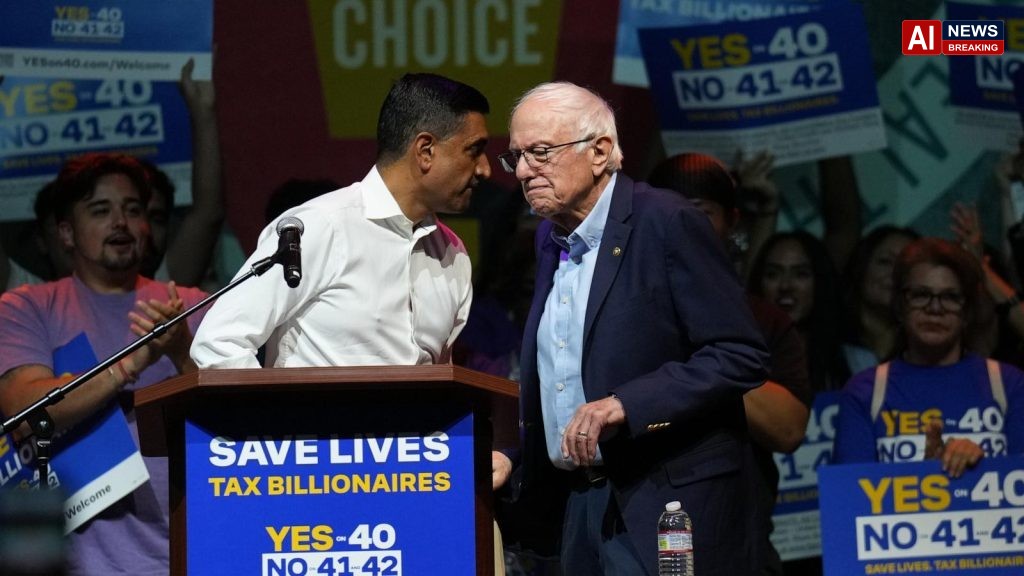
A California billionaire tax proposal faced a major setback despite big wins for progressives - AI News Breaking
California voters have delivered a decisive rebuke to the state’s most ambitious attempt to tax the ultra‑wealthy, turning down Proposition 15 – a measure that would have imposed a 3.5 per cent levy on net worth exceeding $30 million – while simultaneously endorsing a constitutional amendment that makes future attempts to introduce such a tax considerably more difficult. The outcome, which has sent shockwaves through both progressive circles and fiscal policy analysts, underscores the complex interplay of voter sentiment, campaign financing, and the political calculus surrounding wealth redistribution in the United States’ largest economy.Proposition 15, championed by a coalition of labor unions, environmental groups, and progressive advocacy organisations, promised to raise an estimated $12 billion a year for public education, health care and other social services. Proponents argued that the tax would help bridge California’s widening wealth gap and fund essential services that have suffered under chronic under‑investment..
The measure also included provisions to exempt small businesses and to phase in the tax over several years, a strategy designed to soften the impact on entrepreneurs and to address concerns that the levy might discourage investment.Opponents, however, framed the initiative as an attack on the state’s economic dynamism. A well‑funded campaign led by the California Chamber of Commerce, the California Business Roundtable and a host of high‑net‑worth individuals warned that the tax would trigger capital flight, reduce job creation and ultimately hurt the very public services it claimed to support. Their messaging emphasised California’s already high tax burden and portrayed the billionaire tax as a punitive measure that would push innovators and investors to more business‑friendly states such as Texas or Florida.The campaign battle was intense and heavily financed on both sides..
According to filings with the California Fair Political Practices Commission, supporters of Proposition 15 raised roughly $450 million, while the opposition amassed just over $500 million, making it one of the most expensive ballot‑measure fights in the state’s recent history. Television ads, digital outreach, and mailers flooded households across the state, with the opposition’s messaging often focusing on personal stories of small‑business owners who feared the tax’s unintended consequences.When the votes were counted, Proposition 15 was rejected by a margin of 53 per cent to 47 per cent. The defeat was particularly stark in affluent coastal counties such as San Mateo and Marin, where opposition to the tax was strongest, but it also saw significant resistance in traditionally progressive strongholds like the Bay Area’s East Bay and parts of Southern California..
The results suggest that even among voters who support progressive taxation in principle, there remains a deep-seated wariness of policies that appear to single out the wealthiest individuals for special treatment.In the same election, voters approved Proposition 16, a constitutional amendment that raises the threshold for a super‑majority to pass any future wealth tax from a simple majority to a two‑thirds vote in the legislature. This change effectively raises the political bar for any subsequent attempts to levy a billionaire tax, signalling a broader skepticism about the feasibility of such measures in California’s political landscape. The amendment’s passage was bolstered by a coalition of fiscal conservatives and moderate Democrats who argued that the existing tax code already provides sufficient mechanisms for revenue generation without the need for radical new levies.The dual outcome reflects a nuanced voter mindset: while many Californians express support for increased funding for education and health care, they appear reluctant to endorse a tax that targets a specific segment of the population based on net worth..
Political scientists point to the “tax‑targeting paradox,” a phenomenon where voters favour broad-based tax reforms but resist measures perceived as punitive or discriminatory. In a state where the median household income is approximately $80 000 but the cost of living ranks among the highest in the nation, the electorate’s appetite for nuanced fiscal policy appears to be bounded by concerns over fairness and economic competitiveness.The defeat of Proposition 15 also marks a setback for the broader national conversation about wealth taxes. California, with its $3.2 trillion economy and a concentration of tech billionaires, was seen as a testing ground for a policy that could inspire similar initiatives in other states and potentially at the federal level..
The failure may embolden opponents elsewhere, reinforcing arguments that such taxes are politically untenable and economically detrimental. Conversely, progressive groups argue that the loss highlights the need for more robust public education campaigns about the benefits of wealth redistribution and the potential for alternative policy designs that avoid the pitfalls experienced in California.In the immediate aftermath, the state’s fiscal outlook remains uncertain. Lawmakers had counted on the projected revenue from Proposition 15 to address lingering budget shortfalls, particularly in the K‑12 education sector, where per‑pupil spending still lags behind the national average..
The shortfall will likely force the legislature to explore other avenues for revenue, such as modest increases in sales tax or reallocating existing funds. However, the passage of the super‑majority requirement for wealth taxes suggests that any future proposals will have to be crafted with broader bipartisan appeal, perhaps focusing on universal tax reforms rather than targeted levies.The political ramifications for the parties involved are also significant. Governor Gavin Newsom, who campaigned vigorously for Proposition 15, now faces criticism from within his own Democratic base for the defeat, which some interpret as a blow to his progressive credentials..
Meanwhile, the Republican-controlled California State Senate, which opposed the measure, can claim a strategic victory that reinforces its fiscal conservatism narrative. The bipartisan coalition that opposed the tax also demonstrated that fiscal concerns can bridge typical partisan divides, especially when framed around economic growth and job preservation.Looking ahead, policymakers are likely to re‑evaluate how best to address the state’s persistent funding gaps. Some analysts suggest that a more incremental approach—such as modest increases in the corporate franchise tax or a restructuring of property tax assessments—might achieve similar revenue goals without provoking the same level of voter resistance..
Others propose leveraging the state’s robust capital gains market through a “financial transaction tax” that would apply broadly rather than targeting individual net worth, thereby sidestepping the constitutional hurdles introduced by Proposition 16.The electorate’s response also about the role of campaign finance in shaping public opinion on complex fiscal measures. The sheer scale of spending on both sides underscores a broader trend in American politics where ballot initiatives become arenas for high‑stakes advertising wars, potentially eclipsing substantive policy debate. Critics argue that the inundation of political messaging can polarise voters and reduce nuanced discussions to sound‑bite slogans, a dynamic that may have contributed to the mixed outcomes observed in this election.Ultimately, the California experience serves as a cautionary tale for advocates of wealth taxation across the United States..
While the moral case for taxing extreme wealth to fund.
Updated: November 22, 2026
California’s rejection of the billionaire levy shows that voters will back broad‑based fiscal gains but balk at what they see as a punitive “tax‑targeting” policy—an echo of the nation’s broader wariness of wealth‑specific taxes. The simultaneous passage of a super‑majority hurdle signals that







