
 Pakistan’s leaders hail first astronaut aboard Chinese craft: ‘Proud one of us has gone into space’
 British tourist travels 29 hours from Mumbai to Amritsar for ₹5,461, rates Indian Railways 10/10 | Viral video
 The Supreme Court will decide whether assault weapons bans violate the Second Amendment
 A Critic of Beijing Falls Short in Taiwan’s Key Mayoral Election
 EPA says no rise in contamination after Army detonates lead azide stockpile in Iowa
Nepal PM Balendra Shah arrives in Delhi for first official visit to India
**
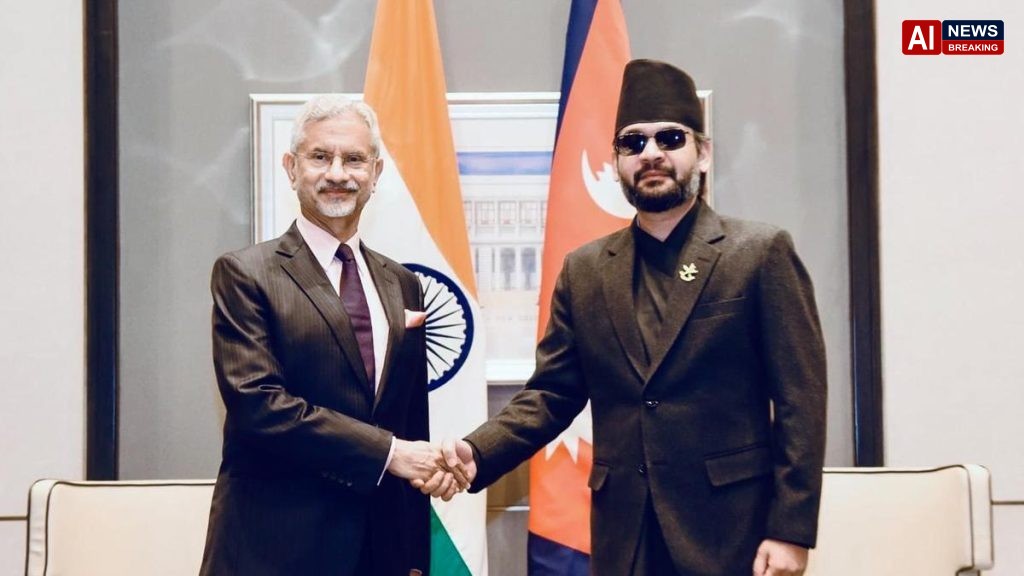
Nepal PM Balendra Shah arrives in Delhi for first official visit to India - AI News Breaking
nepal balendra shah arrives:
Prime Minister Pushpa Kamal Dahal, known as Balendra Shah, landed at Delhi’s Indira Gandhi International Airport on Monday, marking his first official visit to India since assuming office in January. The trip, scheduled for three days, is being billed by both governments as a milestone in the bilateral relationship, with leaders set to meet in New Delhi on Tuesday to discuss a wide agenda that includes trade, energy, water management and border security. While the visit carries symbolic weight, diplomats say the real test will be whether it yields a concrete political framework that can guide the two neighbours’ interactions for the coming years.The meeting between Shah and Prime Minister Narendra Modi will take place at the historic Rashtrapati Bhavan, a venue traditionally reserved for high‑level diplomatic engagements..
Sources close to the Indian foreign ministry have indicated that the talks will aim to move beyond the “issue‑by‑issue” approach that has characterised recent exchanges, and instead produce a “political direction” for the partnership. Such a direction would encompass a longer‑term roadmap covering trade liberalisation, cross‑border connectivity projects, and joint initiatives in renewable energy, areas that both capitals have highlighted as priorities in their respective national development plans.Trade has long been a cornerstone of Indo‑Nepal ties, with India accounting for roughly 80 per cent of Nepal’s total trade volume. Yet, the relationship has been strained by periodic closures of border points and disputes over transit rights..
During the Delhi visit, the two leaders are expected to sign a new memorandum of understanding that could streamline customs procedures and reduce non‑tariff barriers. Business chambers in both countries have welcomed the prospect, noting that smoother trade flows could boost Nepal’s export earnings and provide Indian manufacturers with a more reliable supply chain to the Himalayan market.Energy cooperation is another focal point of the agenda. Nepal’s vast hydro‑electric potential remains largely untapped, and the country has repeatedly sought Indian investment and technical assistance to develop its water resources..
In return, India is keen to secure clean electricity to supplement its own grid, which is under pressure from rising demand and a transition away from fossil fuels. Preliminary talks have already identified several pilot projects, including a 1,200‑megawatt cascade of run‑of‑the‑river plants that could be jointly financed and operated under a revised power purchase agreement.Water management, particularly concerning the transboundary rivers that flow from the Himalayas into the Indian plains, will also feature prominently. Both sides have expressed concern over the impacts of climate change on glacial melt and seasonal flows, which affect agriculture, hydropower generation and flood risk downstream..
Experts say that a collaborative monitoring framework, possibly under the auspices of the existing Indo‑Nepal Joint Commission on Water Resources, could provide the data needed to formulate adaptive strategies and mitigate future disputes.Security and border management are expected to be addressed with a pragmatic tone. The two nations share an open border that facilitates the movement of people, goods and services, but also presents challenges related to smuggling, human trafficking and illegal immigration. Recent incidents along the Nepal‑India frontier have prompted calls for enhanced cooperation between customs and law‑enforcement agencies..
Officials have hinted at the possibility of joint patrols and the deployment of advanced surveillance technology to curb illicit activities while preserving the traditional flow of legitimate traffic.Cultural and people‑to‑people ties will be underscored during the visit, with both governments planning a series of events that celebrate shared heritage. A cultural delegation from Nepal is slated to perform traditional music and dance at the National Museum in Delhi, while a Nepalese film festival will run concurrently in the capital. Such soft‑power initiatives are intended to reinforce the deep historical connections that underpin the political relationship, and to remind both publics of the mutual benefits of cooperation.The diplomatic choreography of the trip also includes side meetings with senior Indian officials, including the Minister of External Affairs and the Minister of Commerce and Industry..
Analysts note that these engagements are crucial for translating the high‑level political statements into actionable policies. In particular, the commerce ministry is expected to present a detailed roadmap for expanding bilateral investment, with a focus on sectors such as tourism, agriculture and information technology, where Nepal seeks to diversify its economic base.Regional dynamics add another layer of complexity to the discussions. Nepal’s growing ties with China, especially in infrastructure financing under the Belt and Road Initiative, have been a point of careful monitoring for New Delhi..
While both sides have affirmed that their relationship is not a zero‑sum game, they have also signalled a desire to ensure that external partnerships do not undermine the strategic balance in South Asia. The Delhi talks are therefore likely to include a frank dialogue on how to manage third‑party influences while preserving sovereign decision‑making.As the visit draws to a close, observers will be looking for the substance of any joint communiqué issued after the meetings. A robust, forward‑looking document could signal a new era of strategic alignment, whereas a more cautious statement might reflect lingering mistrust and unresolved issues..
Regardless of the immediate outcomes, the fact that the Nepali premier has chosen Delhi for his inaugural foreign trip underscores the primacy of the Indo‑Nepal relationship in the region’s diplomatic calculus. The next steps—implementation of agreements, follow‑up meetings and monitoring mechanisms—will determine whether the political direction sought by both capitals translates into tangible benefits for their peoples..
Updated: November 22, 2026
Shah’s Delhi debut signals Nepal’s pivot toward a pragmatic, India‑centric agenda that could lock both economies into a joint hydro‑electric‑trade corridor, subtly counterbalancing Beijing’s Belt‑and‑Road lure.
If the talks move beyond rhetoric, the new political framework may turn the open border from






