
 Pakistan’s leaders hail first astronaut aboard Chinese craft: ‘Proud one of us has gone into space’
 British tourist travels 29 hours from Mumbai to Amritsar for ₹5,461, rates Indian Railways 10/10 | Viral video
 The Supreme Court will decide whether assault weapons bans violate the Second Amendment
 A Critic of Beijing Falls Short in Taiwan’s Key Mayoral Election
 EPA says no rise in contamination after Army detonates lead azide stockpile in Iowa
Couple pays over 2.5L to move to 3BHK in Bengaluru, sparks debate over 1.5L house deposit: ‘Higher cost in Delhi’
**
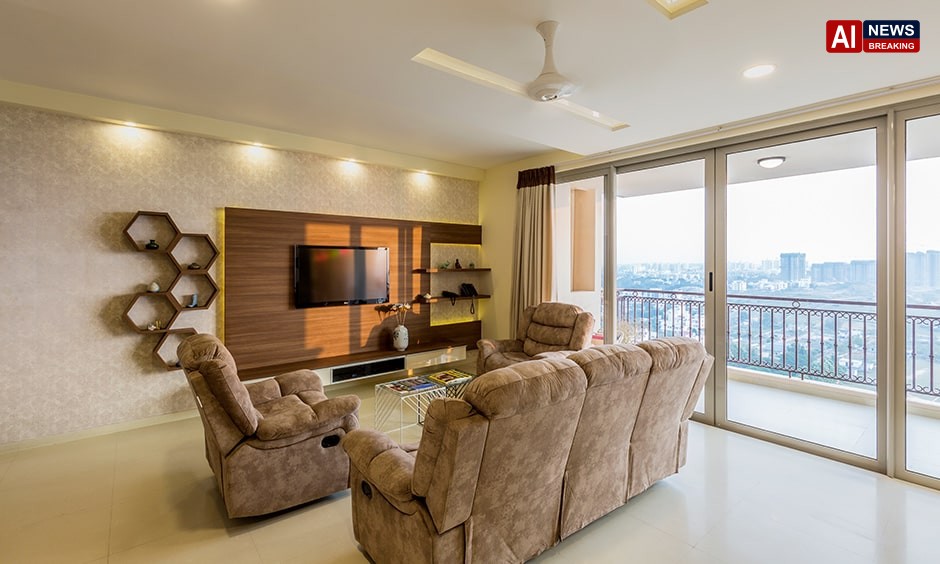
couple pays move 3bhk:
The couple’s move to a three‑bedroom flat in Bengaluru was more than a simple change of address – it was a financial journey that highlighted the stark differences between the two leading Indian cities. Ranjit Kumar, 38, and his wife Asha, 35, both software engineers, had lived in a modest two‑bedroom apartment in Delhi for the past seven years before deciding to relocate to their home state. “We wanted to be closer to family and to tap into the booming tech ecosystem here,” Ranjit told reporters, a smile flickering over the memory of the last month they had spent in the city’s capital.The couple’s first budgetary hurdle was the cost of hiring a professional packer and mover, which alone ran to ₹45,000..
The service, chosen after a series of online reviews, included packing materials, vehicle hire, and a small crew of movers who worked through the night to minimise disruption to their current landlords. “The company offered a package that covered insurance and a small guarantee in case something was damaged,” Asha explained. “We thought it was worth the price, but the number on the invoice still surprised us.”With the moving logistics sorted, the duo faced the next set of expenses: the security deposit, broker’s commission, and the first month’s rent..
In Delhi, the security deposit for a comparable three‑bedroom unit in a gated community would typically sit around ₹1.2 lakh, according to industry data. Yet, the Bangalore flat demanded a deposit of ₹1.5 lakh. “It’s higher here because the demand in Bangalore is so high, especially in neighbourhoods like Whitefield and HSR Layout,” Ranjit said..
The broker’s commission added another ₹30,000 to the bill, bringing the total upfront costs to just over ₹2.5 lakh.The couple’s financial advisor, Meera Singh, explained how the deposit figures can vary based on location and market sentiment. “In Delhi, especially in the newer developments, landlords have started to hold more cash, but the market still favours a lower security deposit compared to Bangalore, where the real estate market has seen a rapid rise in demand, driving up the initial cost of entry,” she said. She pointed out that in both cities, the deposit typically equals one month’s rent, but the rent itself is higher in Bangalore by roughly 15–20 percent on average for comparable units.When the couple attempted to secure the property, they were confronted with the bureaucratic nuances of Bangalore’s registration process..
The property was not yet fully compliant with the local municipal regulations, requiring a temporary occupancy certificate that cost an additional ₹5,000 and a legal fee of ₹3,000 to finalize the paperwork. “In Delhi, the process is more streamlined. The documentation is handled by the builder or the broker, and the transaction is usually completed in two weeks,” Meera added..
In contrast, the Bangalore team had to wait an extra month to obtain the final lease agreement.The couple’s narrative also underscores the broader shift in India’s real estate landscape, where the cost of living and the nature of housing markets differ dramatically between cities. While Delhi’s real estate market has been subject to stricter regulations and higher taxes, Bangalore’s liberal policies have attracted a surge of IT professionals, inflating demand and, consequently, deposit requirements. The BBC’s own research has found that in major metros, security deposits are increasingly seen as a barometer of market health, with higher deposits signalling robust demand.The emotional aspect of the move, however, was not entirely financial..
Asha recounted how her family’s reactions were mixed. “My mother was worried about the cost, but she was happy that we are now close to her and her husband,” she said. Her brother, a small business owner in Bangalore, welcomed the news, noting that the city’s infrastructure had improved markedly over the past few years..
“The roads are better, the public transport is expanding, and the city’s vibe is very much a blend of tradition and tech,” he told the reporters.Their story also reflects a growing trend among professionals who are willing to incur higher upfront costs for better lifestyle prospects. In 2023, the Indian National Housing Survey highlighted a rise in the number of people relocating to tier‑one cities like Bengaluru, citing better job opportunities and a perceived higher quality of life. The data revealed that while the average salary in Bangalore is about 10 percent higher than in Delhi, the cost of living—particularly housing—has surged by 12 percent over the same period.The couple’s choice of a three‑bedroom flat was driven by a blend of practical and sentimental considerations..
Their two children, aged 5 and 7, would have the space to grow and to engage in educational activities, which the couple believed would be more conducive in a quieter, more spacious environment than what is typically available in Delhi’s apartments. “We also want our kids to be able to play outside safely,” Ranjit said. “In Delhi, you’re often limited by the size of the flat, but here we have a decent backyard.”Looking ahead, the couple is optimistic about the return on their investment..
They anticipate that the value of the property will appreciate over the next few years, a factor that is increasingly attracting families to Bangalore. They are also considering renting out one of the rooms to offset the maintenance costs, a practice that has become common among homeowners in the city. “If we can rent out the extra room, we’ll get a small monthly income that will help us pay for utilities and other expenses,” Ranjit added.In conclusion, the couple’s story is a microcosm of the evolving dynamics of India’s urban real estate markets..
While the upfront costs in Bengaluru are higher than in Delhi, the perceived quality of life, job prospects, and future growth potential are compelling reasons for many professionals to make the switch. Their experience underscores how housing decisions are no longer purely about immediate affordability but also about long‑term investment and lifestyle aspirations. The debate over security deposits remains a central issue, but for Ranjit and Asha, the move was a step toward a future that they hope will bring both personal satisfaction and financial stability..
Updated: November 22, 2026
The couple’s hefty Bangalore deposit signals a broader trend: cities with booming tech hubs are turning housing into an investment, not just a shelter. By front‑loading costs, they’re betting on long‑term equity gains and a lifestyle that outweighs the higher monthly outlays.






