
 Pakistan’s leaders hail first astronaut aboard Chinese craft: ‘Proud one of us has gone into space’
 British tourist travels 29 hours from Mumbai to Amritsar for ₹5,461, rates Indian Railways 10/10 | Viral video
 The Supreme Court will decide whether assault weapons bans violate the Second Amendment
 A Critic of Beijing Falls Short in Taiwan’s Key Mayoral Election
 EPA says no rise in contamination after Army detonates lead azide stockpile in Iowa
Delta software glitch delays Atlanta flights.
A malfunction in Delta’s weight‑and‑balance software forced the carrier to halt flight plans and manually verify aircraft loads, resulting in over 30% of Atlanta‑bound departures delayed or cancelled on the eve of Thanksgiving, leaving thousands of travelers stranded and sparking debate over digital reliance in aviation.
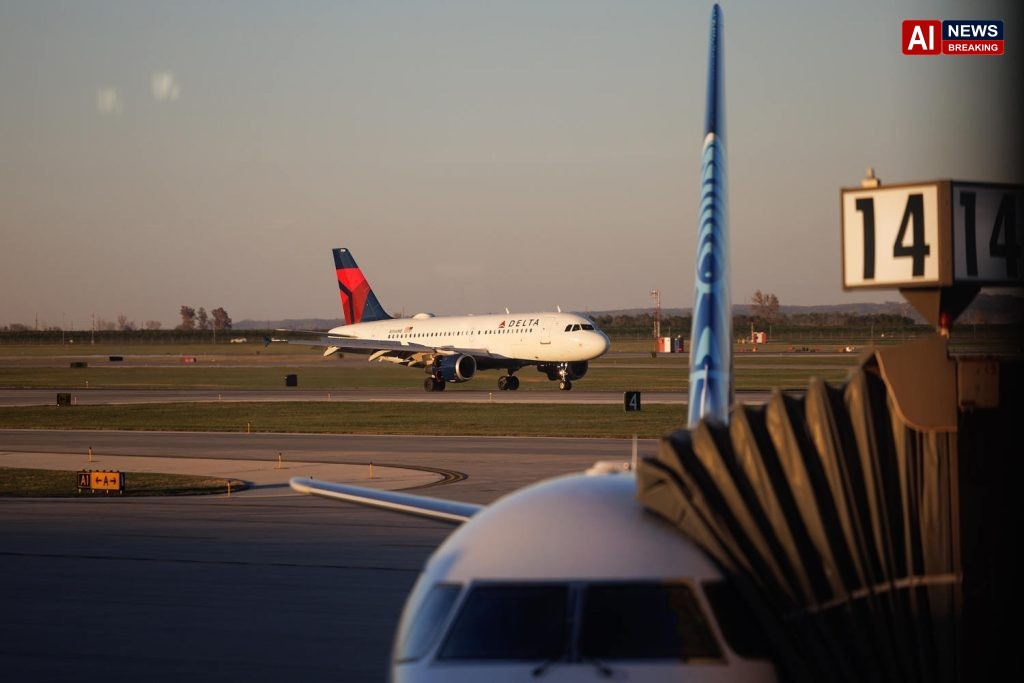
Delta tech issue delays Atlanta-bound flights head of Thanksgiving - AI News Breaking
Delta Air Lines confirmed that a malfunction in the software used to calculate aircraft weight and balance caused widespread delays to flights bound for its Atlanta hub on Sunday, the day before the start of the Thanksgiving travel rush. The issue, which emerged early in the morning, forced the carrier to hold or cancel dozens of departures from airports across the United States as crews and dispatchers worked to verify load data manually. By the time the problem was identified, the cumulative effect had already set back the schedule for the busiest travel day of the year, leaving passengers stranded, scrambling for alternate routes and confronting long wait times at terminals.The weight‑and‑balance system, a critical component of an airline’s flight‑planning suite, ensures that each aircraft is loaded within safe operational limits for take‑off, cruise and landing..
According to a statement released by Delta, the software glitch caused erroneous calculations that could have placed some aircraft outside those limits, prompting the airline’s safety officers to halt the release of flight plans until the data could be cross‑checked by hand. “The safety of our passengers and crew is paramount,” the statement read, adding that the airline “activated contingency procedures and is working to restore normal operations as quickly as possible.”Air traffic control towers at Hartsfield‑Jackson Atlanta International Airport reported a sudden surge in inbound traffic as flights scheduled to arrive from the Midwest, the South and the West were delayed en route or forced to hold at alternate airports. Controllers had to re‑sequence arrivals to accommodate the staggered flow, extending the already heavy workload that typically characterises the pre‑Thanksgiving period..
By mid‑day, the airport’s departure board showed more than 30 per cent of scheduled departures either delayed by over an hour or cancelled outright, a figure that eclipsed the usual 10‑15 per cent delay rate for the same timeframe in previous years.Passengers on the ground described a scene of mounting frustration. Lines stretched beyond the security checkpoints, and families with children were seen trying to keep little ones occupied as announcements repeatedly warned of further delays. One traveller, a 62‑year‑old man from Ohio, told reporters that he had been on the airport tarmac for over six hours, his flight to Atlanta postponed three times..
“I understand there’s a technical problem, but we’re missing Thanksgiving dinner with our family,” he said, his voice tinged with fatigue. Similar sentiments were echoed by business travellers who risked missing crucial meetings and holiday gatherings.Delta’s operational response involved mobilising additional ground staff to manually calculate weight‑and‑balance data for each affected aircraft. Engineers from the airline’s central maintenance hub in Atlanta were dispatched to regional airports to assist with the verification process..
In some cases, aircraft were re‑configured, moving cargo and passengers to achieve a compliant load distribution. The airline also rerouted several flights to less congested airports, offering passengers vouchers and meals while they awaited rebooking. Despite these measures, the manual process proved time‑consuming, extending the delay window well into the late afternoon.The incident has reignited discussions about the reliance on complex software systems in aviation and the importance of robust backup procedures..
Industry analysts note that while automated weight‑and‑balance calculations have become standard practice for their speed and precision, they also introduce a single point of failure that can ripple through an airline’s network. “What we’re seeing is a classic example of digital dependency,” said Dr. Elaine Porter, a professor of aerospace engineering at the University of Texas..
“Airlines must ensure that contingency plans are not just procedural checklists but fully staffed, practiced alternatives that can be deployed instantly.”Delta’s chief operating officer, Pete Ingram, addressed the media on Sunday evening, acknowledging the inconvenience caused to passengers and pledging a thorough investigation. He indicated that the airline would work with its software vendor to pinpoint the root cause, whether it be a coding error, a data input glitch or an unexpected interaction with recent system updates. Ingram also promised that the findings would be shared with the Federal Aviation Administration, which oversees airline safety compliance, to prevent similar disruptions in the future.The Federal Aviation Administration has yet to issue a formal statement on the incident, but a spokesperson confirmed that the agency is monitoring the situation closely..
The FAA routinely audits airline software systems for compliance with safety standards, and any significant failure that impacts flight operations typically triggers a review. “Our priority is to ensure that all airlines maintain the highest level of safety and reliability,” the spokesperson said. “We will work with Delta to understand what happened and to reinforce the safeguards that protect the travelling public.”Travel experts predict that the ripple effect of the Sunday delays will be felt throughout the Thanksgiving travel period, which stretches into the following week..
With the nation’s largest hub temporarily operating at reduced capacity, airlines are expected to adjust their flight schedules, add extra aircraft where possible and encourage passengers to arrive at airports earlier than usual. Some consumer advocacy groups have urged airlines to provide clearer communication and more generous compensation for passengers whose travel plans are disrupted by technical failures, emphasizing that such incidents can have a disproportionate impact on families gathering for holiday celebrations.As the holiday weekend unfolds, Delta is gradually restoring its normal schedule, though some flights remain on hold pending final verification of load data. Passengers are advised to check their flight status regularly, consider alternative airports, and remain prepared for further changes..
The airline has set up additional customer‑service counters in major terminals and expanded its online chat support to handle the surge in inquiries. While the weight‑and‑balance software glitch represents an unusual setback for an industry that prides itself on precision, Delta’s swift mobilisation of resources and commitment to safety underscore the complex interplay between technology and human oversight that underpins modern air travel..
Updated: November 22, 2026







