Pakistan’s leaders hail first astronaut aboard Chinese craft: ‘Proud one of us has gone into space’
 British tourist travels 29 hours from Mumbai to Amritsar for ₹5,461, rates Indian Railways 10/10 | Viral video
 The Supreme Court will decide whether assault weapons bans violate the Second Amendment
 A Critic of Beijing Falls Short in Taiwan’s Key Mayoral Election
 EPA says no rise in contamination after Army detonates lead azide stockpile in Iowa
How Homeowners Are Powering Vietnam’s E-Bike Surge
**
How Homeowners Are Powering Vietnam’s E-Bike Surge - AI News Breaking
homeowners powering vietnams ebike:
The sudden escalation of the conflict in Iran has sent shock‑waves through global supply chains, and Vietnam’s two‑wheel market has felt the tremor keenly. Within weeks of the first major hostilities, imports of cheap Chinese‑made motorbikes, which have long dominated the streets of Hanoi, Ho Chi Minh City and smaller towns, were curtailed by shipping delays and heightened tariffs. Dealers, faced with empty shelves and dwindling sales, turned to a faster‑growing segment: electric two‑wheelers, or e‑bikes, whose batteries can be recharged locally..
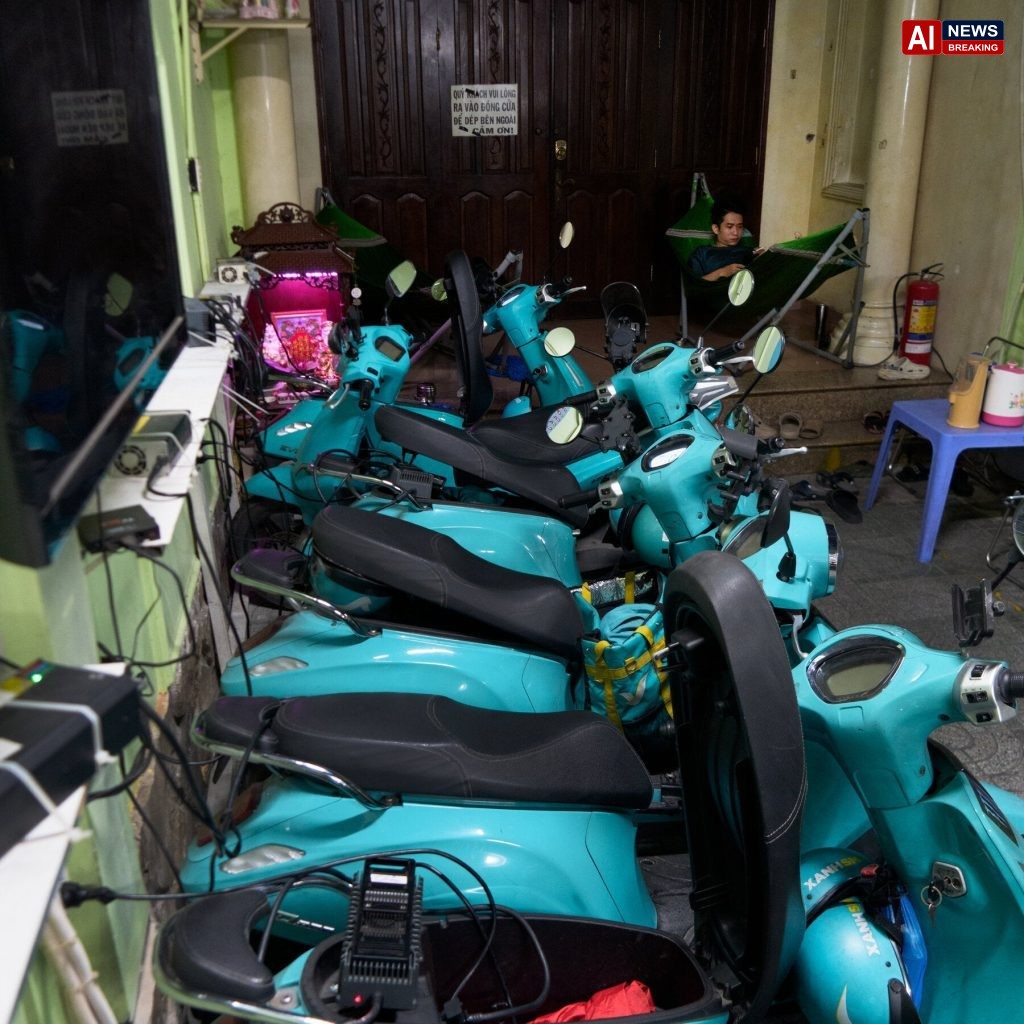
The shift has been dramatic, with the number of new e‑bike registrations soaring by an estimated 45 percent between March and August, according to data released by the Ministry of Transport.What began as a pragmatic response to a supply crunch has quickly morphed into a grassroots charging ecosystem, driven largely by ordinary homeowners who have repurposed spare rooms, garages and even rooftop sheds into makeshift power stations. In districts such as Dong Da in Hanoi and Thu Duc in Ho Chi Minh City, rows of small charging bays line narrow alleys, each occupied by a single‑phase charger humming at 220 volts. The owners—often retired civil servants, small‑scale traders or unemployed youths—charge a modest fee, typically between 2 000 and 5 000 dong (roughly 8 to 20 cents) per kilowatt‑hour, for e‑bike riders who lack reliable access to the national grid.The business model is strikingly informal yet remarkably resilient..
Homeowners purchase second‑hand lithium‑ion battery packs from a burgeoning market of salvaged units, many sourced from decommissioned smartphones and laptops. These packs are then assembled into larger, 48‑volt modules that can charge an e‑bike in roughly three to four hours. To keep costs low, many operators install solar panels on their rooftops, supplementing grid electricity with renewable power and reducing their own bills..
A recent survey by the Vietnam Institute for Energy Research found that 62 percent of these micro‑charging stations rely at least partially on solar generation, a figure that has risen sharply since the first half of the year.The rapid proliferation of homeowner‑run chargers has not gone unnoticed by municipal authorities. In early September, the Ho Chi Minh City People’s Committee issued a set of guidelines aimed at standardising safety practices, including mandatory fire‑retardant wiring, regular inspection of battery storage, and the display of emergency contact numbers. While the regulations are well‑intentioned, enforcement remains uneven..
In some neighbourhoods, volunteers from local Residents’ Associations conduct spot checks, yet in the sprawling suburbs where informal economies thrive, many operators continue to work outside the official framework, citing the urgency of meeting demand and the difficulty of securing permits.Economic incentives are a powerful driver behind the homeowner‑led charging boom. A modest initial outlay of around 30 million dong (approximately US$1 300) for a basic charging setup can yield monthly revenues of 6 to 8 million dong, depending on location and volume of traffic. For many families, this income supplements dwindling pensions or provides a lifeline for young adults seeking to fund their own e‑bike purchases..
Nguyen Van Long, a 58‑year‑old former factory worker in the city of Hai Phong, installed two chargers in his garage last month. “When the motorbike shop closed, I needed something to earn a living,” he told reporters. “Now riders come every evening, and the money is steady..
It also helps my grandchildren’s school fees.”Riders themselves have embraced the shift, attracted by the lower operating costs and the perception of a cleaner, quieter ride. A typical gasoline‑powered scooter in Vietnam consumes roughly 2 litres of fuel per 100 kilometres, translating to a monthly expense of about 800 000 dong (US$35) at current prices. By contrast, an e‑bike charged at a homeowner’s station costs roughly one‑third of that, even after accounting for the modest charging fee..
For delivery workers, who often log 200‑300 kilometres a day, the savings are substantial, and many have upgraded from older motorbikes to newer e‑bikes equipped with larger battery capacities to extend range between charges.The environmental implications of the surge are complex. On the one hand, the replacement of gasoline scooters with electric models reduces urban air pollutants such as nitrogen oxides and particulate matter, a benefit welcomed by the Ministry of Natural Resources and Environment, which has flagged transportation as a key sector for emission reductions. On the other hand, the rapid turnover of low‑quality battery packs raises concerns about waste management..
Vietnam currently recycles only a fraction of its e‑bike batteries, and the informal nature of many charging stations means that defective cells are sometimes stored in unventilated spaces, heightening fire risks. NGOs such as GreenFuture Vietnam are calling for a coordinated take‑back scheme, urging manufacturers to adopt extended producer responsibility (EPR) frameworks that would fund safe disposal and recycling.Industry observers note that the homeowner charging model may be a transitional phenomenon, but its scale suggests a lasting impact on the country’s mobility landscape. Analysts at Mekong Capital predict that formal e‑bike infrastructure—comprising purpose‑built charging hubs, standardized payment systems and grid‑integrated renewable energy—could capture up to 40 percent of the market by 2030 if current trends continue..
Yet they caution that the informal network, with its low entry barriers and community‑rooted trust, fills a critical gap that large‑scale projects may struggle to address, especially in rural provinces where grid reliability remains uneven.As Vietnam navigates the twin challenges of geopolitical uncertainty and climate ambition, the story of homeowners turning living rooms into power stations offers a vivid illustration of how ordinary citizens can reshape economic activity in the face of external shocks. The e‑bike surge, sparked by a distant war, has become a locally driven experiment in decentralized energy, entrepreneurship and urban adaptation. Whether policy will eventually formalise this grassroots system or allow it to evolve organically remains to be seen, but the momentum behind Vietnam’s two‑wheel electrification appears unlikely to wane..
Vietnam’s ad‑hoc e‑bike chargers show how a crisis can accelerate a bottom‑up renewable‑energy market, turning low‑skill households into micro‑utilities that undercut traditional fuel costs. If policymakers can channel this informal agility into a regulated framework, the country could leapfrog into