Pakistan’s leaders hail first astronaut aboard Chinese craft: ‘Proud one of us has gone into space’
 British tourist travels 29 hours from Mumbai to Amritsar for ₹5,461, rates Indian Railways 10/10 | Viral video
 The Supreme Court will decide whether assault weapons bans violate the Second Amendment
 A Critic of Beijing Falls Short in Taiwan’s Key Mayoral Election
 EPA says no rise in contamination after Army detonates lead azide stockpile in Iowa
China warns AI could expose nuclear forces
**
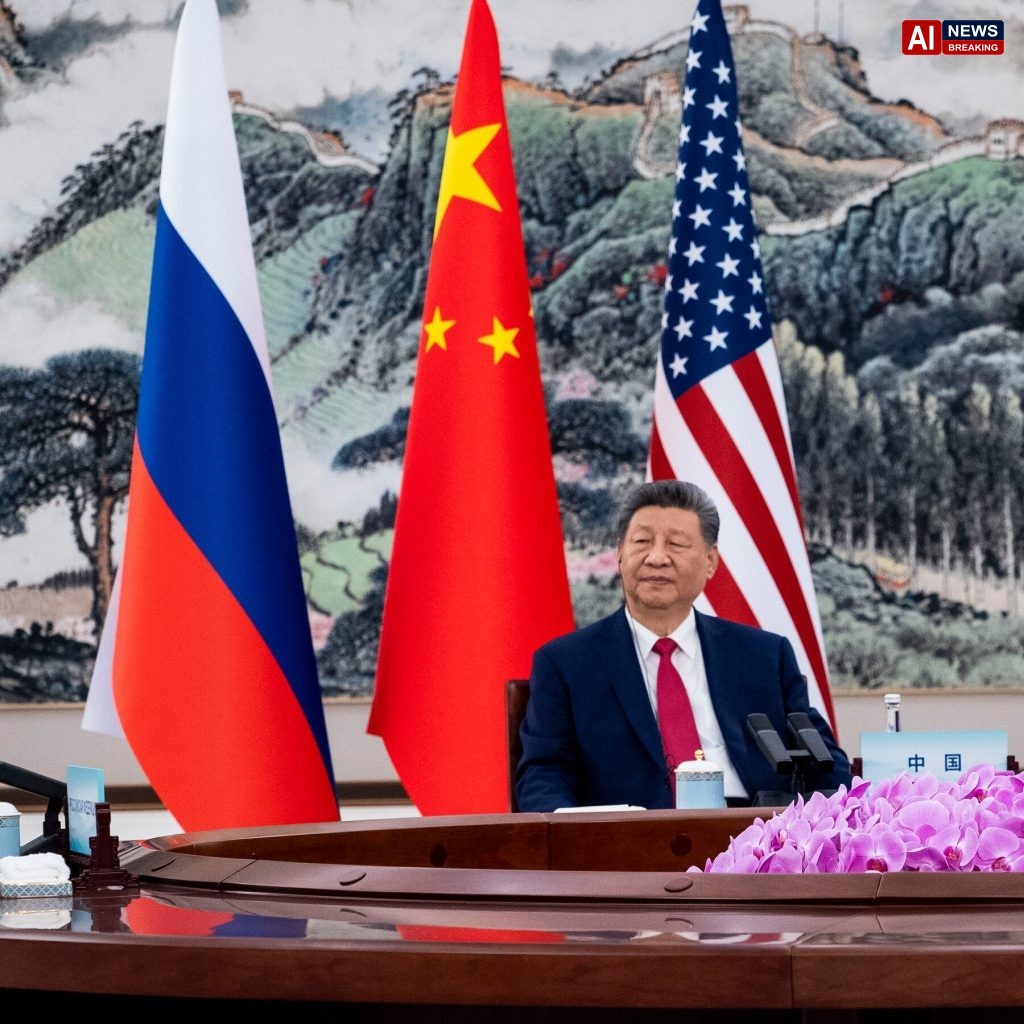
China Fears A.I. Could Give the U.S. an Edge in Nuclear Rivalry - AI News Breaking
china warns could expose:
an Edge in Nuclear Rivalry Chinese military researchers are increasingly focused on how artificial intelligence could reshape the command and control of nuclear forces, yet they warn that the same technology may also expose the People’s Liberation Army to new vulnerabilities. In recent internal reports, senior officers have highlighted the paradox of AI: while it promises faster data processing and more accurate targeting, it also creates potential pathways for cyber‑intrusion and misinformation that could undermine the credibility of China’s nuclear deterrent. The concerns are prompting a cautious approach to AI integration, even as Beijing seeks to keep pace with U.S..
advancements in autonomous weaponry. The drive to incorporate AI stems from a broader strategic ambition to modernise the People’s Liberation Army (PLA) and to maintain strategic parity with the United States. Since President Xi Jinping’s 2017 directive to build a world‑class military, the PLA has invested heavily in AI research labs, partnerships with tech firms, and recruitment of data scientists..
Projects range from AI‑enhanced early warning systems to algorithms that could streamline the decision‑making process during a nuclear crisis. However, analysts note that the opaque nature of Chinese military research makes it difficult to assess how far these initiatives have progressed beyond laboratory simulations. In a 2023 white paper circulated among senior defense academies, Chinese scholars warned that AI could inadvertently lower the threshold for nuclear escalation..
By automating threat detection, there is a risk that false alarms—whether caused by sensor errors or adversarial hacking—might be acted upon more swiftly, reducing the time available for human deliberation. The paper cited historical incidents, such as the 1983 Soviet false alarm, as cautionary tales of how technology can amplify the danger of miscalculation. Consequently, the PLA is reportedly re‑evaluating the balance between speed and verification in any AI‑assisted launch protocol..
military planners have been openly discussing the integration of AI into their own nuclear command structures, a development that has not escaped Beijing’s notice. According to leaked documents from the U.S. Department of Defense, American researchers are exploring machine‑learning models that could predict enemy movements and optimise missile trajectories in real time..
The prospect of an AI‑enhanced U.S. nuclear response has heightened Chinese anxieties about a potential “AI arms race,” where each side strives to outpace the other’s computational capabilities. This dynamic adds a new dimension to the long‑standing strategic competition between the two powers..
Chinese officials argue that the vulnerability lies not only in the technology itself but also in the supply chain that underpins it. Many AI components are produced by overseas semiconductor manufacturers, making them susceptible to export controls and sanctions. In response, Beijing has accelerated its push for a self‑sufficient chip industry, investing billions in domestic fabs and research into alternative materials..
Yet experts caution that achieving parity with the United States’ advanced AI hardware ecosystem could take years, leaving a gap that might be exploited by adversaries during a crisis. Cybersecurity concerns dominate the internal debate on AI adoption within the PLA’s nuclear forces. The integration of complex software platforms raises the spectre of malware infiltration, especially given the sophisticated cyber capabilities demonstrated by the United States and its allies..
Chinese cyber‑defence units are reportedly conducting “red‑team” exercises to simulate attacks on AI‑driven command and control networks, aiming to identify weak points before they can be exploited. These drills are part of a broader effort to harden the nuclear infrastructure against both conventional hacking and more subtle forms of data poisoning. The question of human oversight remains a contentious issue..
While AI can process vast quantities of sensor data far quicker than a human operator, Chinese doctrine still emphasises the principle of “centralised control and decentralized execution.” Military scholars argue that any AI system must ultimately defer to a human decision‑maker, especially when the stakes involve nuclear weapons. However, the practicalities of ensuring that human operators retain meaningful control in a high‑speed, AI‑augmented environment are still being worked out, with some officials warning that over‑reliance on algorithms could erode the essential judgment required in nuclear decision‑making. Internationally, the prospect of AI‑enabled nuclear weapons has sparked calls for new arms‑control frameworks..
The United Nations has convened expert panels to discuss the risks of autonomous weapons, but consensus on binding regulations remains elusive. China has traditionally resisted arms‑control measures that it perceives as limiting its strategic autonomy, yet the internal warnings about AI’s destabilising potential may push Beijing to engage more actively in diplomatic dialogues. Some analysts suggest that mutual concerns could serve as a catalyst for confidence‑building measures, though the geopolitical climate remains fraught..
Economic considerations also shape China’s approach. The development of AI for military use competes with civilian priorities such as industry, healthcare, and infrastructure. The Chinese leadership must allocate resources carefully, balancing the desire for cutting‑edge defence capabilities against the need to sustain economic growth..
The government’s dual‑use policy, which encourages civilian tech firms to contribute to military projects, has raised ethical questions about the blurring lines between commercial innovation and strategic weaponry. This dynamic further complicates the assessment of how rapidly AI can be deployed within the nuclear sphere. Looking ahead, Chinese scholars caution that the integration of AI into nuclear forces could alter the strategic calculus not only between Beijing and Washington but also among other nuclear‑armed states..
The diffusion of AI technologies might lower the barriers for emerging powers to develop sophisticated deterrent capabilities, potentially destabilising the existing balance. To mitigate these risks, the PLA is reportedly drafting contingency plans that include manual override mechanisms, redundant communication channels, and hardened data pathways. These safeguards aim to ensure that, even if AI systems are compromised, the command structure can revert to more conventional, human‑centric procedures..
Updated: November 23, 2026
Insight: China’s scramble to arm its nuclear forces with AI shows a classic “double‑edged sword” dilemma—speed and precision can be bought, but at the price of new cyber choke points that could trigger accidental launches. This tension may force Beijing to harden its command chain, yet the very act of closing that loop