
 Pakistan’s leaders hail first astronaut aboard Chinese craft: ‘Proud one of us has gone into space’
 British tourist travels 29 hours from Mumbai to Amritsar for ₹5,461, rates Indian Railways 10/10 | Viral video
 The Supreme Court will decide whether assault weapons bans violate the Second Amendment
 A Critic of Beijing Falls Short in Taiwan’s Key Mayoral Election
 EPA says no rise in contamination after Army detonates lead azide stockpile in Iowa
Iraq’s Prime Minister Aims to Wrest More Power from Kurdistan Region
**
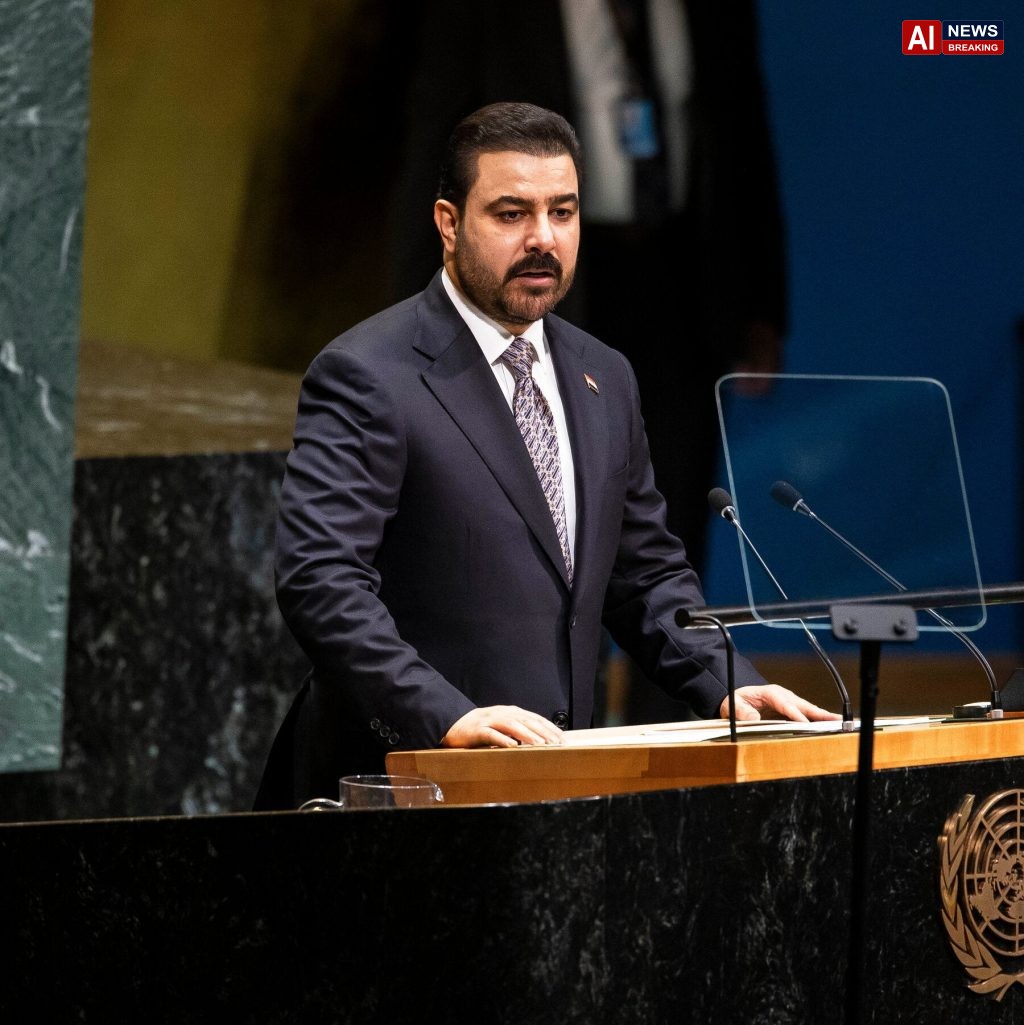
Iraq’s Prime Minister Aims to Wrest More Power from Kurdistan Region - AI News Breaking
iraqs prime minister aims:
Iraq’s prime minister has launched a fresh push to tighten central authority over the semi‑autonomous Kurdistan Region, targeting border checkpoints and oil licences that have long been administered by Erbil’s regional government. The move follows the recent arrest of a senior commander of the Kataib Hezbollah militia, a development that Prime Minister Mohammed Shia al‑Sulayman presented as a symbolic win in Baghdad’s wider campaign against Iran‑backed paramilitary groups. Analysts say the success against the militia may be encouraging the cabinet to press ahead with a broader agenda of re‑centralising power that has been a contentious issue since the 2005 constitution granted the Kurdish region a degree of self‑rule.Since the fall of Saddam Hussein, Iraq’s federal structure has been marked by a delicate balance between the capital and the Kurdish north, with revenue sharing and control of natural resources remaining the most volatile points of dispute..
The Kurdish Regional Government (KRG) has historically managed its own border crossings with Turkey and Iran, collecting customs duties that feed its budget, while also negotiating its own oil export contracts with foreign firms. Baghdad, however, maintains that all oil sales must be licensed by the federal Ministry of Oil and that customs revenue should be pooled into the national treasury before being redistributed.In a televised address last week, al‑Sulayman argued that “the unity of the Iraqi state depends on a fair and transparent system where every region contributes to the common pool and benefits equally.” He warned that the current arrangement, in which the KRG retains full control over its borders and oil fields, “creates parallel structures that undermine national sovereignty.” The prime minister’s office has since issued a directive to the Ministry of Interior and the Ministry of Oil to draft new regulations that would require all border crossing points in the Kurdish provinces to operate under federal oversight, and to bring any oil licences issued by Erbil into the central licensing framework.The proposal has been met with swift resistance from Kurdish leaders, who contend that the central government’s move breaches the constitutional guarantees of regional autonomy. Kurdish president Nechirvan Barzani described the plan as “an attempt to erode the hard‑won rights of the Kurdish people” and called for a meeting of the Iraqi Council of Representatives to debate the issue..
In response, Baghdad has insisted that any changes would be discussed within the framework of the Iraqi constitution and that the central government is merely seeking “clarity and coherence” in the management of Iraq’s oil wealth and border security.International observers have noted that the timing of the proposal coincides with heightened regional tensions. Tehran’s influence in Iraq has been a persistent source of friction, and the recent crackdown on Kataib Hezbollah, a militia with deep ties to the Iranian Quds Force, has signalled a shift in Baghdad’s security policy. The United States, which maintains a strategic partnership with Iraq, has expressed support for Iraq’s efforts to assert state authority, while also urging that any reforms be pursued through dialogue to avoid destabilising the already fragile federal arrangement.Economic considerations also underpin the central government’s push..
Iraq’s public finances are under severe strain, with the COVID‑19 pandemic, fluctuating oil prices and rampant corruption eroding revenue streams. The Ministry of Finance estimates that integrating the customs duties from Kurdish border posts could increase the national budget by up to 1.5 billion dollars annually. Moreover, bringing Kurdish oil licences under the federal system could streamline export processes, potentially attracting more foreign investment to the country’s oil sector, which has been hampered by overlapping jurisdictions and legal uncertainties.Nevertheless, critics argue that the central government’s approach risks alienating a key partner in Iraq’s reconstruction..
The KRG has been a relatively stable and prosperous region, contributing significantly to Iraq’s overall GDP and serving as a buffer against sectarian spill‑over from the south. Some economists warn that a confrontational stance could deter foreign investors wary of political risk, especially if disputes over oil contracts lead to legal battles in international courts. They point to the 2017 independence referendum, which, despite being declared illegal by Baghdad, highlighted the deep-rooted aspirations for greater self‑determination among many Kurds.In the diplomatic arena, neighbouring Turkey and Iran are watching developments closely..
Both countries rely heavily on trade routes that pass through Kurdish border crossings, and any alteration to customs collection could affect their commercial interests. Turkey, in particular, has cultivated a pragmatic relationship with Erbil, signing multiple energy agreements that bypass Baghdad. A shift in control could compel Ankara to renegotiate terms, potentially creating new friction points in an already complex regional matrix.As the debate unfolds in Iraq’s parliament, lawmakers from both the central and regional blocs are preparing amendments that could either dilute or reinforce the prime minister’s proposal..
The next parliamentary session, scheduled for early next month, is expected to feature heated exchanges, with opposition parties warning that the centralisation drive may ignite renewed calls for Kurdish autonomy. Meanwhile, civil society groups in both Baghdad and Erbil have called for a transparent, inclusive process that respects the constitutional framework while addressing the nation’s pressing fiscal challenges.The outcome of this contest will shape Iraq’s political architecture for years to come. If the federal government succeeds in extending its remit over the Kurdish border points and oil licences, it could set a precedent for further integration of regional authorities, potentially reshaping the balance of power between Baghdad and Erbil..
Conversely, a stalemate or concession could reaffirm the status quo, preserving the semi‑autonomous model that has, despite its flaws, helped maintain relative stability in the north. In either case, the interplay between security concerns, economic imperatives and constitutional law will continue to define Iraq’s path toward a more unified, yet still federal, state..
Updated: November 24, 2026
Baghdad is pressing to bring Kurdish border checkpoints and oil licences under federal control, framing the move as essential for national unity and fiscal stability after a recent crackdown on an Iran‑linked militia. Kurdish leaders decry the plan as a breach of constitutional autonomy, setting the stage for a contentious parliamentary showdown over Iraq’s federal balance.
Insight: Baghdad’s crackdown on an Iran‑linked militia is less about security than a strategic lever to justify re‑centralising oil and customs revenue—an economic gambit that could force Erbil into a costly trade‑off between fiscal aid and political autonomy.
If the federal push succeeds,






