
 Pakistan’s leaders hail first astronaut aboard Chinese craft: ‘Proud one of us has gone into space’
 British tourist travels 29 hours from Mumbai to Amritsar for ₹5,461, rates Indian Railways 10/10 | Viral video
 The Supreme Court will decide whether assault weapons bans violate the Second Amendment
 A Critic of Beijing Falls Short in Taiwan’s Key Mayoral Election
 EPA says no rise in contamination after Army detonates lead azide stockpile in Iowa
Why has the FSSAI sanctioned prosecution against Bisleri? | Explained
**
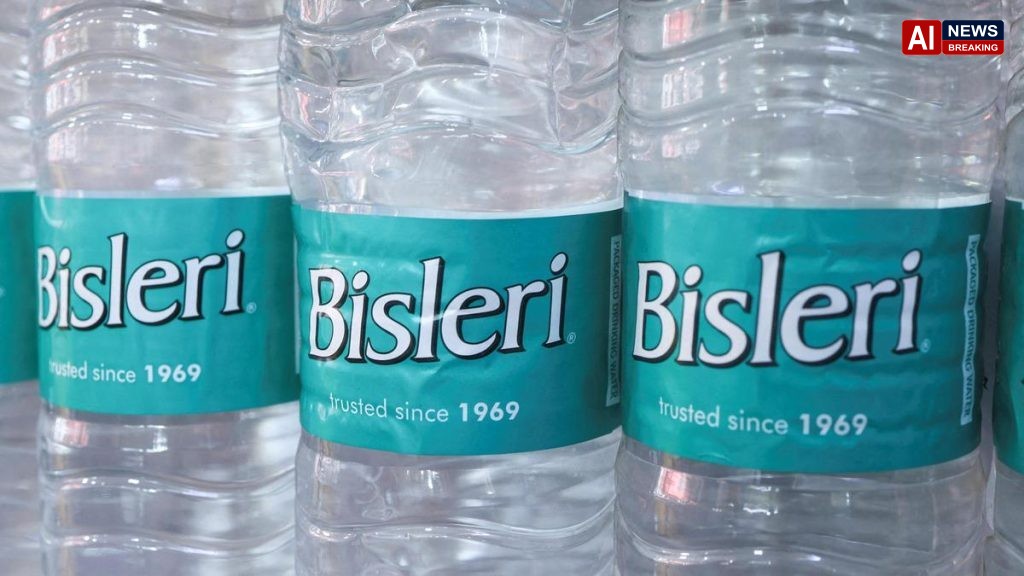
Why has the FSSAI sanctioned prosecution against Bisleri? | Explained - AI News Breaking
The Food Safety and Standards Authority of India (FSSAI) has moved to prosecute Bisleri International, one of the country’s leading packaged drinking‑water brands, after laboratory tests revealed the presence of bromate and poly‑aromatic hydrocarbons (PAHs) in samples of its “Pure Water” product. The sanction marks a rare escalation from the usual warning and recall process, underscoring the regulator’s growing concern over chemical contaminants that can arise during water treatment and bottling. While Bisbis’s market share and reputation have made the case high‑profile, the underlying issue reflects broader challenges in India’s bottled‑water industry, where rapid growth has sometimes outpaced stringent quality control.Bromate is a by‑product of the ozonation process, a disinfection method employed by many water‑treatment plants to eliminate microbial pathogens..
When ozone reacts with bromide ions naturally present in source water, it can form bromate, a compound classified by the World Health Organization as a possible human carcinogen. The permissible limit for bromate in drinking water under Indian standards is 0.01 milligrams per litre, a threshold set to minimise long‑term cancer risk. In the Bisleri samples examined by an accredited laboratory, bromate concentrations exceeded this limit, prompting the FSSAI’s decision to file a criminal complaint under the Food Safety and Standards Act, 2006.The second contaminant, poly‑aromatic hydrocarbons, comprises a family of chemicals generated primarily during the incomplete combustion of organic matter..
In the context of bottled water, PAHs can infiltrate the product through contaminated source water, leaching from plastic packaging, or even from the use of certain filtration media. Several PAH compounds, such as benzo[a]pyrene, are recognised carcinogens, while others can cause liver, kidney and immune‑system damage at lower exposure levels. The test results indicated that at least one PAH, above the allowable limit of 0.001 mg/L, was present in Bisleri’s water, raising alarms about both acute and chronic health effects for consumers.The health implications of these contaminants are not merely theoretical..
Chronic ingestion of bromate has been linked in epidemiological studies to an increased incidence of thyroid and kidney tumours, as well as oxidative stress that can exacerbate cardiovascular disease. PAHs, meanwhile, are known to bind to DNA, initiating mutations that can lead to cancers of the lung, bladder and skin. While occasional exposure to low levels may not cause immediate symptoms, the cumulative risk over years of regular consumption of contaminated bottled water is a serious public‑health concern, especially for vulnerable groups such as children, pregnant women and the elderly.India’s regulatory framework for packaged drinking water is anchored in the Food Safety and Standards (Packaging and Labelling) Regulations, 2011, and the Food Safety and Standards (Contaminants, Toxins and Residues) Regulations, 2011..
Under these rules, manufacturers must obtain a licence from the FSSAI, adhere to Good Manufacturing Practices (GMP), and submit periodic water‑quality test reports to accredited laboratories. The standards prescribe maximum limits for microbiological parameters, heavy metals, and chemical residues, including bromate and PAHs. In addition, the Packaging and Labelling Regulations mandate clear declaration of the source of water, treatment processes used, and the date of bottling, ensuring traceability and consumer awareness.To comply, bottled‑water producers are required to conduct a series of safety checks at each stage of production..
Raw water must be tested for microbial load, total dissolved solids and specific chemical markers before entering the treatment plant. The treatment cascade typically involves pre‑filtration, reverse‑osmosis or ultrafiltration, followed by disinfection—most commonly chlorination, UV radiation or ozonation. After treatment, the water undergoes post‑treatment testing for residual disinfectants, bromate, PAHs and other regulated contaminants..
Finally, the finished product is sampled from the bottling line for sterility and chemical analysis before being released for sale. Non‑conformity at any point mandates corrective action, product recall and notification to the FSSAI.The incident also spotlights the role of plastic packaging in contaminant migration. Polyethylene terephthalate (PET) bottles, the material most commonly used for bottled water, can leach antimony, a metalloid used in the polymerisation process, especially when to high temperatures or prolonged sunlight..
Though antimony levels are generally low, studies have shown that repeated heating—such as storing bottles in a hot car—can increase its concentration, potentially exceeding the safe limit of 0.5 mg/L. Moreover, PET can act as a conduit for PAHs if the plastic itself is contaminated during manufacturing. While the Bisleri case focused on water quality rather than packaging, the broader industry is increasingly scrutinised for these ancillary risks.Consumer confidence in packaged drinking water has risen sharply over the past decade, driven by concerns over municipal supply quality and the perception of bottled water as a safer alternative..
Yet the rapid expansion of the sector—estimated at a market size of over ₹90 billion—has also attracted smaller, less‑resourced players who may lack robust quality‑control infrastructure. The FSSAI’s decisive action against a market leader like Bisleri serves as a warning that regulatory oversight will intensify, and that compliance cannot be assumed on the basis of brand reputation alone.Legal experts note that the prosecution route, rather than a simple recall, could set a precedent for future enforcement. Under Section 27 of the Food Safety and Standards Act, authorities can levy penalties up to ₹5 million, impose imprisonment for up to two years, or both, for contraventions that endanger public health..
The case is expected to be examined by a Special Court, where the burden of proof will rest on the FSSAI to demonstrate that the alleged contamination directly resulted from lapses in Bisleri’s processes. The outcome may influence how other manufacturers document their treatment protocols and maintain audit trails.In the meantime, health officials advise consumers to stay informed about the source and testing credentials of bottled water they purchase. Checking the label for a valid FSSAI licence number, the bottling date, and the name of the testing laboratory can provide reassurance..
For those concerned about chemical contaminants, alternative options such as filtered tap water, provided the local supply meets safety standards, may offer a lower‑risk and environmentally sustainable choice. As the investigation proceeds, the Bisleri case underscores the importance of rigorous, science‑based oversight in safeguarding one of the most essential commodities—clean drinking water..
Updated: November 25, 2026
FSSAI has filed criminal charges against Bisleri after lab tests found its “Pure Water” exceeded legal limits for bromate and a poly‑aromatic hydrocarbon, both known carcinogens. The move signals tougher enforcement for India’s fast‑growing bottled‑water sector, where lapses in treatment and packaging can pose serious health risks.






