Pakistan’s leaders hail first astronaut aboard Chinese craft: ‘Proud one of us has gone into space’
 British tourist travels 29 hours from Mumbai to Amritsar for ₹5,461, rates Indian Railways 10/10 | Viral video
 The Supreme Court will decide whether assault weapons bans violate the Second Amendment
 A Critic of Beijing Falls Short in Taiwan’s Key Mayoral Election
 EPA says no rise in contamination after Army detonates lead azide stockpile in Iowa
U.S. raises tariffs on Chinese, EU and Brazilian goods to curb subsidies.
**
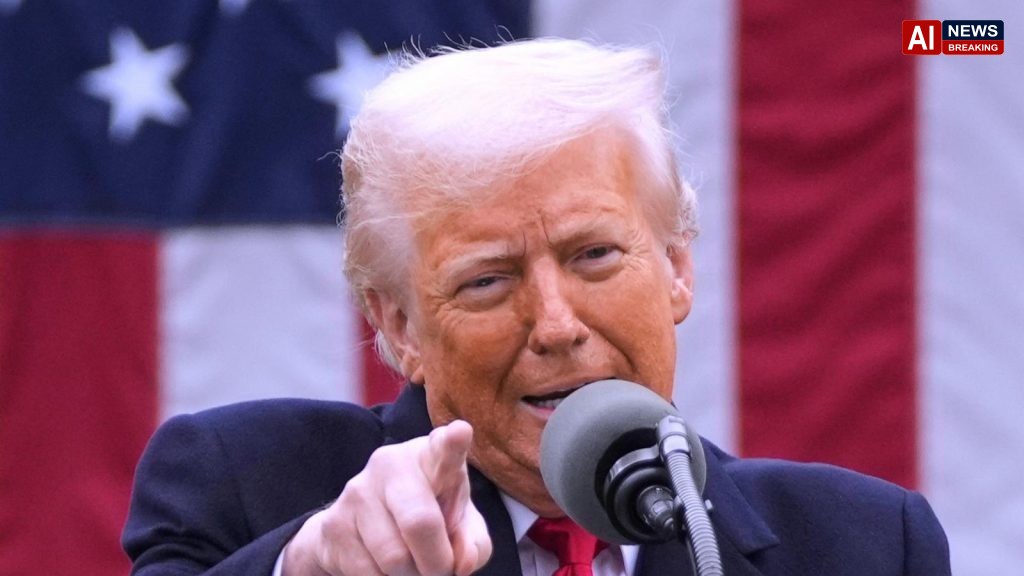
U.S. raises tariffs on Chinese, EU and Brazilian goods to curb subsidies. - AI News Breaking
raises tariffs chinese brazilian:
In recent weeks the United States has signalled a decisive shift in its trade policy, announcing plans to raise tariffs on a range of goods imported from China, the European Union and several other trading partners, including Brazil. The move is part of a broader strategy to counter what Washington views as unfair trade practices, particularly subsidies that distort competition and undermine American manufacturers.The proposal, first revealed by officials in the Department of Commerce, outlines new duties on key Chinese exports such as electric vehicles, solar panels and advanced semiconductor equipment. The tariffs, if implemented, would rise from the current 10% to as high as 25% on certain categories..
This is in line with a broader campaign that began last year, when the administration imposed duties on a wide range of goods ranging from steel to dairy. The new measures are intended to address a range of concerns, including the alleged dumping of Chinese technology and the lack of a comprehensive framework for technology transfer.In the European Union, the United States is targeting a different set of goods. Among the most affected will be luxury cars, certain luxury watches and high‑end fashion items..
These tariffs are set to increase to 35% for some products. The European Commission has responded by indicating it will not accept the measures without a detailed justification of the economic impact. Washington’s officials claim the EU’s subsidies to its aerospace and automotive sectors give its firms an unfair advantage, while Brussels counters that the United States is selectively targeting European goods without offering reciprocal measures.Brazil is also on the docket for new tariffs..
The United States plans to impose duties on Brazilian steel and certain agricultural products, including coffee and sugar. The Brazilian government has expressed concerns that these tariffs could hurt its already fragile agricultural sector, which depends heavily on exports to the United States. Washington, meanwhile, maintains that the measures are necessary to level the playing field for American farmers and manufacturers, many of whom have struggled to compete against subsidised imports.The administration’s trade strategy has sparked a debate among economists and industry groups about the effectiveness of tariffs as a tool for correcting trade imbalances..
While some experts argue that tariffs can protect domestic industries from unfair competition, others warn that they may provoke retaliatory actions that could ultimately harm U.S. A recent report from the Congressional Budget Office estimated that a 25% tariff on Chinese solar panels could raise U.S. import costs by more than $1.5 billion annually, while potentially driving up prices for American households that rely on solar power.In response to the tariffs, several countries have already begun to prepare countermeasures..
The European Union has hinted at the possibility of imposing duties on American automobiles and certain consumer goods. China has signalled that it may impose tariffs on American soybeans and other agricultural products, a move that could further strain the long‑standing trade relationship that has seen significant growth since the early 2000s. Meanwhile, Brazil has expressed willingness to engage in dialogue, though it remains wary of a potential trade war that could damage its economy.The United States’ trade policy shift is also tied to broader geopolitical concerns..
The administration has long argued that China’s rapid industrial development, backed by significant state support, poses a strategic challenge to U.S. The new tariffs target critical technologies, such as chip manufacturing equipment and electric vehicle batteries, which the United States sees as essential to maintaining its competitive edge. By curbing China’s access to these technologies, Washington aims to slow its economic ascent and protect its own industry.Despite the clear economic and strategic motivations, the tariffs face legal scrutiny under international trade rules..
The World Trade Organization has a dispute settlement mechanism that allows member states to challenge measures deemed inconsistent with the organization’s agreements. Several countries have already filed complaints, and the WTO may issue rulings that could invalidate or modify the tariffs. Critics argue that the United States is using trade policy to pursue political objectives rather than purely economic concerns, and that this could undermine the multilateral trading system.Within the United States, the policy has drawn support from a range of stakeholders..
American manufacturing associations, such as the American Manufacturing Association, have applauded the measures as a necessary step to protect domestic jobs. They argue that subsidies from foreign governments create an uneven playing field, forcing U.S. companies to compete on price alone..
However, consumer groups have cautioned that higher tariffs could translate into higher prices for everyday goods, from smartphones to household appliances. They call for a balanced approach that protects industry while safeguarding consumers.The administration has also pledged to provide support for sectors most impacted by the tariffs. A package of subsidies and tax incentives is reportedly in the works, aimed at helping domestic producers upgrade technology and expand capacity..
The Department of Commerce is coordinating with the Department of Labor to create training programs for workers displaced by foreign competition. Critics, however, question whether such measures can offset the broader economic disruption caused by tariffs, especially in an era where global supply chains are highly integrated.In summary, the United States’ planned tariff hikes on China, the European Union, Brazil and other partners represent a significant escalation in its trade policy. While the administration frames the measures as a defense against unfair subsidies and a means to protect domestic industry, they also raise questions about the potential for retaliatory measures, the impact on consumers, and the integrity of the global trading system..
As the United States moves forward, the international community will be closely watching to see how these tariffs unfold and whether they ultimately achieve their stated objectives or trigger a broader trade conflict..
Updated: November 25, 2026
U.S. officials are raising tariffs to 25‑35% on key imports from China, the EU and Brazil in an effort to counter subsidies that the administration says distort competition. The move risks retaliation, higher consumer prices and legal challenges at the WTO, sparking debate over whether the trade war will protect American industry or hurt global trade.