Pakistan’s leaders hail first astronaut aboard Chinese craft: ‘Proud one of us has gone into space’
 British tourist travels 29 hours from Mumbai to Amritsar for ₹5,461, rates Indian Railways 10/10 | Viral video
 The Supreme Court will decide whether assault weapons bans violate the Second Amendment
 A Critic of Beijing Falls Short in Taiwan’s Key Mayoral Election
 EPA says no rise in contamination after Army detonates lead azide stockpile in Iowa
US airports face delays
**
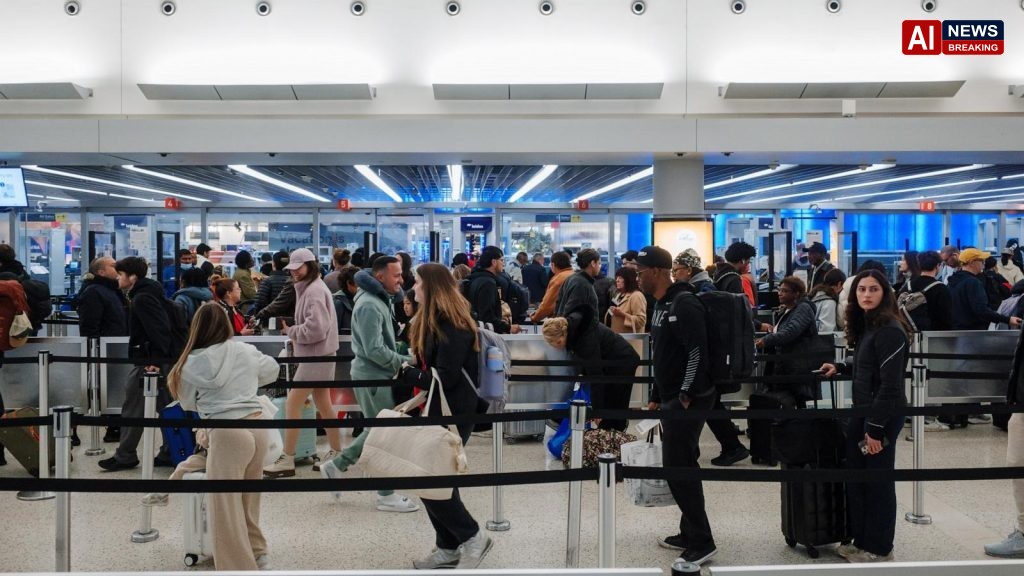
US travelers facing long airport lines, bad weather in the run up to Thanksgiving - AI News Breaking
Thanksgiving is traditionally the busiest travel period of the year in the United States, and this week the nation’s airports, highways and rail hubs are once again under pressure. Federal data shows that an estimated 20 million Americans are on the move, a figure that rivals the pre‑pandemic peaks of 2019. Airlines have responded by adding hundreds of extra flights, but the surge in demand is meeting an equally dramatic rise in disruptions..
Weather patterns that have already rattled the Midwest and the East Coast are now converging with the seasonal influx of passengers, creating a perfect storm of delays, cancellations and crowded terminals that is testing both travellers and the industry’s capacity to cope.At New York’s John F. Kennedy International, the busiest airport in the country, queues for security checkpoints have stretched well beyond the usual 30‑minute wait times. Passengers report lining up for up to two hours before reaching a screening lane, a situation amplified by a sudden bout of rain that has left the tarmac slick and forced ground crews to slow aircraft movements. Airlines such as Delta and American have already announced a series of flight cancellations, citing “operational constraints” linked to the wet conditions..
The airport’s own spokesperson warned that the weather could worsen over the weekend, urging travellers to arrive early and consider alternate routes.Further south, Baltimore/Washington International Thurgood Marshall Airport is grappling with a different set of challenges. A low‑pressure system moving across the Mid‑Atlantic has brought intermittent snow showers, prompting the Federal Aviation Administration to issue a temporary ground stop for several carriers. The stoppage, which began early Thursday morning, has resulted in a backlog of departures that is expected to ripple through the day’s schedule..
Passengers stranded at the terminal describe cramped waiting areas, limited food options and a growing sense of frustration as the airline’s rebooking system struggles to accommodate the surge in demand.In the heart of the country, Chicago O’Hare International Airport, a critical hub for both domestic and international traffic, is confronting a mix of snow and wind that is hampering both runway clearance and gate access. The National Weather Service issued a winter storm warning for the region, predicting up to six inches of snowfall and gusts exceeding 30 mph. As a result, the airport has implemented a “de‑icing priority” protocol, which, while essential for safety, adds additional turnaround time for each aircraft..
Airline officials say that the combined effect of weather delays and the sheer volume of Thanksgiving travellers could push the airport’s on‑time performance metric below 60 percent for the next 48 hours.On the West Coast, the situation is no less acute, albeit for different reasons. Coastal flooding triggered by a series of heavy rainstorms has forced the closure of several access roads to Los Angeles International Airport. The flooding has also impacted the airport’s cargo facilities, delaying the movement of freight that is critical for holiday supply chains..
United Airlines, which operates a major hub at LAX, announced that a number of inbound flights will be diverted to alternate airports such as San Diego and Phoenix, adding further strain on connecting passengers who must now navigate additional ground transportation hurdles.The ripple effects of these disruptions are being felt beyond the airports themselves. Major interstate highways that link the East and Midwest are experiencing congestion that rivals the worst of the pandemic‑era travel spikes. The I‑95 corridor, a primary route for travellers heading toward the Northeast, has seen traffic slow to a crawl in sections of New Jersey and Pennsylvania after a series of minor accidents, themselves linked to slick road conditions..
State transportation departments have deployed additional snowplows and salt trucks, but the sheer volume of vehicles—estimated at over 1 million in the corridor alone—means that many motorists are stuck for hours, often with limited access to food and restrooms.Rail passengers are not immune to the weather‑related chaos. Amtrak’s Northeast Corridor, which serves more than 500,000 riders annually, has been forced to cancel several Northeast Regional services due to track obstructions caused by fallen leaves and debris, a problem compounded by the rain’s effect on rail adhesion. In the Midwest, the Amtrak Empire Builder, which traverses the snow‑laden plains of North Dakota and Minnesota, has been delayed by up to four hours as crews work to clear snow drifts from the tracks..
The rail operator’s spokesperson emphasized that safety remains the top priority, but acknowledged that the cumulative delays could push some travellers past their Thanksgiving dinner appointments.Airlines are also grappling with staffing shortages that have been exacerbated by the weather. Pilots and flight attendants who were scheduled for holiday routes have reported fatigue and increased stress, leading some carriers to pull staff from less critical flights to maintain service on the most heavily trafficked routes. The pilots’ union, representing roughly 30 percent of the nation’s commercial pilots, warned that the combination of adverse weather and high passenger volumes could lead to “unprecedented levels of crew fatigue,” a factor that could further depress on‑time performance.Consumer advocacy groups have taken the opportunity to remind travellers of their rights in the face of widespread delays..
The Department of Transportation’s Aviation Consumer Protection division has issued a reminder that airlines must provide refunds for cancelled flights and that passengers are entitled to reasonable accommodations when stranded for extended periods. However, many passengers have reported difficulty securing hotel vouchers or meal vouchers, citing a “voucher shortage” as airlines struggle to meet the sudden surge in demand for such services.In response to the growing crisis, the Federal Aviation Administration has activated its National Operations Committee, a body that coordinates among airlines, airports and the military to manage severe weather impacts. The committee’s latest briefing indicated that more than 150 aircraft have been placed in a holding pattern over the eastern seaboard, a measure designed to reduce runway congestion but one that adds fuel costs and further delays..
The FAA also announced that it will prioritize the release of aircraft that have already been cleared for take‑off, hoping to smooth the flow once the weather eases.While the immediate outlook suggests a continued period of inconvenience for millions of Americans, industry analysts point to a longer‑term trend that may mitigate future disruptions. Investment in next‑generation weather‑prediction tools, coupled with the rollout of more flexible scheduling software, is expected to give airlines greater agility in responding to sudden changes. Moreover, the growing adoption of remote work policies could reduce the pressure on holiday travel peaks, as some employers allow employees to work from alternative locations during the Thanksgiving week.For now, however, the advice from experts remains consistent: travellers should monitor weather updates closely, keep an eye on airline communications, and be prepared for the possibility of altered itineraries..
Updated: November 25, 2026