The Supreme Court will decide whether assault weapons bans violate the Second Amendment
 A Critic of Beijing Falls Short in Taiwan’s Key Mayoral Election
 EPA says no rise in contamination after Army detonates lead azide stockpile in Iowa
 Israeli Strike Kills 2 Workers at Gaza Clinic, Doctors Without Borders Says
 McQueen Pre-Fall 2027
London imposes fare cap and noise limits on pedicab operators
**
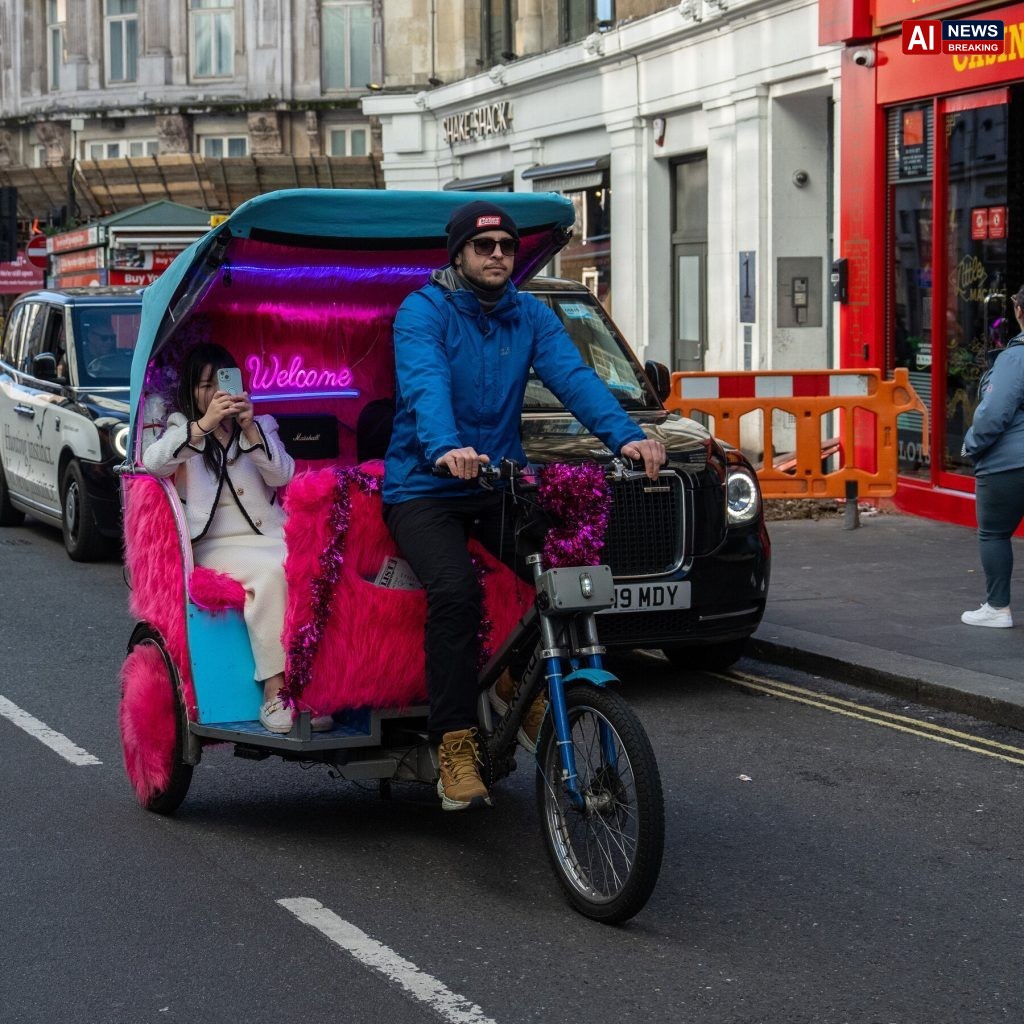
London Banning Noise and Capping Fares for Its Pedicabs - AI News Breaking
london imposes fare noise:
London has introduced a new set of rules for pedicab operators that will take effect next Friday, marking the city’s first attempt to regulate the growing fleet of human‑powered rickshaws. The measures, announced by Transport for London (TfL) this week, will cap fares and impose limits on the noise produced by the vehicles, a move that has sparked debate among commuters, local businesses and the operators themselves.The fare cap, which will set a maximum rate of £7.50 for rides up to five kilometres, is designed to make pedicabs a more affordable alternative to taxis and ride‑hailing services. TfL said the limit will apply to all licensed operators, regardless of whether they use the traditional red‑and‑yellow design or more recent variations such as blue and black models that have been popular with tourists..
The cap will also be enforced by the new licensing system, which will require operators to register each vehicle and carry a valid licence that can be checked by passengers through a mobile app.“We are concerned that unregulated fares are driving up costs for both operators and users,” said TfL’s senior policy officer. “By setting a standard price, we hope to level the playing field and protect consumers from price gouging while maintaining the viability of the industry.” The cap will be reviewed annually by TfL’s regulatory committee, which will consider any changes in operating costs or market conditions.Noise restrictions are the second pillar of the new policy. Pedicabs are known for their loud, revving engines and the constant clatter of their gears, which has drawn complaints from residents in dense urban neighbourhoods..
The new rule will require all vehicles to be fitted with sound‑attenuating materials, with a maximum decibel level of 65 in residential zones and 70 in commercial areas. In addition, operators will be prohibited from using any form of loud advertising or music that could disrupt the surrounding environment.The noise control measures are intended to address concerns that have been raised by residents in the City of Westminster, where a surge in pedicab usage has coincided with reports of increased traffic congestion and pedestrian disturbance. “We have been receiving complaints about the constant noise that can be heard from streets like Jermyn Street and Whitehall,” said a spokesperson from the Westminster council..
“These new restrictions should help mitigate the issue and make the city more pleasant for everyone.”Pedicab operators have mixed feelings about the new regulations. Some welcome the clarity and the promise of increased legitimacy, while others argue that the constraints will undermine their profitability. A spokesperson for the Pedicab Association, which represents around 200 operators across the capital, said the organisation would support the fare cap as a way to attract new riders but called for a more flexible approach to noise limits.“We need to recognise that many operators run on tight margins,” the spokesperson said..
“Strict noise restrictions could increase maintenance costs and reduce the number of vehicles on the road, which would be counter‑productive for the sector.” The association has already started lobbying TfL for an exemption clause that would allow operators in high‑traffic areas to use quieter, hybrid engines that still meet the required decibel threshold.The new rules also coincide with TfL’s broader strategy to reduce urban congestion and promote greener forms of transport. Pedicabs, being human-powered, are seen as an environmentally friendly option that can reduce reliance on motorised vehicles in congested areas. By setting a cap on fares, TfL hopes to keep pedicabs competitive against taxis and ridesharing services, encouraging commuters to choose a zero‑emission alternative..
Meanwhile, the noise restrictions are part of an ongoing effort to improve air quality and reduce noise pollution in the city’s most densely populated districts.The licensing system will be rolled out in stages, beginning with a pilot programme that will cover 50 vehicles in central London. Operators will need to submit a detailed safety report and demonstrate that their vehicles meet the new noise standards before receiving a licence. The pilot will last for six months, after which TfL will evaluate its effectiveness and decide whether to expand the system nationwide.Critics have expressed concerns about the enforcement of the new rules..
“It will be difficult to monitor noise levels effectively, especially in areas where pedicabs are operating at high speeds or in narrow streets,” said an analyst from the London Transport Institute. “Without a robust monitoring framework, there is a risk that operators will either ignore the regulations or find loopholes.”TfL has responded by announcing that it will deploy a network of acoustic sensors across key hotspots in the city, coupled with a mobile app that allows passengers to report violations. Operators will face fines of up to £1,000 for non‑compliance with noise standards and could lose their licence if they are found in breach of the fare cap.The new regulations are part of a larger conversation about how cities can balance the needs of small‑business operators, commuters, and residents..
While the fare cap aims to make pedicabs more affordable and the noise restrictions seek to protect the quality of life in densely populated areas, the success of the policy will depend on effective enforcement and the willingness of operators to adapt to the new framework. As London continues to evolve its transport policies, the pedicab sector will likely play a small but visible role in shaping the city’s future mobility landscape..
Updated: November 26, 2026
Insight: London’s new pedicab cap and noise limits signal a cautious embrace of micro‑mobility that prioritises consumer protection over operator flexibility, risking a shrinkage of the sector if enforcement proves uneven.
If the city can tighten monitoring, these rules could turn the human‑powered fleet into a credible, eco‑friendly alternative to taxis—yet without adaptive exemptions, operators may be pushed into a compliance‑driven niche that limits growth and innovation.