
 The Supreme Court will decide whether assault weapons bans violate the Second Amendment
 A Critic of Beijing Falls Short in Taiwan’s Key Mayoral Election
 EPA says no rise in contamination after Army detonates lead azide stockpile in Iowa
 Israeli Strike Kills 2 Workers at Gaza Clinic, Doctors Without Borders Says
 McQueen Pre-Fall 2027
Strobe Talbott, former Time magazine reporter and deputy secretary of state, has died
**
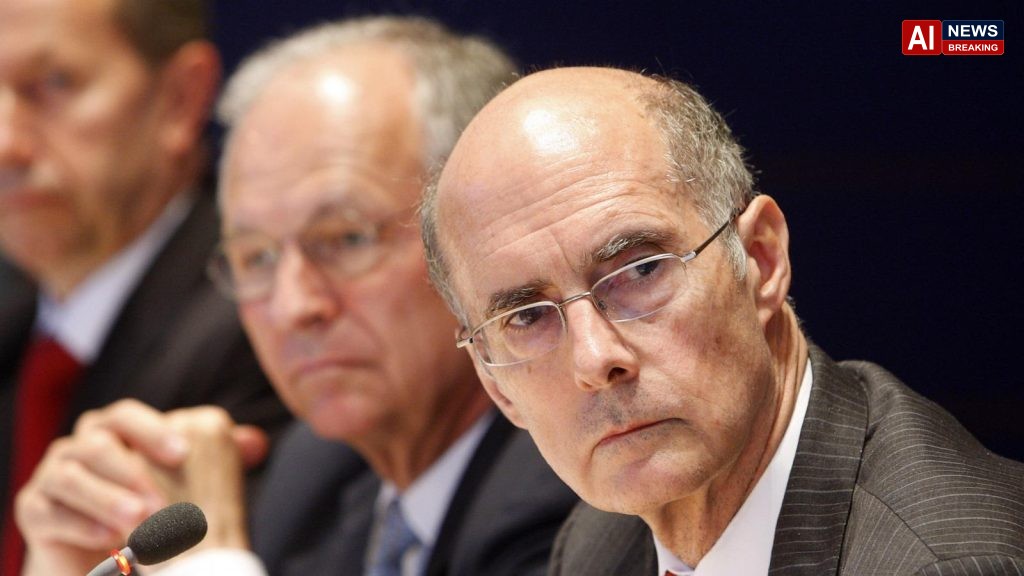
Strobe Talbott, former Time magazine reporter and deputy secretary of state, has died - AI News Breaking
strobe talbott former time:
Strobe Talbott, a veteran journalist and seasoned diplomat, died on Tuesday at the age of 80, leaving behind a legacy that spanned the corridors of newsrooms, the halls of the State Department, and the think‑tank world of international policy. His death, confirmed by family members, was attributed to complications of a long‑standing illness, though the exact cause has not been disclosed. The news reverberated across both media and diplomatic circles, prompting reflections on a career that blended reportage with high‑level statecraft.Born in 1946 in New York City, Talbott grew up in a family steeped in public service; his father, a former diplomat, and his mother, an educator, instilled in him a curiosity about global affairs that would shape his professional trajectory..
He attended the University of Michigan, where he earned a degree in history before moving on to Columbia University’s School of International and Public Affairs. It was at Columbia that he first crossed paths with the future political elite who would later become his colleagues and, in some cases, his political allies.Talbott entered the world of journalism in the early 1970s, joining Time magazine as a reporter covering foreign affairs. His tenure at the publication coincided with some of the Cold War’s most pivotal moments, including the détente negotiations, the Soviet invasion of Afghanistan, and the rise of the Solidarity movement in Poland..
Known for his meticulous research and clear prose, he quickly rose through the editorial ranks, eventually becoming chief diplomatic correspondent. His articles, often featured on the magazine’s cover, were praised for their ability to distill complex diplomatic maneuvers into accessible narratives without sacrificing nuance.The transition from journalism to public service came in 1995, when President Bill Clinton appointed Talbott as a special assistant to the President for national security affairs. In this role, he was instrumental in shaping the administration’s approach to post‑Cold War Europe, advocating for the expansion of NATO and supporting the integration of former Soviet republics into Euro‑Atlantic structures..
His deep understanding of the Soviet system, honed through years of reporting, gave him a unique perspective that earned him the confidence of both American policymakers and their European counterparts.In 1998, Talbott was elevated to the position of Deputy ary of State for a brief but consequential period. During his tenure, he oversaw a range of diplomatic initiatives, from the implementation of the Dayton Accords that ended the Bosnian war to the negotiation of the Good Friday Agreement in Northern Ireland. Colleagues recall his calm demeanor in crisis rooms, noting that his ability to listen and synthesize divergent viewpoints often defused tensions that might otherwise have escalated..
While some critics argued that his diplomatic style was overly cautious, proponents point to the relative stability of several conflict zones during his time in office as evidence of his effectiveness.After leaving the State Department in 2001, Talbott returned to the policy arena as a senior fellow at the Brookings Institution, where he co‑directed the Center on the United States and Europe. His scholarship during this period focused on transatlantic relations, nuclear non‑proliferation, and the evolving nature of American power in a multipolar world. He authored several influential papers, including a 2004 report that warned of the strategic risks posed by a resurgent Russia, a theme that would reappear in his later public commentary as tensions rose in Eastern Europe.Talbott’s contributions were not confined to the United States..
He maintained close ties with European leaders, most notably with German Chancellor Helmut Kohl and later with French President François Hollande, both of whom praised his ability to bridge the Atlantic divide. In 2014, he served as a senior advisor to the United Nations‑backed peace talks in Ukraine, offering counsel that emphasized diplomatic engagement over military escalation. Although the conflict remains unresolved, his input was credited with keeping diplomatic channels open during the most volatile phases of the crisis.Beyond his official duties, Talbott was known for his mentorship of younger journalists and diplomats..
Former Time reporters have recounted his willingness to provide constructive feedback on their work, while a generation of State Department officials cite his guidance as pivotal in shaping their approach to international negotiations. His personal archives, now being donated to the Library of Congress, are expected to provide scholars with a rich trove of primary sources that illuminate the interplay between media and policy during a transformative era.Family and close friends described Talbott as a devoted husband and father, noting his love for sailing and classical music, pursuits that offered him respite from the pressures of public life. His wife, a former diplomat herself, and their three children issued a brief statement expressing gratitude for the outpouring of tributes and urging the public to remember the importance of “thoughtful, measured engagement in a world that often seems hurried and noisy.” The family also announced plans for a private ceremony, respecting Talbott’s preference for modesty even in death.Strobe Talbott’s death marks the passing of a figure who navigated the shifting sands of late‑20th‑century geopolitics with a blend of journalistic rigor and diplomatic finesse..
As the United States confronts new challenges—from great‑power competition to climate‑driven migration—his career offers a reminder of the value of informed analysis, patient negotiation, and the enduring relevance of transatlantic partnerships. In the words of a former colleague, “He taught us that understanding history is not a scholarly exercise but a practical tool for building a more stable world.” His contributions will continue to be studied and, perhaps, emulated by those who seek to balance the twin imperatives of truth‑telling and policy‑making in an increasingly complex global landscape..
Updated: November 26, 2026
Talbott’s blend of newsroom rigor with diplomatic tact underscores that today’s geopolitical dead‑ends are often solvable only when policymakers treat information as a strategic asset, not a background note.
His legacy hints that a new generation of “journalist‑diplomats” could be the missing link in





