The Supreme Court will decide whether assault weapons bans violate the Second Amendment
 A Critic of Beijing Falls Short in Taiwan’s Key Mayoral Election
 EPA says no rise in contamination after Army detonates lead azide stockpile in Iowa
 Israeli Strike Kills 2 Workers at Gaza Clinic, Doctors Without Borders Says
 McQueen Pre-Fall 2027
DMK to support Delimitation Bill as there is no loss for Tamil Nadu: A. Raja
**
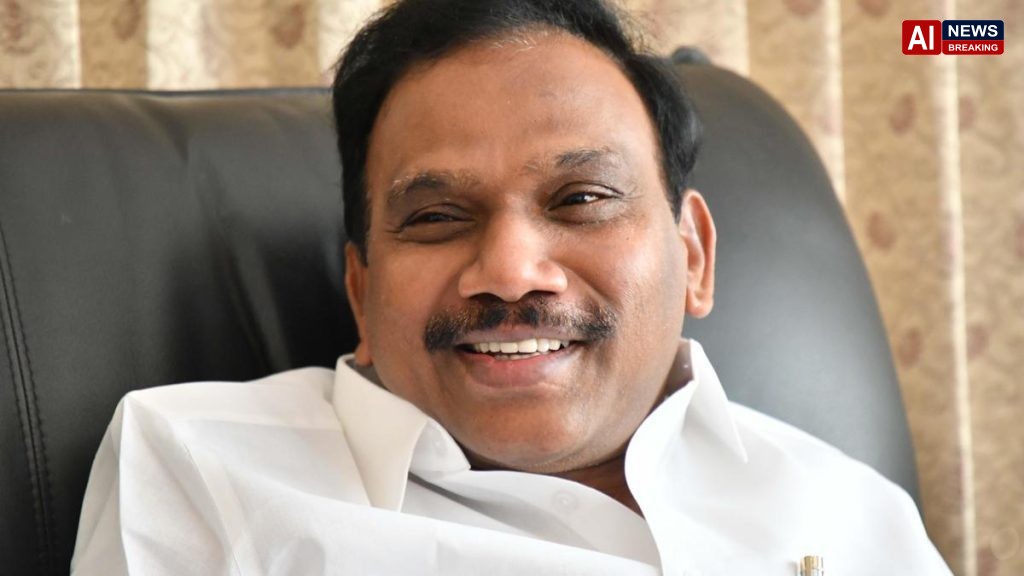
DMK to support Delimitation Bill as there is no loss for Tamil Nadu: A. Raja - AI News Breaking
support delimitation bill there:
DMK to support Delimitation Bill as there is no loss for Tamil Nadu: A. Raja The Dravida Munnetra Kazhagam (DMK) has announced its support for the central government’s Delimitation Bill, a move that marks a notable shift from its historically adversarial stance towards the Bharatiya Janata Party (BJP). Party veteran A. Raja clarified that the decision was taken after a careful review of the bill’s provisions, emphasizing that the legislation does not jeopardise Tamil Nadu’s political interests..
The announcement came during a press conference in Chennai, where Raja answered queries about the party’s change in position and its implications for the state’s electoral map. Delimitation, the process of redrawing parliamentary and assembly constituencies based on the latest census data, is a routine exercise intended to ensure equitable representation. The current bill, tabled in Parliament, seeks to implement changes based on the 2021 census, with the objective of balancing population disparities across constituencies..
While the BJP has championed the bill as a step towards modernising India’s electoral framework, opposition parties have raised concerns about potential political gerrymandering and the impact on regional balance. For the DMK, the key consideration has been whether the bill aligns with its long‑standing demand for a fair and transparent delimitation exercise. Raja noted that the party’s core principle is to safeguard Tamil Nadu’s demographic weight and to prevent any dilution of its legislative strength..
“We have examined the draft clauses, and there is no provision that would erode the number of seats or undermine the representation of our people,” he said. This assessment, according to Raja, underpins the DMK’s endorsement of the legislation. Critics have pointed out that the DMK’s support could be interpreted as a strategic move to gain political leverage ahead of the next general elections..
The party, which currently holds a dominant position in the state government, may be seeking to cultivate a cooperative relationship with the centre to secure development projects and fiscal allocations. Nonetheless, Raja dismissed such speculation, insisting that the decision is rooted in principle rather than expediency. “Our stance is not driven by electoral calculus but by an objective analysis of the bill’s content,” he asserted..
The opposition’s reaction to the DMK’s stance has been mixed. The All India Anna Dravida Munnetra Kazhagam (AIADMK), the main rival in Tamil Nadu, reiterated its skepticism, warning that any delimitation could alter the political landscape to its disadvantage. Meanwhile, the Indian National Congress welcomed the DMK’s support, viewing it as a sign of bipartisan consensus on a technical issue that should rise above partisan politics..
Political analysts suggest that the DMK’s move may encourage other regional parties to reassess their positions on the bill. The central government, led by Prime Minister Narendra Modi, has highlighted the Delimitation Bill as part of a broader agenda to strengthen democratic institutions. In a recent statement, the Ministry of Law and Justice emphasized that the bill incorporates safeguards to prevent manipulation, including an independent commission to oversee the redrawing of boundaries..
The ministry also assured that the number of Lok Sabha seats for each state will remain unchanged, a factor that appears to have alleviated the DMK’s primary concerns. Raja’s comments also touched upon the historical context of delimitation in India. The last major exercise was conducted in the early 2000s, following the 2001 census, and resulted in significant adjustments to constituency boundaries..
However, the process was halted after the 84th Constitutional Amendment, which froze the total number of seats until after the 2026 census. The current bill proposes to lift that freeze partially, allowing for a reallocation of seats based on updated population figures while retaining the overall cap. This nuanced approach seeks to balance demographic realities with political stability..
Stakeholders from civil society have welcomed the DMK’s clarification, noting that transparent dialogue can reduce mistrust surrounding delimitation. Non‑governmental organisations monitoring electoral reforms have called for robust public consultations and the publication of detailed maps before finalising the new boundaries. They argue that such openness would mitigate accusations of bias and ensure that the process reflects the will of the electorate across diverse regions..
Economic implications of the delimitation exercise have also been raised, particularly concerning resource allocation and development funding. Constituency reconfiguration can affect the distribution of central schemes, as funds are often allocated on a per‑seat basis. By supporting the bill, the DMK signals its intent to engage constructively with the centre to protect Tamil Nadu’s share of national resources..
Raja highlighted that a stable and predictable constituency framework can attract investment, as businesses favour regions with clear administrative demarcations. The political calculus surrounding the Delimitation Bill is further complicated by upcoming state assembly elections in Tamil Nadu, scheduled for 2026. While the current legislative term runs until 2026, parties are already positioning themselves for the next electoral cycle..
The DMK’s endorsement may be aimed at pre‑empting any adverse outcomes that could arise from a contested delimitation process. By voicing support early, the party hopes to influence the shaping of constituencies in a manner that reflects its demographic strengths. As the bill moves through parliamentary committees, amendments and recommendations are expected..
The DMK has pledged to monitor the proceedings closely and to raise any concerns that may emerge during the detailed scrutiny stage..
DMK’s rare backing of the Delimitation Bill signals a calculated pivot toward federal cooperation, betting that early acquiescence will let it shape constituency boundaries rather than confront a potentially hostile central mandate.
If the party’s gamble pays off, Tamil Nadu could lock in its electoral heft and attract greater central funding—yet the move also risks normalizing a collaborative posture that may erode its traditional anti‑BJP credibility among regional voters.