A Critic of Beijing Falls Short in Taiwan’s Key Mayoral Election
 EPA says no rise in contamination after Army detonates lead azide stockpile in Iowa
 Israeli Strike Kills 2 Workers at Gaza Clinic, Doctors Without Borders Says
 McQueen Pre-Fall 2027
 Mushfiqur Rahim to retire from Test cricket in February 2027
EPA says no rise in contamination after Army detonates lead azide stockpile in Iowa
**
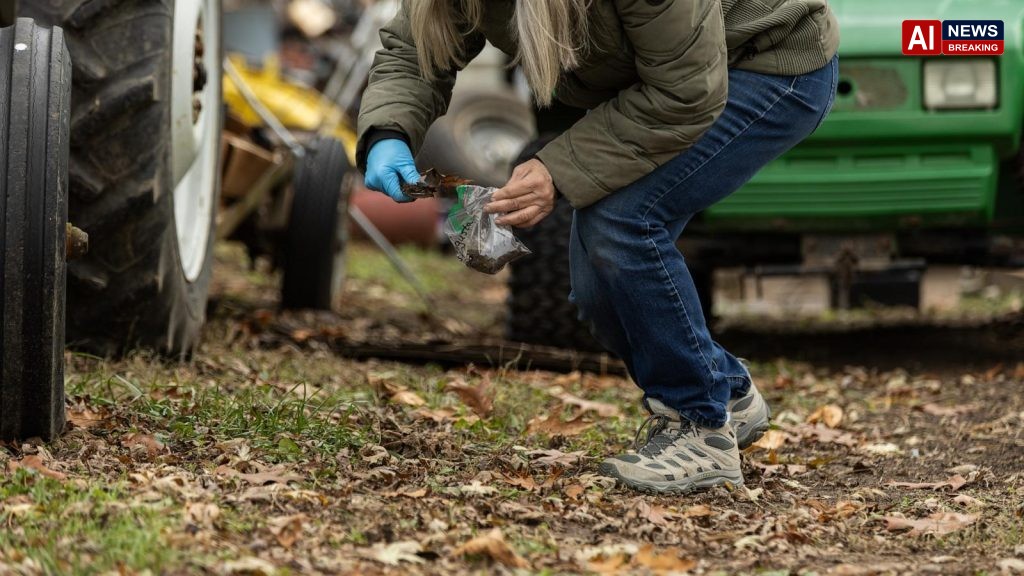
EPA says no rise in contamination after Army detonates lead azide stockpile in Iowa - AI News Breaking
says rise contamination army:
Environmental Protection Agency has reported that preliminary laboratory analyses show no measurable increase in lead concentrations in the water bodies that provide drinking water to communities in southeastern Iowa following the controlled demolition of a five‑ton stockpile of lead azide by the U.S. The findings, released in a briefing on Thursday, are based on samples collected from the Des Moines River, several tributaries and the municipal wells that draw from the underlying aquifer. According to the agency, the data suggest that the detonation, which took place on 12 June at the Army’s 1‑2‑5 Training Range near Ottumwa, did not result in detectable leaching of the explosive material into the surrounding hydrological system.Lead azide, a primary explosive commonly used in detonators, is highly sensitive to shock, friction and heat..
When it detonates, it decomposes rapidly into elemental lead, nitrogen gas and a small amount of other by‑products. While the metal itself is a known neurotoxin, the risk to public health from an isolated explosion is generally considered low unless the fallout contaminates food chains or drinking water supplies. The Army’s decision to destroy the aging stockpile, which had been stored for more than three decades, followed a safety review that concluded the material posed an unacceptable risk of accidental ignition or degradation over time.The EPA’s involvement began months before the demolition, when the agency signed a memorandum of understanding with the Department of Defense to monitor environmental impacts in real time..
Water samples were taken at baseline levels in March, establishing reference concentrations for lead, copper, zinc and other trace elements. After the blast, the EPA’s Office of Water dispatched a mobile field lab to collect water and sediment samples at intervals of one hour, 24 hours, three days and one week post‑detonation. All samples were analysed using inductively coupled plasma mass spectrometry, a method capable of detecting lead at parts‑per‑billion concentrations.According to the preliminary report, lead levels in the Des Moines River upstream of the test site remained at 2.3 micrograms per litre, well below the EPA’s maximum contaminant level of 15 micrograms per litre for drinking water..
Downstream measurements showed a marginal rise to 2.7 micrograms per litre, a change the agency attributes to normal variability rather than to the explosion. Similar patterns were observed in the smaller tributaries, where concentrations fluctuated within a narrow band of 1.8 to 3.0 micrograms per litre. The agency’s scientists also examined the municipal wells serving Ottumwa and the surrounding rural townships; none displayed an increase beyond the detection limit of 0.5 micrograms per litre.The EPA’s assessment also considered the potential for airborne dispersion of particulate lead..
Air monitoring stations positioned at a one‑kilometre radius recorded lead concentrations averaging 0.04 micrograms per cubic metre, again well under the National Ambient Air Quality Standard of 0.15 micrograms per cubic metre for a 24‑hour average. The agency noted that the majority of the explosive’s mass was converted to gaseous nitrogen, with the residual solid fraction captured by the range’s containment berms and subsequently removed for safe disposal.While the initial findings are reassuring, both the EPA and the Army have cautioned that ongoing monitoring will continue for at least twelve months to capture any delayed leaching that might arise from weathering of the containment area or from runoff during heavy rainfall. Monthly water and soil samples will be taken, and the data will be made publicly available through the EPA’s Envirofacts portal..
The agencies also plan to conduct a follow‑up health risk assessment to evaluate any cumulative exposure for vulnerable populations, such as children and pregnant women, who may rely on private wells not covered by municipal testing.Local officials have welcomed the preliminary report but remain vigilant. Ottumwa’s mayor, Karen Miller, said the city’s water treatment facilities are equipped to handle occasional spikes in contaminant levels, but stressed the importance of transparent communication. “Our residents deserve to know that their tap water is safe,” she told a press conference..
“We will keep a close eye on the data and work with state and federal partners to ensure any potential issue is addressed promptly.”Environmental groups, while acknowledging the absence of immediate contamination, have called for a broader review of how legacy munitions are stored and disposed of. The Sierra Club’s Iowa chapter issued a statement urging the Department of Defense to accelerate the removal of obsolete explosives from active training sites and to adopt non‑explosive demolition methods where feasible. The group pointed to incidents in other states where improper disposal of lead‑based compounds has led to long‑term soil and water pollution.The Army’s spokesperson, Lieutenant Colonel James Harper, defended the operation as a necessary precaution..
“The decision to detonate the lead azide was made after extensive risk analysis and consultation with environmental experts,” he said. “Our priority is the safety of our personnel and the surrounding communities. The early results indicate that our mitigation measures were effective, and we will continue to cooperate with the EPA to monitor the environment.”In sum, the early data suggest that the controlled detonation of the five‑ton lead azide stockpile has not compromised the water quality of the Des Moines River basin or the municipal supplies that depend on it..
Nevertheless, the agencies involved have emphasized that continued observation is essential to confirm these findings over the longer term. The collaborative approach taken by the Army, the EPA and state authorities may serve as a model for future disposal of hazardous munitions, balancing the imperative of public safety with the need to protect environmental health..
Updated: November 28, 2026
The clean‑water readings hint that, with rigorous pre‑planning, even the dirtiest military munitions can be neutralized without harming communities—suggesting a new benchmark for hazardous‑waste disposal. Yet the 12‑month watch‑list underscores that “no immediate spike” isn’t a blanket