
 Indian engineering student dies in U.S. internship.
  Andhra CM alerts officials about the cyclone in Bay of Bengal
  Trump at South Florida rally revives the idea of military intervention in Cuba after Iran
 Trump backs Clarity Act to clarify crypto regulation
**
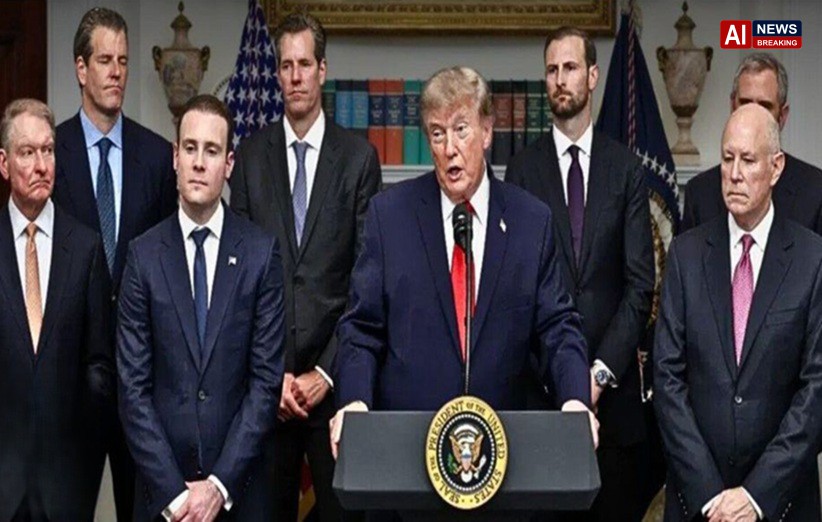
Trump backs Clarity Act to clarify crypto regulation - AI News Breaking
trump backs clarity clarify:
In a significant shift in American financial policy, the administration of US President Donald Trump is intensifying its efforts to reshape the regulatory landscape for digital assets. At the heart of this initiative is the proposed Clarity Act, a legislative measure designed to establish definitive and transparent rules for the rapidly evolving cryptocurrency sector. The President’s public endorsement of the bill has sent immediate ripples through global markets, with Bitcoin surging past the psychological barrier of $70,000..
This price action reflects a broader sentiment of relief among investors who have long feared that ambiguous regulations would stifle innovation and drive capital overseas. The movement represents more than a mere fluctuation in asset prices; it signals a potential realignment of geopolitical financial power, as the United States attempts to reclaim its status as the primary hub for digital asset innovation.The Clarity Act, as currently drafted, seeks to resolve the long-standing jurisdictional conflicts between federal agencies that have overseen the crypto industry in an often contradictory manner. For years, investors and developers have navigated a complex maze where the Securities and Exchange Commission (SEC) and the Commodity Futures Trading Commission (CFTC) frequently pulled in opposite directions regarding the classification of tokens..
By establishing clear criteria for what constitutes a security versus a commodity, the bill aims to provide the legal certainty necessary for institutional investment to flourish. This clarity is viewed by industry proponents as a prerequisite for the maturation of the digital asset economy, moving it from the speculative fringes into the mainstream of global finance.Despite the enthusiastic reception from the crypto community, the legislative path for the Clarity Act remains fraught with political obstacles. The bill currently faces a stalemate in the Senate, where debates have focused less on the technicalities of digital asset regulation and more on broader ethical provisions included in the broader legislative package..
Critics and supporters alike acknowledge that while the core crypto provisions are widely regarded as sensible, the surrounding political negotiations have slowed its progress. This delay highlights the challenges of passing modern tech legislation in a polarized environment, where every regulatory tweak is scrutinized through the lens of partisan ideology. Nevertheless, the sustained pressure from the White House suggests that the administration views this as a priority that cannot be indefinitely postponed.The market’s reaction to Trump’s advocacy has been immediate and pronounced..
Bitcoin, the flagship cryptocurrency, broke through the $70,000 threshold, a level that many analysts had predicted would serve as significant resistance. This breakout was not isolated to Bitcoin alone; a wave of enthusiasm swept through the equity markets, with crypto-linked stocks experiencing sharp rallies. Companies that mine digital assets or provide infrastructure for blockchain technology saw their valuations rise, reflecting investor confidence that a favorable regulatory environment would boost profitability and operational stability..
The surge underscores the sensitivity of crypto markets to political signals, demonstrating that regulatory hope is often a more powerful driver of price than immediate technical fundamentals.For the cryptocurrency industry, the push for the Clarity Act represents a potential end to an era of regulatory uncertainty that has defined the sector since the massive market corrections of early 2022. During that period, the failure of major lending platforms and exchanges was exacerbated by a lack of clear guidelines, leading to a crisis of confidence that took months to resolve. Industry leaders argue that the proposed legislation would prevent similar scandals by ensuring that all entities operate under a known set of rules..
This transparency is crucial for attracting traditional financial institutions, which have been hesitant to engage fully with crypto markets due to the risk of reputational damage and regulatory penalties.However, the debate surrounding the ethics provisions in the Senate has introduced a layer of complexity that extends beyond the digital asset community. Lawmakers are concerned that certain clauses may create conflicts of interest or provide loopholes for political networking within the financial sector. These concerns have led to calls for amendments and additional scrutiny, slowing the momentum of the bill..
While some senators argue that these ethical safeguards are necessary to maintain public trust in financial markets, others contend that they distract from the primary goal of modernizing financial regulation. The tension illustrates the broader challenge of integrating emerging technologies into existing legal frameworks without compromising established norms of accountability.The impact of the Clarity Act extends beyond the borders of the United States, influencing global perceptions of America’s role in the digital economy. Countries such as the European Union, which has implemented its own comprehensive framework for crypto-assets, are watching the US developments closely..
If the United States successfully enacts clear and fair regulations, it could draw significant investment and talent back to American shores, reversing the trend of regulatory arbitrage that has seen many crypto firms relocate to more friendly jurisdictions. This potential repatriation of capital is seen by economists as a key factor in maintaining the US dollar’s dominance and fostering technological innovation in the broader financial sector.Critics of the proposed legislation, however, remain skeptical about the ability of Congress to keep pace with the rapid technological advancements in the blockchain space. They argue that static laws may quickly become obsolete, creating new bottlenecks and legal ambiguities within a short period..
There is also concern that the focus on immediate price boosts may overshadow the need for robust consumer protection measures. Critics warn that without stringent safeguards, the industry could remain vulnerable to fraud and manipulation, potentially harming retail investors who are increasingly entering the market. These arguments highlight the delicate balance that lawmakers must strike between fostering innovation and protecting the public interest.The surge in Bitcoin’s price has also reignited discussions about the broader macroeconomic implications of widely adopted digital assets..
As institutional adoption grows, the volatility associated with cryptocurrencies is beginning to decrease, suggesting a maturation of the market. However, the correlation between crypto prices and traditional equity markets remains a point of contention among analysts. Some argue that cryptocurrencies are becoming a distinct asset class with its own drivers, while others maintain that they remain heavily influenced by broader risk sentiment..
The impact of the Clarity Act on this correlation will be closely monitored in the coming months, as it could provide clues about the long-term trajectory of digital assets in the global economy.As the Senate continues to deliberate, the cryptocurrency community remains cautiously optimistic. Industry groups have increased their lobbying efforts, aiming to ensure that the final version of the bill retains its core principles of clarity and fairness. The potential passage of the Clarity Act is viewed as a historic moment for the United States financial system, marking a shift from skepticism to engagement with digital assets..
Whether this shift leads to sustained growth or merely a temporary boost will depend on the durability of the regulations and the ability of the market to deliver on the promise of decentralization and accessibility.The political dynamics surrounding the bill reflect a broader transformation in how American policymakers view technology and finance. The previously adversarial relationship between regulators and crypto firms is evolving into a more collaborative, albeit complex, dialogue. This evolution is driven by the recognition that ignoring digital assets is no longer a viable option for maintaining economic competitiveness..
The stakes are high, as the outcome of these legislative.
Updated: August 20, 2026
Summary: President Trump’s backing of the “Clarity Act” has spurred a $70,000-plus Bitcoin rally, signalling a push to finally pin down crypto regulation. The bill’s fate in a split Senate underscores the tension between clearing legal grey areas and navigating partisan and ethical roadblocks.
Trump’s crypto push isn’t just a market catalyst; it’s a strategic gamble to re‑anchor U.S. financial power by turning regulatory certainty into a magnet for global talent and capital.
If the Clarity Act survives the Senate tug‑of‑war, the real test will be whether it can evolve fast enough