
 Russians across
  Jagan to move Supreme Court again over ‘obstruction’ of YSRCP nominees in Andhra local body polls
  Pentagon directive bans troops from using nonpublic info to bet in prediction markets
  Plaintiffs in Trump arch project seek injunction to stop administration from beginning work Nov. 5
 Why Are Sugar Prices Rising in India Centre Lists Five Key Reasons Behind 6070 Retail Spike
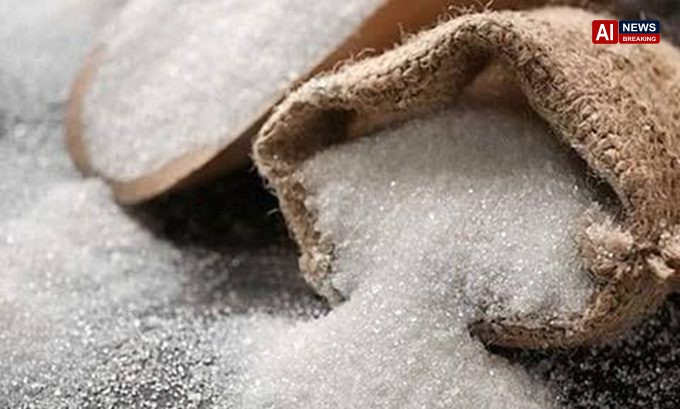
Why Are Sugar Prices Rising in India Centre Lists Five Key Reasons Behind 6070 Retail Spike - AI News Breaking
sugar prices rising india:
New Delhi: Why are sugar prices rising? The price of white sugar in India’s retail market has jumped sharply, climbing to ₹60-70 per kilogram from ₹48.18 a month ago. The surge has sent ripples through households, confectionery manufacturers and the broader food‑processing sector, prompting both political leaders and industry bodies to demand an explanation.
While some commentators have pointed to the growing use of sugarcane for ethanol production as a primary driver, the Union Ministry of Consumer Affairs has categorically dismissed that notion. In a detailed statement released on Tuesday, the Centre outlined five distinct factors that it believes are fueling the price hike. First, the Ministry highlighted that ethanol output from sugarcane has actually fallen compared to the same period last year.
According to the ministry, several factors are simultaneously affecting the sugar market, including seasonal demand, weather-related crop damage, supply conditions and market dynamics.
5 Key Points
- Retail sugar prices have risen sharply, reportedly reaching ₹60–70 per kg from around ₹48.18 a month earlier.
- The Centre has rejected the claim that ethanol production is the main reason for the sugar price increase.
- Government data indicates that ethanol production from molasses has declined by around 7% compared with the corresponding period.
- Festive-season demand for sweets, beverages and processed foods has increased pressure on sugar supplies.
- Weather-related damage to sugarcane crops in major producing states is also tightening the supply chain and supporting higher prices.
Data from the Ministry of Petroleum and Natural Gas shows a 7 % dip in ethanol volumes derived from molasses, reflecting a slowdown in the blending programme and reduced demand from oil refiners. This, the government argues, contradicts the narrative that sugarcane is being diverted away from sugar production, and therefore cannot be blamed for the current price spike. Second, the statement pointed to seasonal festive demand as a major contributor.
The period between Diwali and the New Year traditionally sees a surge in consumption of sweets, snacks and beverages, all of which rely heavily on sugar. Retailers report a 12‑15 % increase in sales volume compared with the same window in 2022, pushing up wholesale and retail rates. Analysts note that such demand spikes are often amplified by limited storage capacity and the need for producers to meet tight delivery windows, which can compress margins and lift prices.
Third, officials cited weather‑related crop damage across key sugarcane‑growing states as a significant factor. In Maharashtra, Karnataka and Tamil Nadu, unseasonal rains and unexpected cold snaps have damaged an estimated 8‑10 % of the harvested area, according to the Ministry of Agriculture. The reduced cane quality forces mills to reject a larger proportion of the cut, effectively tightening the supply chain.
The Ministry warned that if the monsoon patterns persist, the shortfall could deepen, adding further upward pressure on market rates. Fourth, the Centre referred to tight global sugar supplies that are reverberating in Indian markets. The International Sugar Organization’s latest outlook projects a 4 % contraction in world sugar output for the 2025/26 marketing year, driven by lower harvests in Brazil and Thailand.
Even though India remains a net importer of sugar, the global price index has risen by roughly 9 % since March, making imported sugar more expensive and influencing domestic pricing benchmarks. Traders argue that the convergence of international and local market forces has narrowed the margin for price stability. The final point in the Ministry’s dossier was speculation and hoarding by a minority of traders.
The government’s Directorate General of Commercial Intelligence and Statistics (DGCI&S) has flagged unusual stock‑building activities in several major warehouses in Gujarat and Uttar Pradesh. While the agency stopped short of naming specific entities, it warned that such behaviour can artificially constrict supply, create artificial scarcity and drive up prices. The Centre has therefore urged state authorities to intensify inspections and enforce existing anti‑hoarding regulations to protect consumers.
Industry experts, however, remain divided on the relative weight of each factor. Ramesh Patel, senior economist at the Indian Sugar Institute, acknowledges the role of festive demand but cautions that structural supply‑chain bottlenecks may be more decisive. “Even if ethanol production were higher, the underlying issue is that we do not have enough cane reaching the mills on time,” he told BBC News.
“Weather disruptions, delayed sowing and inadequate irrigation are eroding the base‑year yields, and that cannot be offset by short‑term policy tweaks.” Meanwhile, the ethanol lobby – led by the Sugarcane Development Board – continues to argue that policy incentives for ethanol blending have inadvertently nudged farmers toward planting varieties with higher sucrose content, which are less suited for sugar extraction. The board points to a 3 % increase in the planting of hybrid cane that favours ethanol yield. In response, the Centre reiterated that the current ethanol blending target of 20 % remains well within the capacity of existing molasses supplies, and that any marginal shift in acreage is unlikely to affect sugar output in any material way.
The Ministry’s statement also referenced price‑support mechanisms that have been in place since the 2023‑24 season. The government’s minimum support price (MSP) for sugarcane is set at ₹38 per quintal, a level intended to encourage growers to sell to sugar mills rather than diverting cane to ethanol. Officials argue that the MSP has helped maintain a steady flow of raw material into the sugar sector, mitigating the impact of external shocks..
Nevertheless, some farmers’ unions claim that the MSP does not reflect the real cost of cultivation, especially in drought‑prone regions, and that they are forced to sell at lower rates, further constraining mill operations. In the retail sphere, consumers are feeling the pinch most acutely. Supermarket chains across Delhi, Mumbai and Bengaluru have reported a 10‑12 % rise in shelf‑price tags for popular sugar brands..
The Consumer Affairs Ministry has therefore issued a warning to retailers to avoid price gouging, reminding them of the Consumer Protection (Price Control) Order 2019. While the order allows for short‑term price.
Bottom Line
India’s sugar-price increase appears to be the result of multiple supply and demand pressures rather than a single cause.
The Union Consumer Affairs Ministry has specifically rejected the claim that increased ethanol production is responsible, pointing instead to data showing a decline in ethanol derived from molasses.
At the same time, stronger seasonal demand and weather-related damage to sugarcane in major producing states have tightened the market.
The crucial question now is whether the price surge is temporary or represents the beginning of a longer period of supply pressure.
If festive demand eases and sugar availability improves, retail prices could eventually moderate. But if weather-related production losses persist and stocks remain tight, consumers and food manufacturers may continue to face elevated sugar costs.
White sugar prices in India have surged to ₹60-70 kg⁻¹, driven by festive demand, weather‑hit cane crops, tighter global supplies, trader hoarding and a dip in ethanol output, which the government says is not a cause. The Centre dismissed the ethanol link and urged stricter inspections while noting that supply‑chain bottlenecks and seasonal spikes are the main culprits.