
 Tao Tokyo Spring 2027
  Karnataka SIR: Teaching on the back burner
  Trump administration offers mixed messages on limits to Ukraine’s Starshield access
  US Treasury proposes a rule to crack down on high-tech investments in China, other adversaries
  Calley Means, a key MAHA advocate, resigns as a top RFK Jr. adviser
 Trump negotiator details final US trade proposal to Canada
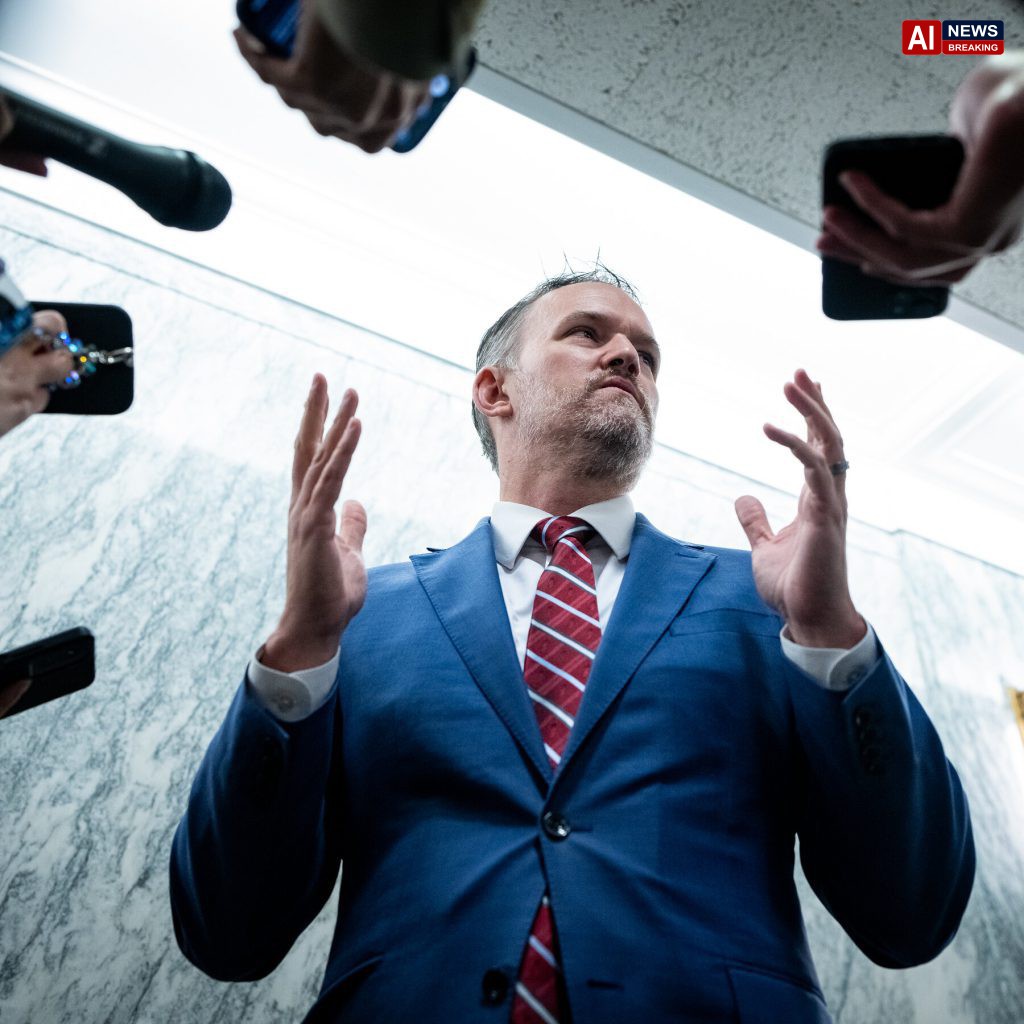
Trump negotiator details final US trade proposal to Canada - AI News Breaking
Jamieson Greer, the principal trade negotiator for the Trump administration, has provided an unprecedented level of detail regarding the final trade proposal extended to Canada before diplomatic channels between Washington and Ottawa effectively collapsed. In a wide-ranging interview with a major broadcast network, Greer outlined the specific concessions the United States believed were necessary to secure a modernized bilateral trade agreement, describing the offer as a fair and balanced framework that would have preserved the core tenets of the North American Free Trade Agreement while updating it for contemporary economic realities. The revelation comes amid heightened tensions across the border, with Canadian officials maintaining that the American demands were excessive, legally untenable, and fundamentally disrespectful of Canada’s sovereignty over its domestic energy and agricultural policies.Greer emphasized that the United States approached the negotiations with a clear mandate to protect American manufacturing jobs and ensure that trade terms no longer favored Canadian exporters at the expense of US producers..
The central pillar of the American offer, according to the former United States Trade Representative, involved a restructuring of dairy market access, a long-standing point of contention in US-Canada trade relations. For decades, Canadian farmers have been protected by a supply management system that has restricted American dairy imports, a practice that many US lawmakers and agricultural groups have viewed as discriminatory. Greer stated that the proposal would have required Canada to open its dairy market to significantly higher volumes of American products, a move he argued was essential to level the playing field for farmers in states such as Wisconsin and Minnesota who have long competed against subsidized Canadian imports.In addition to dairy, the trade proposal addressed the intricate web of rules governing the automotive industry, specifically focusing on labor value content requirements..
Greer explained that the US sought to ensure that a greater percentage of automobile components were manufactured by workers earning wages above a specific threshold, a provision often referred to as the high-wage worker clause. This requirement was designed to incentivize the continuation of manufacturing jobs in the United States rather than allowing them to shift to lower-wage jurisdictions within North America. While Canadian officials had expressed willingness to negotiate on automotive rules of origin, they pushed back against the stringent wage thresholds, arguing that such demands would disrupt established supply chains and potentially increase costs for consumers without guaranteeing the promised job creation in the US.The negotiation complications were further exacerbated by disputes over dispute settlement mechanisms, particularly those relating to the softwood lumber sector..
Greer detailed how the United States proposed the elimination of certain panels that had historically allowed Canadian producers to challenge American tariff rulings through World Trade Organization processes. From the American perspective, these panels had often resulted in rulings that favored Canadian interests, leading to prolonged legal battles that drained government resources and created uncertainty for US timber companies. The proposal called for a more direct bilateral mechanism for resolving such disputes, one that Greer argued would be faster, more transparent, and ultimately more equitable for both sides..
However, Canadian negotiators viewed the removal of these international safeguards as a significant erosion of their legal rights to fair trade remedies.Another critical component of the rejected offer involved telecommunications and internet regulation, areas where the United States had grown increasingly frustrated with what it perceived as Canadian protectionism. Greer noted that the US sought commitments from Ottawa to allow greater competition in the broadband market, arguing that Canadian state-owned enterprises and private monopolies were stifling innovation and keeping prices high for consumers. The proposal included measures to facilitate the entry of US technology firms into the Canadian market and to prevent barriers to cross-border data flows..
While Canada has its own robust privacy laws and regulatory framework, American officials argued that these regulations were being used as non-tariff barriers to protect domestic telecom giants from American competition.Greer also touched upon the contentious issue of cultural exemptions, a longstanding feature of US-Canada trade relations that allows Canada to treat its cultural industries differently from the rest of the economy. The US proposal suggested that certain cultural safeguards should be reviewed to ensure they did not inadvertently restrict digital media distribution, a sector that has grown exponentially in recent years. While the United States acknowledged the importance of cultural sovereignty, it argued that in the digital age, traditional exemptions were often used to block American streaming services and media content companies from competing fairly in the Canadian market..
This cultural dispute, while less economically significant than tariffs on steel or aluminum, has often served as a symbolic flashpoint in broader trade negotiations.The Canadian government’s refusal to accept the terms was rooted in a belief that the American demands went far beyond simple trade adjustments and encroached upon core domestic policy decisions. Ottawa argued that the supply management system for dairy is a cornerstone of Canadian agricultural policy, providing stability for rural communities and ensuring food security. From the Canadian perspective, the US offer was not a genuine attempt to modernize trade rules but rather a punitive measure designed to extract concessions under the threat of tariffs..
Canadian officials pointed out that the US had already imposed tariffs on steel and aluminum under the guise of national security, a decision that international bodies and legal experts widely regarded as baseless.Political dynamics in both countries also played a significant role in the breakdown of talks. In the United States, President Trump faced pressure from his base to deliver a win that would visibly benefit American workers, leading to a hardline negotiating stance that left little room for compromise. Greer acknowledged that the administration’s mandate was to achieve maximum leverage, even if it meant risking a temporary rupture in relations..
Conversely, the Canadian Liberal government, led by Prime Minister Justin Trudeau, faced domestic criticism for appearing too weak in the face of American aggression. This political sensitivity forced Ottawa to adopt a defiant posture, publicly rejecting the US terms to demonstrate strength to Canadian voters and provinces that felt their economic interests were being sacrificed.The implications of the failed negotiation extend well beyond the immediate trade deficit figures. Analysts warn that the collapse of these talks could lead to a prolonged period of economic uncertainty for businesses on both sides of the border, which are deeply integrated through complex supply chains..
Automotive manufacturers, meat processors, and energy firms are all vulnerable to the whims of trade policy, and the lack of a clear agreement creates an environment where investment decisions are delayed and costs rise. Greer suggested that while the US was willing to walk away from the table, it remained open to future discussions if Canada returned with a more realistic and compliant proposal.Critics of the Trump administration’s trade strategy argue that the aggressive tactics employed by Greer and his team are likely to cause long-term damage to the transatlantic and North American alliances. By framing trade negotiations as zero-sum games rather than cooperative opportunities, the administration has fostered resentment among traditional allies who view trade as a mutual benefit..
The rejection of the latest offer underscores the fundamental disconnect between the US administration’s protectionist ideology and the multilateral trade principles that have guided global commerce for decades. As tensions escalate, both nations face the difficult task of managing trade disputes without resorting to retaliatory measures that could harm their own economies..
Updated: August 22, 2026
The retreat of multilateral norms reveals how trade policy has mutated into a proxy battlefield for domestic political legitimacy. By prioritizing short-term symbolic victories over integrated supply chain stability, both nations risk cementing a fractured economic architecture.