 Plaintiffs in Trump arch project seek injunction to stop administration from beginning work Nov. 5
  Trump says he ‘heard something about’ Justice Department probe into longtime ally Corey Lewandowski
  Trump administration stopped sharing evidence in Good and Pretti killings, Minnesota officials say
  Tamil Nadu CM orders Chennai flood‑prevention review.
  India and Bangladesh work
 India Holds ‘Frank’ BRICS Talks on Summit Declaration as West Asia Conflict, Maritime Security Take Centre Stage
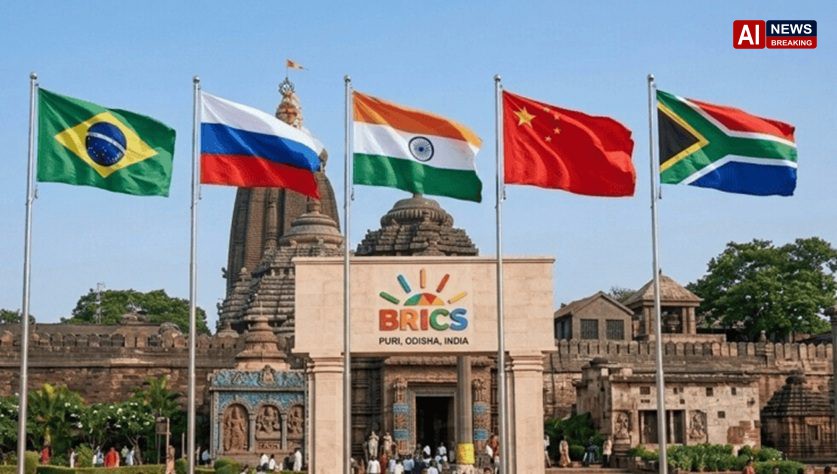
India Holds 'Frank' BRICS Talks on Summit Declaration as West Asia Conflict, Maritime Security Take Centre Stage - AI News Breaking
india holds frank brics:
India is engaged in candid negotiations with fellow BRICS members over the wording of the group’s summit declaration, with territorial integrity, maritime commerce and the escalating West Asia conflict among the key issues.
The discussions come amid heightened regional tensions involving Iran and the UAE, making consensus on geopolitical language particularly challenging.
India in ‘Frank’ Talks With BRICS States Over Summit Declaration
India is holding what officials have described as “frank” discussions with other BRICS countries over the wording of the group’s summit declaration, as member states attempt to bridge differences on some of the most sensitive geopolitical issues facing the international community.
The negotiations have assumed particular importance because the declaration is expected to address questions involving territorial integrity, freedom of maritime commerce and conflicts in West Asia. Differences among BRICS members over how these issues should be described have made the drafting process complex.
At the centre of the discussions is the challenge of producing language that can command consensus among a diverse group of countries whose strategic interests do not always align.
India has traditionally sought to maintain a careful balance in its foreign policy, supporting principles such as sovereignty and territorial integrity while also advocating dialogue, diplomacy and respect for international law. Its position in the BRICS negotiations reflects that broader diplomatic approach.
The talks are taking place against the backdrop of growing instability in West Asia, including tensions involving Iran and the United Arab Emirates. The wider regional situation has also raised concerns about maritime trade routes and the potential consequences of further escalation for global commerce.
Sensitive Geopolitical Issues Complicate Drafting
Summit declarations are generally negotiated carefully because every word can carry diplomatic significance.
For BRICS, this is particularly important because the grouping has expanded significantly and now represents a broader range of political systems, economic interests and foreign-policy positions.
The challenge is not simply to agree on broad principles but to determine precisely how those principles should be expressed.
Territorial integrity is one such issue.
For India, respect for sovereignty and territorial integrity has long been a core element of its diplomatic messaging. New Delhi has consistently emphasised the importance of respecting the territorial sovereignty of states and resolving disputes through peaceful means.
At the same time, BRICS members have differing perspectives on several international conflicts.
This makes the wording of a common declaration particularly sensitive.
A statement that one member views as a straightforward reaffirmation of international law could be interpreted by another as criticism of its strategic position.
Consequently, negotiators often spend considerable time discussing individual terms, phrases and references to specific conflicts.
West Asia Conflict Adds Pressure
The situation in West Asia has added another layer of complexity to the negotiations.
The region remains strategically important for India because of energy supplies, trade routes, maritime connectivity and the large Indian diaspora living across Gulf countries.
Any major disruption to regional stability could have direct economic consequences for India.
The tensions involving Iran and the UAE are therefore being closely watched by New Delhi.
The Gulf is also critical to global energy markets and maritime commerce. Any deterioration in security could affect shipping costs, insurance premiums, energy prices and supply chains.
For India, maintaining the security of maritime routes is especially important because a substantial portion of the country’s international trade moves by sea.
This explains why maritime commerce has emerged as one of the important subjects in the BRICS discussions.
Maritime Security Becomes a Major Concern
Freedom of navigation and uninterrupted maritime commerce have become increasingly important diplomatic issues as geopolitical tensions have spread across key waterways.
The disruption of major shipping routes can have consequences far beyond the countries directly involved in a conflict.
Higher freight costs can feed into inflation, while delays in shipping can disrupt manufacturing and consumer markets.
India has therefore consistently emphasised the importance of keeping international sea lanes open and secure.
The country’s location in the Indian Ocean gives it a particularly strong interest in maritime stability.
New Delhi has also expanded its naval presence and maritime partnerships in recent years, partly in response to concerns about piracy, attacks on commercial vessels and broader geopolitical competition.
Within BRICS, however, maritime security can intersect with the foreign-policy priorities of individual members.
Finding language that supports secure commerce without appearing to endorse one country’s strategic position over another can therefore be difficult.
India’s Diplomatic Balancing Act
India’s approach to the negotiations reflects its broader strategy of maintaining relationships with competing geopolitical blocs.
New Delhi is a member of BRICS while simultaneously maintaining close strategic ties with the United States, Europe, Japan, Australia and countries in the Middle East.
India has also developed important relationships with both Israel and Arab Gulf states while maintaining longstanding ties with Iran.
That diplomatic balancing act becomes especially important during periods of regional conflict.
India has repeatedly called for dialogue and diplomacy rather than military escalation.
Its primary interests include protecting Indian citizens abroad, maintaining energy supplies, safeguarding trade routes and preventing conflicts from expanding into wider regional crises.
These priorities influence the way India approaches multilateral declarations.
Rather than pushing for language that directly confronts one side, New Delhi often seeks formulations that reinforce broader principles such as sovereignty, territorial integrity, dialogue and respect for international law.
BRICS Expansion Makes Consensus More Difficult
The negotiations also highlight the changing nature of BRICS.
The grouping has expanded beyond its original members, bringing in additional emerging economies from different regions.
The expanded membership gives BRICS greater demographic and economic weight but also makes consensus more complicated.
Members have different relationships with the United States, Europe, Russia, China and regional powers.
Their positions on international conflicts can consequently differ sharply.
A declaration that is acceptable to one member may not be acceptable to another.
India has therefore been involved in negotiations aimed at finding common ground rather than allowing disagreements to prevent the declaration from being adopted.
The use of diplomatic language becomes crucial in such circumstances.
Rather than attempting to resolve every geopolitical disagreement through a summit document, negotiators typically seek broad formulations that acknowledge shared principles without forcing members to endorse positions they oppose.
Territorial Integrity at the Centre of Discussions
The reference to territorial integrity is particularly significant because the principle is central to the international rules-based system.
For India, the issue has direct relevance because New Delhi has repeatedly emphasised respect for sovereignty and territorial integrity in international forums.
The principle also has broader implications for conflicts involving disputed borders and territories.
However, BRICS members have different interests and interpretations regarding conflicts around the world.
That creates a difficult drafting environment.
If the declaration uses strong language on territorial integrity, some members could see it as having implications for their own geopolitical positions.
If the language is weakened too much, other members may consider it insufficiently meaningful.
India’s challenge is therefore to support a formulation that reflects its own diplomatic principles while retaining the possibility of consensus.
Economic Interests Cannot Be Separated From Security
Although BRICS is primarily associated with economic cooperation among emerging economies, geopolitical developments increasingly affect its economic agenda.
Trade, investment and energy flows depend heavily on political stability.
The West Asia crisis illustrates this connection.
The region is a major source of energy for the global economy and contains some of the world’s most important shipping routes.
A prolonged confrontation involving regional powers could affect oil and gas supplies, shipping and insurance costs.
For countries such as India, China and other major energy importers, such developments can have immediate economic consequences.
India therefore has a strong incentive to promote language supporting uninterrupted commercial activity.
The reference to maritime commerce in the negotiations is consequently not merely a security issue. It also has direct economic significance.
Iran and UAE Tensions Raise Regional Concerns
The tensions between Iran and the UAE add complexity to an already fragile regional environment.
Iran occupies a strategically important position near the Strait of Hormuz, one of the world’s most significant energy transit routes.
Any serious deterioration in relations involving Iran and Gulf states can create concerns about maritime traffic and energy supplies.
The UAE, meanwhile, is a major regional commercial and financial centre with extensive international trade links.
For India, both countries are important.
India has longstanding economic and strategic relations with the UAE and maintains historical ties with Iran.
This makes New Delhi particularly sensitive to developments that could force countries in the region into opposing camps.
India’s diplomatic preference has generally been to maintain engagement with all sides.
That approach allows New Delhi to protect its economic interests while also maintaining channels for dialogue.
Why the Final Wording Matters
The BRICS declaration will ultimately be assessed not only for what it says but also for what it does not say.
In multilateral diplomacy, the absence of certain terms can itself carry significance.
For example, a strong reference to territorial integrity could signal collective support for a particular interpretation of international law.
Similarly, explicit language about maritime commerce could demonstrate that BRICS members recognise the importance of keeping trade routes open during periods of conflict.
References to West Asia could also indicate how far the group is willing to go in addressing active geopolitical crises.
India is therefore likely to approach the negotiations carefully, seeking language that protects its strategic interests without undermining the broader objective of BRICS consensus.
The Larger Significance for India
The negotiations provide another illustration of India’s growing role in multilateral diplomacy.
India increasingly seeks to position itself as a bridge between different geopolitical groupings.
Within BRICS, New Delhi engages with countries such as China and Russia while simultaneously maintaining strong partnerships with Western and Indo-Pacific powers.
This gives India an opportunity to influence discussions on global governance.
However, the role also creates diplomatic challenges.
India must balance competing relationships while ensuring that its own strategic priorities remain protected.
The BRICS declaration negotiations demonstrate how difficult that balancing act can become when geopolitical tensions rise.
Looking Ahead
The immediate priority for BRICS negotiators will be to settle the language of the summit declaration.
Whether the final document contains strong references to territorial integrity, maritime commerce and the West Asia conflict will depend on the compromises reached among member states.
India’s participation in the discussions indicates that New Delhi wants its concerns reflected in the final consensus.
The negotiations also underline the changing character of BRICS.
As the grouping expands and becomes more politically diverse, reaching agreement on sensitive international issues will require increasingly sophisticated diplomacy.
For India, the objective is likely to remain consistent: defend sovereignty and territorial integrity, protect international trade and maritime commerce, encourage diplomatic solutions to conflicts and avoid language that unnecessarily deepens geopolitical divisions.
The final declaration will therefore offer an important indication of how BRICS members navigate disagreements at a time of heightened global uncertainty.
AI Insight : The BRICS declaration negotiations highlight a central challenge facing the expanded grouping: economic cooperation is becoming increasingly intertwined with geopolitical security. India’s “frank” approach suggests that New Delhi is attempting to protect core principles—particularly territorial integrity and freedom of maritime commerce—while avoiding language that could fracture consensus among BRICS members. The West Asia dimension makes the negotiations even more consequential because India has significant economic, energy and diaspora interests across the region. The final wording will be closely watched because it could reveal whether an increasingly diverse BRICS can develop a coherent position on major international crises or whether geopolitical differences will continue to limit its ability to act collectively.