
 Pakistan’s leaders hail first astronaut aboard Chinese craft: ‘Proud one of us has gone into space’
 British tourist travels 29 hours from Mumbai to Amritsar for ₹5,461, rates Indian Railways 10/10 | Viral video
 The Supreme Court will decide whether assault weapons bans violate the Second Amendment
 A Critic of Beijing Falls Short in Taiwan’s Key Mayoral Election
 EPA says no rise in contamination after Army detonates lead azide stockpile in Iowa
Adani Krishnapatnam Port inducts 288 electric vehicles into its fleet
**
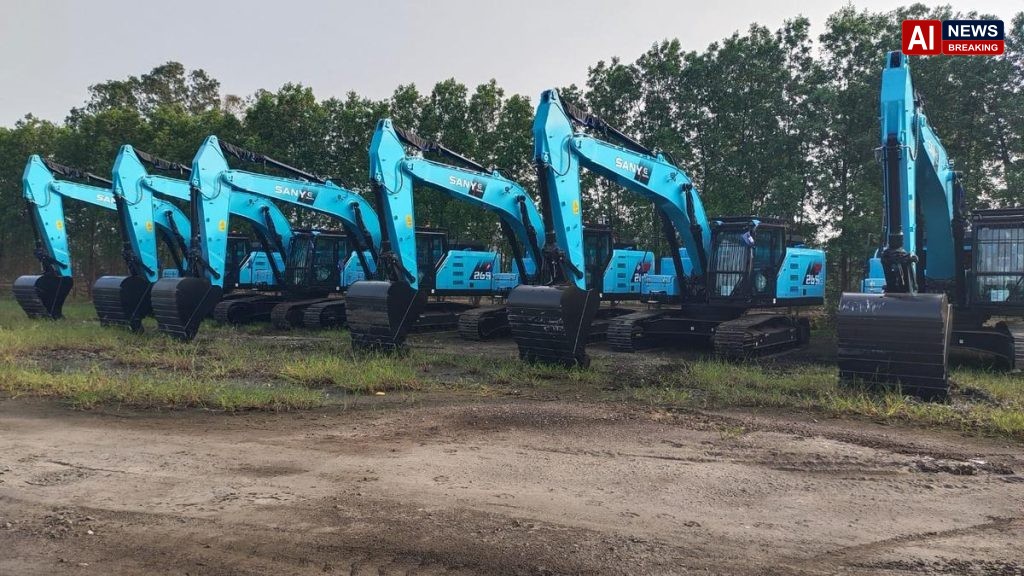
Adani Krishnapatnam Port inducts 288 electric vehicles into its fleet - AI News Breaking
Adani Krishnapatnam Port inducts 288 electric vehicles into its fleet The Krishnapatnam Port, located on the southeastern coast of India, has expanded its sustainability initiatives by adding 288 electric vehicles to its operational fleet. This move, announced by the company’s sustainability officer, underscores the port’s commitment to reducing its carbon footprint and aligning with national environmental goals. The new vehicles include electric forklifts, container handlers, and delivery vans that will replace older diesel-powered machines across the facility..
By integrating electric powertrains, the port aims to lower emissions, improve air quality for workers, and cut fuel costs over the long term. The induction of electric vehicles at Krishnapatnam follows a broader trend in Indian logistics and infrastructure sectors. Port authorities across the country are exploring greener alternatives to power their heavy equipment..
The adoption of battery‑powered machinery is part of a multi‑year strategy to achieve net‑zero emissions by 2050. In addition to the 288 vehicles, the port plans to install charging infrastructure that will support the fleet’s energy needs and provide a model for other ports in the region. According to company data, the electric vehicles have a combined payload capacity of roughly 4,500 tonnes per week, comparable to the performance of their diesel counterparts..
The fleet’s introduction will be phased over the next six months, allowing staff to receive training on electric vehicle operation and maintenance. “We are investing in both technology and people,” said the chief operating officer, highlighting that a skilled workforce is essential for the long‑term success of electrification. The company has partnered with a local battery supplier to secure a steady supply of lithium‑ion packs..
The cost of the electric vehicles is estimated at 12 per cent more than conventional diesel models, but the port expects a payback period of about 3.5 years, based on savings from lower energy and maintenance expenses. Fuel cost reductions alone are projected to offset the initial outlay within the first year. Moreover, the electric fleet benefits from fewer moving parts, translating to lower maintenance requirements..
This financial incentive is a key driver behind the port’s decision to electrify its logistics operations. The environmental impact of the new fleet is significant. By replacing diesel machinery, the port will reduce CO₂ emissions by approximately 20,000 tonnes annually..
This figure is based on average energy consumption and typical diesel fuel emissions data. In addition, the reduction in noise pollution will improve working conditions for employees and the surrounding community. The port’s sustainability report cites a 15 per cent drop in particulate matter levels at the site since the first wave of electric vehicles was deployed..
Beyond environmental metrics, the electric fleet improves operational efficiency. The vehicles can be programmed to operate in a coordinated manner, reducing idle time and improving turnaround rates for cargo handling. Battery management systems provide real‑time diagnostics, enabling predictive maintenance and reducing downtime..
These technological advantages align with the port’s broader digitalisation strategy, which aims to integrate smart systems across its logistics chain. The initiative also supports national energy policy. India’s government has set targets for electric vehicle adoption in freight and public transport sectors, offering subsidies and tax incentives..
By meeting these targets, Krishnapatnam Port becomes eligible for additional financial support and recognition as a green infrastructure project. The port’s leadership emphasises that these incentives help mitigate the cost premium of electric vehicles. In the coming months, the port will roll out a second batch of vehicles, with 193 additional electric units expected to join the fleet..
This expansion will be announced at a joint press event with local authorities and industry partners. The announcement will detail the integration timeline, training schedules, and performance benchmarks for the new vehicles. Stakeholders will also receive updates on the charging network expansion, which will include solar‑powered stations to further reduce the carbon intensity of the fleet..
The electric vehicles are part of a broader shift in port operations towards sustainability. The port has already upgraded its terminal infrastructure to accommodate autonomous drones for inventory monitoring and is exploring renewable energy sources for its power grid. These initiatives demonstrate a holistic approach to reducing environmental impact while maintaining operational efficiency..
While the transition to electric vehicles brings clear benefits, the port acknowledges challenges such as battery disposal and supply chain resilience. The company has partnered with a recycling firm to manage end‑of‑life batteries responsibly and is diversifying battery suppliers to avoid single‑source risk. These measures aim to ensure the long‑term viability of the fleet and comply with emerging regulatory standards on battery safety and recycling..
Krishnapatnam Port has added 288 electric forklifts, container handlers and delivery vans to its fleet, aiming to slash CO₂ emissions by about 20,000 tonnes a year and cut fuel costs. The move, part of a 2050 net‑zero strategy, will be phased over six months with new charging stations and workforce training to ensure a smooth transition.
Krishnapatnam’s electric fleet signals a strategic pivot: the port is betting on tech‑enabled efficiency to offset higher upfront costs and secure government incentives, turning greening into a competitive edge. By pairing EVs with digital monitoring and renewable charging, it not only cuts emissions but also future






