
 New Delhi housing collapse kills 7; rescue operations continue
  Thousands mourn war criminal Ratko Mladic in Banja Luka despite private funeral order
  Israeli strikes kill nine in Lebanese city
  Germany’s AfD enters Saxony-Anhalt cabinet, breaking political firewall
  Tamil Nadu Assembly halts over Vijay’s feud with DMK over Veeranam project
 Andrea Bajani Releases New Novel Critiquing Italian Family Structures
Beneath the romantic veneer of the Italian Riviera lies a darker narrative in Andrea Bajani’s latest novel. Critiquing the traditional Italian family unit as a “little totalitarian system,” the book exposes the psychological violence, rigid hierarchies, and unspoken rules that govern domestic life, sparking intense debate across Italy about tradition, loyalty, and individual autonomy.
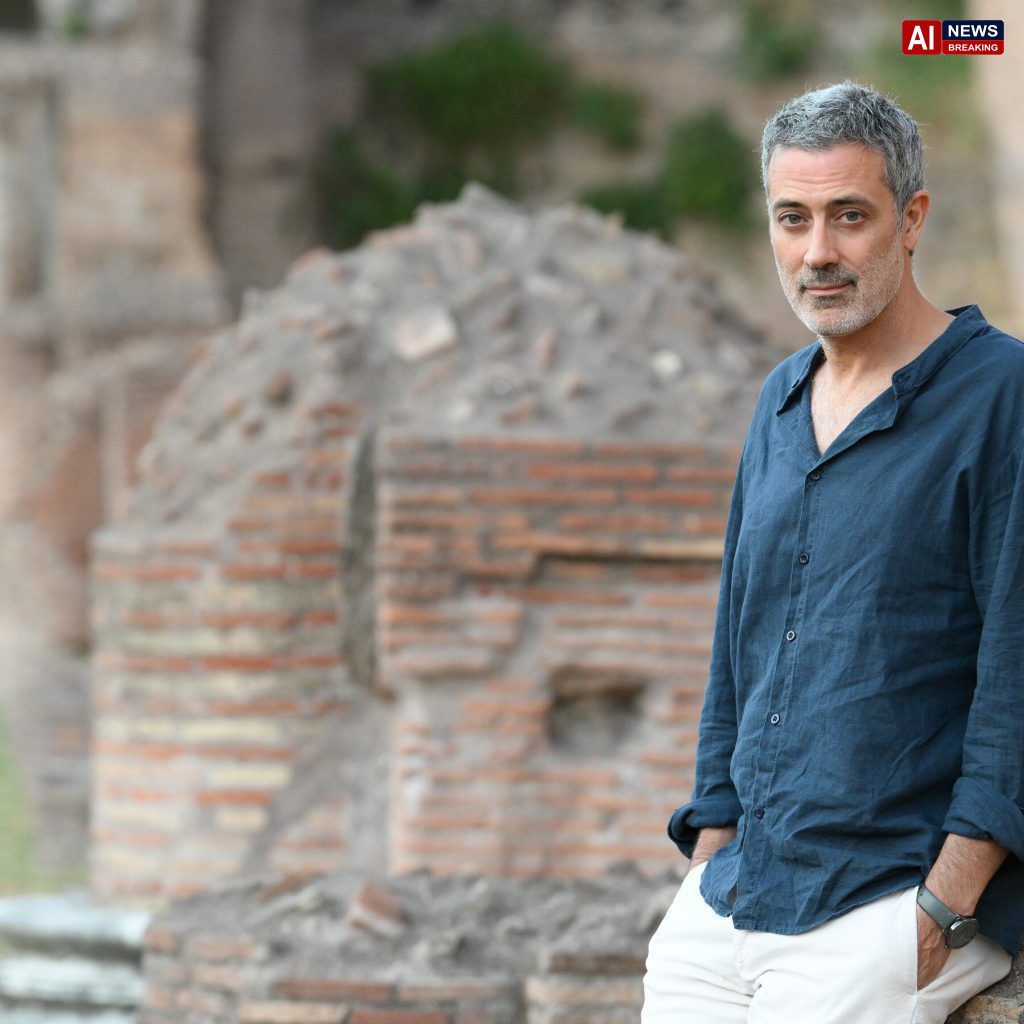
Andrea Bajani Releases New Novel Critiquing Italian Family Structures - AI News Breaking
andrea bajani releases novel:
The sprawling, sun-drenched villas of the Italian Riviera have long served as symbols of leisure and familial warmth in the collective European imagination. Yet, beneath the stucco walls and among the cypress trees, a different narrative is emerging from the literary quarter of Milan. Andrea Bajani, the acclaimed novelist, has released a new work that strips away the romantic veneer of domestic life to reveal a structure he describes as a “little totalitarian system.” The book, which has sparked intense debate across social media and book clubs, challenges the sacred cow of Italian culture: the family unit..
By portraying the household not as a sanctuary but as an arena of psychological and physical violence, Bajani invites readers to confront uncomfortable truths about loyalty, love, and the mechanisms of control that often go unexamined in the name of tradition.Bajani, known for his incisive and often melancholic prose, does not shy away from the brutality of his subject matter. His previous works have explored themes of illness, sexuality, and the fragility of human connection, but this latest novel represents a sharper turn toward sociological critique. The narrative follows a family that appears idyllic to outsiders but operates under a rigid hierarchy of expectations and silences..
The father figure is not a cartoonish villain but a complex embodiment of societal pressures, while the mother navigates a role that demands self-erasure and complicity. The children, positioned as both victims and witnesses, must learn early on that survival depends on their ability to decode the unspoken rules of their environment. This dynamic, Bajani suggests, is not unique to this household but is reflective of a broader cultural pattern that prioritizes cohesion over individual autonomy.The concept of the family as a totalitarian entity is not entirely new in literary or sociological discourse, but Bajani’s application of it to contemporary Italian life feels particularly resonant..
Italy, with its deep-rooted values centered on family, often faces international scrutiny regarding gender roles, domestic abuse, and the protection of minors. By labeling the family structure as “little totalitarian,” Bajani invites a parallel with larger political systems, suggesting that the micro-politics of the home mirror the macro-politics of the state. In such systems, dissent is punished, individuality is suppressed, and loyalty is demanded without question..
This metaphorical framing allows readers to see familiar dynamics in a new light, recognizing how authority is maintained through fear, guilt, and the threat of abandonment.Critics and supporters have reacted with equal intensity since the book’s publication. Some argue that Bajani’s portrayal is an exaggeration, a cynical distortion of a predominantly loving and supportive institution. For many Italians, the family remains the primary source of emotional and financial support, particularly in a country where social safety nets are often perceived as inadequate..
To suggest that this support comes at the cost of freedom and psychological well-being is seen by some as an attack on the very fabric of society. These detractors claim that the novel fetishizes dysfunction and ignores the millions of families that thrive through mutual respect and care. They argue that literature should serve to heal and unite, not to divide and accuse, and that Bajani’s work risks reinforcing negative stereotypes about Italian culture.However, defenders of the novel point to its necessary provocation..
They argue that the silence surrounding domestic issues in Italy has allowed abuse and control to persist unchecked for generations. By bringing these hidden dynamics into the light, Bajani is performing a vital service. The novel serves as a mirror, reflecting aspects of reality that many prefer to ignore..
Supporters highlight the courage it takes to write such a book in a culture where criticism of the family structure is often met with defensiveness and outrage. They see the work as a catalyst for conversation, encouraging readers to examine their own relationships and the subtle ways in which power operates within them. For many young readers, the novel validates experiences of alienation and confusion that they have felt but lacked the language to articulate.The psychological violence depicted in the book is portrayed not as overt aggression but as a slow, insidious erosion of self..
Bajani masterfully illustrates how love can be weaponized, how affection is used as a currency to enforce compliance. The characters learn that their worth is contingent upon their utility to the family unit and their adherence to its rigid norms. This emotional blackmail is often more damaging than physical abuse because it is internalized, leading to long-term effects on self-esteem and mental health..
The novel explores how these dynamics are passed down through generations, creating a cycle of trauma that is difficult to break. By focusing on the psychological rather than the physical, Bajani highlights the pervasive nature of control that can exist even in the absence of overt violence.Physical violence, when it does occur, is treated with stark realism. It is not sensationalized or dramatized for effect but presented as a tragic breakdown of the fragile order that the family strives to maintain..
These moments serve as shockwaves that disrupt the daily routines of the household, exposing the cracks in the façade. Bajani writes these scenes with a chilling detachment, forcing the reader to sit with the discomfort of witnessing abuse that is often hidden behind closed doors. This stylistic choice underscores the banality of evil within the domestic sphere, suggesting that violence is not an anomaly but a potential outcome of the systemic oppression described throughout the narrative.The reception of the novel has also raised questions about the role of the author in contemporary society..
Is it the job of the novelist to hold a mirror up to society, even if the image is unflattering? Bajani’s work suggests that it is. He argues that literature must engage with the darker aspects of human experience to foster empathy and understanding..
By depicting the family in such a critical light, he challenges readers to move beyond nostalgia and tradition to confront the realities of modern life. This approach aligns with a broader trend in international literature, where writers are increasingly focusing on the complexities of interpersonal relationships and the impact of social structures on individual lives.Beyond the specific cultural context of Italy, the novel raises universal questions about the balance between community and individuality. In an era of increasing social isolation, the family often serves as the last bastion of human connection..
Yet, this connection can come at a significant cost to personal freedom and identity. Bajani’s exploration of this tension is timely, reflecting a global conversation about the changing nature of family structures. As traditional roles evolve and new forms of kinship emerge, the novel prompts readers to consider what constitutes a healthy and supportive environment..
It challenges the assumption that proximity and blood ties are sufficient foundations for love, arguing instead that respect and autonomy are equally essential.The literary technique employed by Bajani further enhances the impact of his message. His prose is deliberate and precise, avoiding melodrama in favor of quiet observation. This restraint allows the horror of the situation to emerge organically, making it all the more unsettling..
Updated: August 22, 2026
Insight: Tradition’s grip tightens when convenience masquerades as protection.
We must ask ourselves if our loyalty is born of love or learned fear.