 BJP slaps ‘anti-women’ label on Rahul Gandhi, Congress
 Moving bike, one-handed catch: Pakistani man wins Rs 10,000 cash prize
 Danny Trejo Says He Tried to Exit Daily Wire’s Pro-ICE Film ‘Pawn Shop’ But Was Told They’d ‘Sue the Hell Out of Me’
 Pond heron found dead in Coimbatore tests positive for avian influenza
 Pakistan’s leaders hail first astronaut aboard Chinese craft: ‘Proud one of us has gone into space’
BJP slaps ‘anti-women’ label on Rahul Gandhi, Congress
**
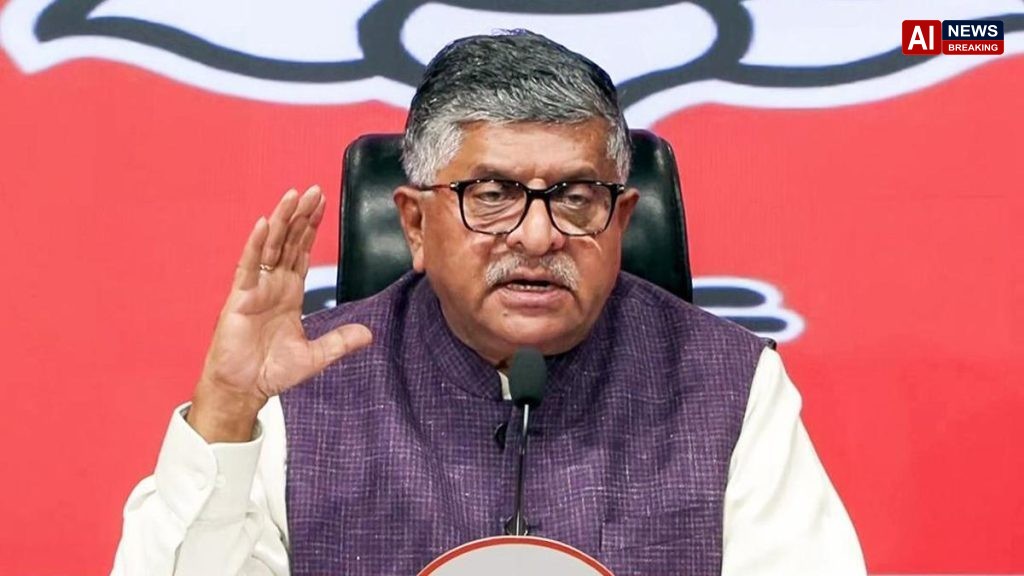
BJP slaps ‘anti-women’ label on Rahul Gandhi, Congress - AI News Breaking
slaps antiwomen label rahul:
BJP MP Ravi Shankar Prasad on Tuesday launched a blistering attack on Congress leader Rahul Gandhi, accusing him of a “desperate” bid to become prime minister and of deliberately opposing women’s reservation in legislatures. The comments were made during a parliamentary debate on the Women’s Reservation Bill, a long‑stalled piece of legislation that seeks to reserve 33 percent of seats in the Lok Sabha and state assemblies for women. Prasad, a senior minister in Prime Minister Narendra Modi’s cabinet, said Gandhi’s opposition was not rooted in principle but in a calculated attempt to secure a political advantage for himself and his party..
In a statement that quickly went viral on social media, Prasad asserted that Gandhi’s “anti‑women” stance was evident from his repeated attempts to derail the bill in previous sessions of Parliament. He claimed the Congress leader had “consistently tried to block progress on women’s empowerment” and that his current criticism of the reservation proposal was simply a ploy to appear as a champion of meritocracy while masking an underlying desire for personal power. The BJP’s narrative frames the issue as a test of political intent rather than a policy debate..
The BJP’s criticism arrives at a crucial juncture for the reservation bill, which has been pending for more than a decade. After the Supreme Court’s 1992 directive to increase women’s representation, successive governments have struggled to muster the requisite two‑thirds majority needed for constitutional amendment. The ruling party, which holds a comfortable majority in the Lok Sabha, has signalled it is ready to push the bill through, citing recent statements from several regional parties indicating their willingness to support the measure..
Prasad, who also serves as the Union Minister for Law and Justice, expressed confidence that the bill would be passed in the current session. He noted that the opposition from a handful of left‑leaning legislators would not be sufficient to derail the legislation, given the BJP’s numerical strength and the “broad‑based consensus” emerging from coalition partners in the states. The minister’s remarks were accompanied by a reference to the party’s “commitment to gender equity” as part of its broader development agenda..
Congress, for its part, has rejected the BJP’s characterisation of Gandhi as “anti‑women”. In a press briefing, spokesperson Mallika Sharma said the party’s position on the reservation bill was consistent with its long‑standing advocacy for merit‑based selection and that any attempt to label Rahul Gandhi as a misogynist was “pure political mud‑slinging”. She added that the Congress would continue to debate the bill on its merits and that a rushed amendment without adequate consultation could undermine the very cause it purports to serve..
Political analysts note that the BJP’s strategy mirrors a broader pattern of personalising policy disputes to weaken opponents. “By painting Gandhi as a barrier to women’s empowerment, the party is trying to force a binary choice on voters – either you support the bill and the BJP, or you oppose it and you are against women’s rights,” said Dr. Arvind Patel, a senior fellow at the Indian Institute of Political Studies..
Patel cautioned that such tactics could polarise public opinion and detract from substantive discussion on the bill’s implementation mechanisms. Supporters of the reservation bill argue that the measure is essential to redress the stark under‑representation of women in Indian politics. According to the latest data from the Election Commission, women occupy just 14 percent of seats in the Lok Sabha and an average of 12 percent in state assemblies..
Pro‑reservation advocates claim that without a mandated quota, structural barriers such as patriarchal party hierarchies and financial constraints will continue to impede women’s entry into elected office. Conversely, critics within the BJP and allied regional parties warn that a blanket 33 percent reservation could disrupt the delicate balance of caste and community representation that has evolved over decades. They contend that a more nuanced approach, perhaps a phased reservation or a separate quota for women from historically marginalized groups, would better address both gender and social equity..
These concerns have been raised in previous parliamentary committees but have not yet coalesced into a concrete alternative proposal. The parliamentary debate on Tuesday also touched on the broader legal framework governing reservations. Prasad reminded members that the Constitution already permits affirmative action in education and public employment, and that extending similar principles to elected bodies is a logical progression..
He cited comparative examples from countries such as Rwanda and Sweden, where gender quotas have been credited with accelerating women’s political participation without compromising legislative effectiveness. In response, Gandhi delivered a brief but pointed retort during a subsequent question‑time session, stating that any attempt to “weaponise women’s rights for political gain” was “unacceptable”. He urged his colleagues to focus on substantive issues such as unemployment, farmer distress, and inflation, rather than resorting to “personal attacks”..
Gandhi’s comments were met with applause from a number of opposition MPs, highlighting the deep‑seated divisions that continue to shape India’s parliamentary culture. The episode underscores the high stakes attached to the Women’s Reservation Bill as it nears a potential vote. With the BJP confident of passage, the onus now lies on the opposition to articulate a coherent alternative or to negotiate amendments that address their concerns..
Observers note that the outcome could have far‑reaching implications for the next general election, where gender representation is likely to be a salient theme in campaign rhetoric. Regardless of the political fray, civil‑society groups have called for a calm, evidence‑based discussion on how best to achieve gender parity in elected bodies. The National Federation of Women’s NGOs issued a statement urging lawmakers to move beyond partisan posturing and to consider the lived realities of women across urban.
Updated: November 28, 2026
Summary: BJP minister Ravi Shankar Prasad accused Rahul Gandhi of using opposition to the Women’s Reservation Bill as a personal power grab, while Congress dismissed the charge as political mud‑slinging. With the BJP poised to push the 33 percent quota through Parliament, the debate has sharpened into a partisan showdown over women’s representation.
By slamming Gandhi’s “anti‑women” stance, Prasad turns a policy debate into a character attack, forcing voters to choose between the bill and the opposition’s credibility—an effort to make gender quota a proxy for partisan loyalty.
If the BJP’s narrative gains traction, it could shift the conversation from how