The Supreme Court will decide whether assault weapons bans violate the Second Amendment
 A Critic of Beijing Falls Short in Taiwan’s Key Mayoral Election
 EPA says no rise in contamination after Army detonates lead azide stockpile in Iowa
 Israeli Strike Kills 2 Workers at Gaza Clinic, Doctors Without Borders Says
 McQueen Pre-Fall 2027
Do school phone bans help students learn? So far, gains are ‘modest’
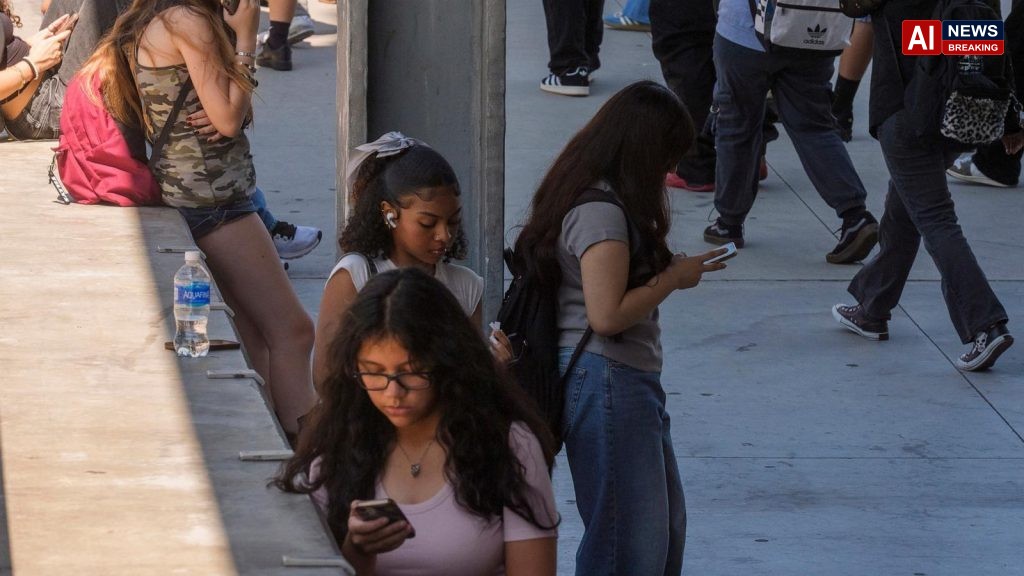
Do school phone bans help students learn? So far, gains are 'modest' - AI News Breaking
Do school phone bans help students learn? So far, gains are ‘modestic’ The United States is witnessing a surge in policies that forbid the use of personal smartphones during classroom time. From sprawling suburban districts in Texas to inner‑city schools in New York, administrators argue that removing the device can minimise distraction and improve concentration..
Yet the evidence on academic outcomes remains mixed. A new wave of studies, released this month, suggests that while some improvements in test scores are observable, the overall effect is modest at best. Critics say the bans may overlook deeper issues such as digital literacy and equity..
The latest research comes from a consortium of five universities that surveyed more than 200,000 students across 250 public schools. Researchers compared year‑over‑year performance in mathematics and reading for schools that instituted a full‑day ban with those that kept phones merely out of sight. On average, the banned schools saw a 2.3 % rise in standardized test scores, compared with a 1.1 % increase in the control group..
While statistically significant, the gain translates to only a few points on a 100‑point scale, prompting scholars to label the benefit “modest.” Supporters of the bans point to anecdotal evidence from teachers who report quieter classrooms and fewer off‑task behaviours. “When the phones are gone, I can finally get through a lesson without constant interruptions,” said Laura Mendoza, a middle‑school math teacher in Arizona. She added that students appear more willing to engage in hands‑on activities when they are not tempted to scroll through social media..
Such observations echo a long‑standing belief that the omnipresence of digital devices erodes the focus needed for deep learning. Opponents, however, caution that the data may mask unintended consequences. A survey of 12,000 high‑school students conducted alongside the academic study revealed that 68 % felt more isolated after the bans were enacted..
Many reported that they relied on phones for quick fact‑checking, language translation, and accessing educational apps that supplement classroom instruction. “Taking phones away can cut off a valuable learning tool,” argued Dr Anita Patel, a digital‑education researcher at Stanford University. She warned that blanket bans could widen the gap between students with ready access to technology and those without..
The policy debate is further complicated by socioeconomic factors. In low‑income districts, smartphones often serve as the only gateway to the internet, especially after school. When bans are enforced, some families struggle to provide alternative devices, leaving students unable to complete homework that requires online research..
In contrast, wealthier schools are more likely to offer school‑owned tablets or laptops, mitigating the loss of personal devices. This disparity about whether phone bans inadvertently penalise the most vulnerable learners. Legal challenges have already begun to surface..
A group of parents in Illinois filed a lawsuit claiming that the ban violates students’ First‑Amendment rights by restricting access to lawful speech and expression. The plaintiffs argue that the policy is overly broad and fails to consider nuanced, age‑appropriate usage. In response, school districts cite the Supreme Court’s 2021 decision in Mahanoy Area School District v..
B.L., which upheld schools’ authority to regulate off‑campus speech when it interferes with the educational environment. The case remains pending, and its outcome could set a nationwide precedent. Meanwhile, technology companies are watching the trend closely..
Apple and Google have recently announced pilot programmes that allow teachers to lock certain apps during class while still permitting essential functions such as note‑taking and calculator use. These “focus modes” aim to strike a balance between curbing distraction and preserving the educational benefits of smartphones. Early feedback from pilot schools suggests that selective restriction may be more palatable to both staff and students than an outright ban..
Educational policymakers are also experimenting with hybrid approaches. In Massachusetts, a district introduced “phone‑free periods” rather than a full‑day prohibition, allowing devices during lunch and after‑school clubs. Preliminary results indicate a slight uptick in engagement without the backlash associated with total bans..
Similarly, a pilot in Colorado gave teachers discretion to permit phones for specific projects, reporting that student‑initiated research increased. These nuanced models hint that flexibility, rather than rigidity, may yield better educational outcomes. The modest gains reported by the recent study have sparked a broader discussion about what metrics truly matter in education..
Some experts argue that focusing solely on test scores overlooks important skills such as digital citizenship, collaboration, and critical thinking—areas where responsible phone use can actually enhance learning. “If we measure success only by test scores, we risk ignoring the competencies students need in a connected world,” said Dr Samuel Lee, an education policy analyst at the Brookings Institution. He advocates for a more holistic evaluation framework that incorporates both academic and socio‑emotional indicators..
In response to the mixed findings, the U.S. Department of Education has announced plans to fund a multi‑year research initiative aimed at identifying best practices for integrating technology in classrooms. The grant programme, slated to begin in 2027, will support schools that experiment with a range of policies—from complete bans to guided usage—to determine which approaches most effectively support learning outcomes across diverse student populations..
Officials hope that rigorous, longitudinal data will inform future federal guidelines. A recent poll by the Pew Research Center found that 55 % of U.S. parents support school phone bans, citing concerns about cyberbullying and academic distraction..
Updated: November 17, 2026
Insight: This development highlights evolving dynamics and may have broader implications in the near term.