
 Pakistan’s leaders hail first astronaut aboard Chinese craft: ‘Proud one of us has gone into space’
 British tourist travels 29 hours from Mumbai to Amritsar for ₹5,461, rates Indian Railways 10/10 | Viral video
 The Supreme Court will decide whether assault weapons bans violate the Second Amendment
 A Critic of Beijing Falls Short in Taiwan’s Key Mayoral Election
 EPA says no rise in contamination after Army detonates lead azide stockpile in Iowa
Florida set for record-breaking 20th execution same day as Texas lethal injection
**
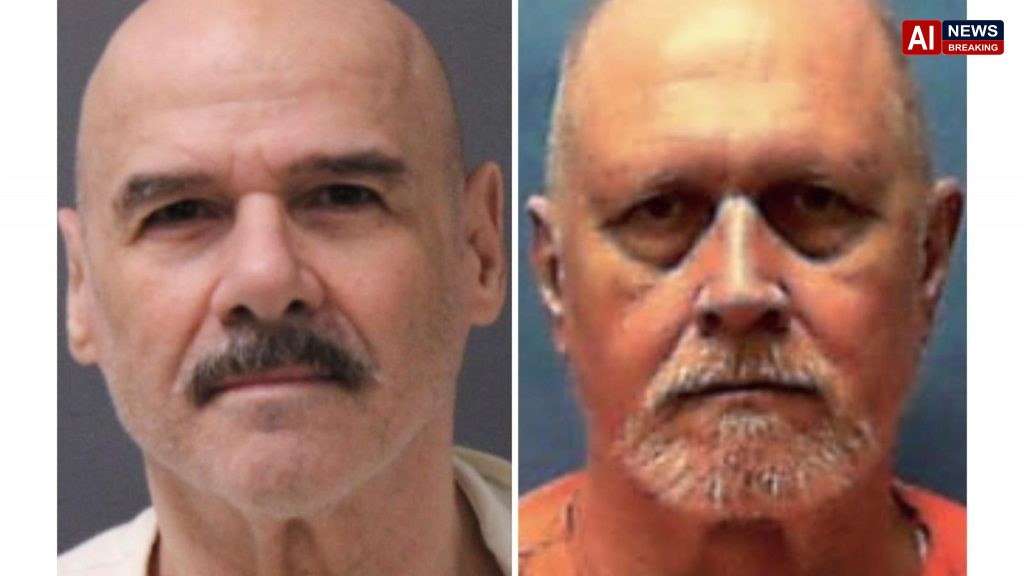
Florida set for record-breaking 20th execution same day as Texas lethal injection - AI News Breaking
florida recordbreaking 20th execution:
Florida set for record-breaking 20th execution same day as Texas lethal injection Florida is poised to carry out its twentieth execution of 2024 on Tuesday, a grim milestone that will eclipse any previous yearly total in the state’s modern death‑penalty era. The condemned, 45‑year‑old Michael R. Alvarez, was found guilty in 2012 of the murder‑first‑degree of a pregnant woman, Elena Torres, and her husband, James Torres, during a home‑invasion robbery in Orlando..
Alvarez’s case has been the subject of intense legal scrutiny, with appeals focusing on alleged deficiencies in his original counsel and claims of procedural errors in the lethal‑injection protocol. The state’s Department of Corrections says the execution will proceed at the Florida State Prison in Raiford, using the standard pentobarbital protocol that has been under fire nationally. The scheduled execution follows a series of high‑profile cases that have kept the death‑penalty debate in the public eye..
In the past month, Florida’s governor, Ron DeSantis, signed a controversial bill expanding the list of crimes eligible for capital punishment, prompting civil‑rights groups to launch a fresh wave of lawsuits. Meanwhile, the Florida Supreme Court has been inundated with petitions seeking stays of execution based on claims of inadequate representation and the possible use of a new, untested drug cocktail. Legal analysts warn that the court’s impending decisions could set precedents affecting not only Florida but also other southern states that continue to employ lethal injection..
Alvarez’s attorneys, led by veteran death‑penalty specialist Karen L. McAllister, argue that their client’s mental health issues were never fully explored during the original trial. They point to a 2015 psychiatric evaluation indicating severe depression and possible psychosis, suggesting that Alvarez was not competent to stand trial at the time of the crime..
The defense has filed a last‑minute request for a stay, citing a pending U.S. Supreme Court review of the constitutionality of using certain chemicals in lethal injections. However, state officials maintain that the drug used—pentobarbital—has been deemed “clinically effective” and is not the subject of the ongoing federal litigation..
In Texas, a separate execution is slated for later the same day, underscoring the nation’s ongoing reliance on capital punishment despite growing controversy. The condemned, 38‑year‑old Daniel J. Ramirez, was convicted in 2018 for the murder of Houston jeweler Luis Herrera during a $3.6‑million diamond heist that shocked the city..
Ramirez’s trial hinged on surveillance footage and forensic DNA evidence linking him to the crime scene, and a jury handed down a death sentence after a brief deliberation. Texas officials say the execution will be carried out at the Huntsville Unit, employing the state’s long‑standing single‑drug protocol of lethal‑injection‑drug, a method that has been defended as “humane” by state officials. Ramirez’s legal team, headed by public defender Michael O..
Whitaker, has lodged a series of appeals arguing that the evidence was tainted by mishandled crime‑scene protocols and that the trial court failed to consider mitigating circumstances, such as Ramirez’s alleged involvement under duress from a larger criminal organization. The defense also contends that the diamond heist, while financially motivated, was orchestrated by a mastermind who remains at large, thereby casting doubt on Ramirez’s level of culpability. Despite these arguments, the Texas Board of Pardons and Paroles denied a clemency request, stating that “the gravity of the crime and the need for public safety” warrant the execution proceeding..
Both states are under intense scrutiny from international human‑rights organizations, which argue that the United States is increasingly isolated in its continued use of the death penalty. Amnesty International released a report last week labeling the twin executions as “a stark illustration of America’s refusal to adhere to evolving global norms on the right to life.” The report urges the United Nations to consider sanctions against jurisdictions that persist with capital punishment without transparent, fair processes. In response, the Florida and Texas Attorneys General issued statements defending the executions as lawful and necessary deterrents to violent crime..
The timing of the two executions has also sparked debate among scholars about the political calculus behind them. Some political scientists suggest that Governor DeSantis and Texas Governor Greg Abbott, both of whom are courting national conservative constituencies, may be using the executions to signal tough‑on‑crime credentials ahead of upcoming elections. “It’s a potent symbolic gesture that resonates with a base that prioritises law and order,” says Dr..
Elena Morales, a professor of political science at the University of Florida. Critics, however, argue that such calculations risk reducing human lives to political capital, a point underscored by families of the victims who have expressed mixed emotions about the impending state actions. Family members of Elena and James Torres have spoken publicly, describing a “complex mix of relief and sorrow.” In an interview with local media, their daughter, Maria Torres, said that while she hopes the execution will bring a sense of closure, she also fears that the state’s focus on retribution may eclipse the need for broader reforms in the criminal justice system..
“We lost our parents to a senseless act of violence,” Maria said. “If the state chooses to end a life, it should also be willing to end the cycle of violence that leads to such tragedies.” Her statements have been echoed by several advocacy groups calling for restorative justice alternatives. In Houston, Herrera’s widow, Anita Herrera, has been an outspoken opponent of the death penalty, despite her personal loss..
She has organized vigils and spoken at rallies demanding that the state invest.
Updated: November 19, 2026
Summary: Florida will carry out its 20th execution of 2024, putting Michael R. Alvarez to death by pentobarbital amid mounting legal challenges over counsel competence and lethal‑injection protocols; Texas will execute Daniel J. Ramirez the same day, highlighting the continued use of capital punishment despite growing human‑rights criticism. Both states face intense scrutiny as the executions draw attention to political motives, legal disputes and calls for reform.
Florida’s record‑setting executions underline a political strategy that prizes a visible “tough‑on‑crime” image over substantive reform, turning the state’s legal system into a campaign stage.
The timing—coinciding with DeSantis’s new capital‑crime bill—suggests the government is







