
 Pakistan’s leaders hail first astronaut aboard Chinese craft: ‘Proud one of us has gone into space’
 British tourist travels 29 hours from Mumbai to Amritsar for ₹5,461, rates Indian Railways 10/10 | Viral video
 The Supreme Court will decide whether assault weapons bans violate the Second Amendment
 A Critic of Beijing Falls Short in Taiwan’s Key Mayoral Election
 EPA says no rise in contamination after Army detonates lead azide stockpile in Iowa
Food and Drug Administration seizes 20,085 litres of oil in Pune over violations of standards
**
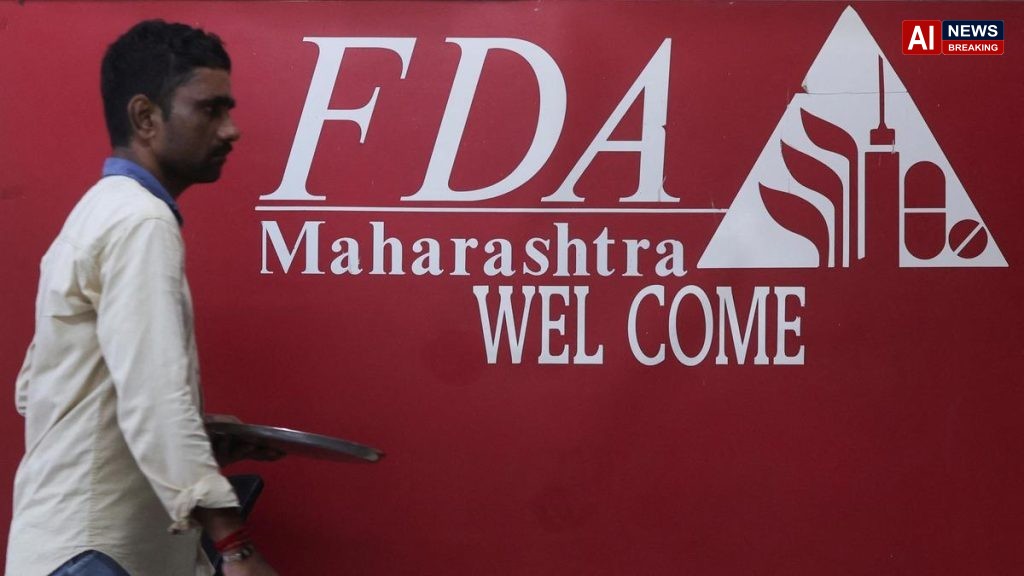
Food and Drug Administration seizes 20,085 litres of oil in Pune over violations of standards - AI News Breaking
food drug administration seizes:
In a decisive enforcement action that underscores the Food and Drug Administration’s (FDA) commitment to safeguarding public health, authorities seized a substantial quantity of oil from a warehouse operated by Avenue Supermarts Limited in Ambi village, Pune. The operation, carried out early this week, involved the confiscation of 20,085 litres of oil that had reportedly fallen short of the stringent standards governing food products in India. The move follows a series of investigations into the company’s supply chain practices, which have raised concerns about compliance with the Food Safety and Standards Authority of India (FSSAI) regulations.The FDA’s investigation began after a routine audit revealed inconsistencies in the product records maintained by the warehouse..
Preliminary findings suggested that the oil batches in question had not undergone the mandatory quality testing required under the FSSAI Act. The company’s internal documentation indicated that the batches were sourced from suppliers who had not secured the necessary certification, a breach that could potentially compromise consumer safety. In response, the FDA authorised a search of the premises, which led to the seizure of the oil and the temporary suspension of the company’s operating licence for the affected facility.Officials noted that the seized oil had been stored in the warehouse’s temperature-controlled area for an extended period, raising questions about the adequacy of its storage conditions..
Under FSSAI guidelines, oils must be kept at a consistent temperature and protected from contamination to preserve their nutritional value and shelf life. The FDA’s assessment concluded that the oil had been stored beyond the recommended duration, potentially resulting in the growth of harmful microorganisms and a deterioration of quality. As a result, the agency has classified the batches as “potentially hazardous” and has issued a notice requiring the company to undergo a comprehensive review of its storage protocols.The seizure also highlighted broader issues within the retail supply chain..
Avenue Supermarts Limited, known for its chain of convenience stores across Maharashtra, reportedly operates a network of warehouses that supply oil and other edible products to its outlets. The FDA’s scrutiny has revealed that several other sites under the company’s umbrella may be operating under similar lapses. In a statement, the agency indicated that it will conduct further inspections across the network to ensure that all facilities meet the national food safety standards..
This is part of a wider initiative by the government to tighten enforcement in the food sector, following a series of high-profile food safety incidents in recent years.The company’s response to the seizure was swift. In a press release, the firm’s spokesperson acknowledged the FDA’s findings and pledged full cooperation with the authorities. “We are committed to upholding the highest standards of food safety,” the spokesperson said..
The statement also mentioned that the company had already begun an internal audit to identify the root causes of the discrepancies and to implement corrective measures. It further assured customers that no product from the affected batches would reach consumers before the completion of a rigorous testing process.From a regulatory perspective, the FDA’s action is significant. It serves as a reminder that food safety violations, regardless of the scale, are met with decisive enforcement..
The agency has repeatedly stated that it will not hesitate to take action against any entity that compromises consumer health. In this instance, the seizure of 20,085 litres of oil represents one of the largest confiscations in recent memory. It signals a clear message to the industry that adherence to food safety norms is non-negotiable.Consumer advocacy groups have welcomed the FDA’s decision, citing the potential risks posed by substandard oil..
“Oil that is not stored or handled correctly can develop toxins that are harmful to consumers, especially when consumed regularly,” said a representative of a local consumer rights organisation. The group urged the government to increase the frequency of inspections and to provide more resources for the FDA to carry out its duties. They also called for greater transparency in the supply chain, suggesting that independent audits could help prevent similar violations in the future.The economic implications of the seizure are also noteworthy..
For a company like Avenue Supermarts Limited, which relies on high-volume distribution of food items, the loss of over 20,000 litres of oil translates into a significant financial hit. While the company has not disclosed the monetary value of the seized stock, industry analysts estimate that the losses could run into millions of rupees, not accounting for potential penalties and the cost of remedial actions. The incident could also affect the company’s reputation, potentially leading to a decline in consumer confidence and a drop in sales across its outlets in the region.Looking ahead, the FDA has outlined a series of steps it will take to ensure that the affected oil is handled responsibly..
The agency will oversee the disposal of the seized product, ensuring that it is processed in a manner that eliminates any health risks. It will also issue a directive to the company to submit detailed reports on the storage conditions, handling practices, and quality control measures for all future oil shipments. Failure to comply with these directives could result in further legal action, including fines and potential closure of the warehouse.In the broader context of India’s food safety landscape, the seizure underscores the evolving regulatory environment..
The FSSAI Act, amended in recent years to introduce stricter compliance requirements, aims to reduce foodborne illnesses and enhance consumer trust. The FDA’s enforcement of these standards, as seen in this case, demonstrates the agency’s willingness to use its powers to enforce compliance. The incident is likely to prompt other firms in the sector to re-evaluate their own procedures, potentially leading to a ripple effect of improved safety standards across the industry..
Updated: November 19, 2026
The FDA seized 20,085 litres of oil from Avenue Supermarts’ Pune warehouse after discovering it had not met FSSAI quality and storage standards. The action, part of a wider crackdown on food safety lapses, has temporarily halted the facility’s licence and prompted a review of the chain’s storage practices.
Insight: This seizure shows regulators are no longer comfortable with “good enough” compliance; a single warehouse’s negligence can ripple through a national chain and shake consumer trust. It forces the industry to adopt tighter, transparent audits or risk being shut down for lapses that threaten public health.






