
 The Supreme Court will decide whether assault weapons bans violate the Second Amendment
 A Critic of Beijing Falls Short in Taiwan’s Key Mayoral Election
 EPA says no rise in contamination after Army detonates lead azide stockpile in Iowa
 Israeli Strike Kills 2 Workers at Gaza Clinic, Doctors Without Borders Says
 McQueen Pre-Fall 2027
Hungary releases ÁVH police archives online.
**
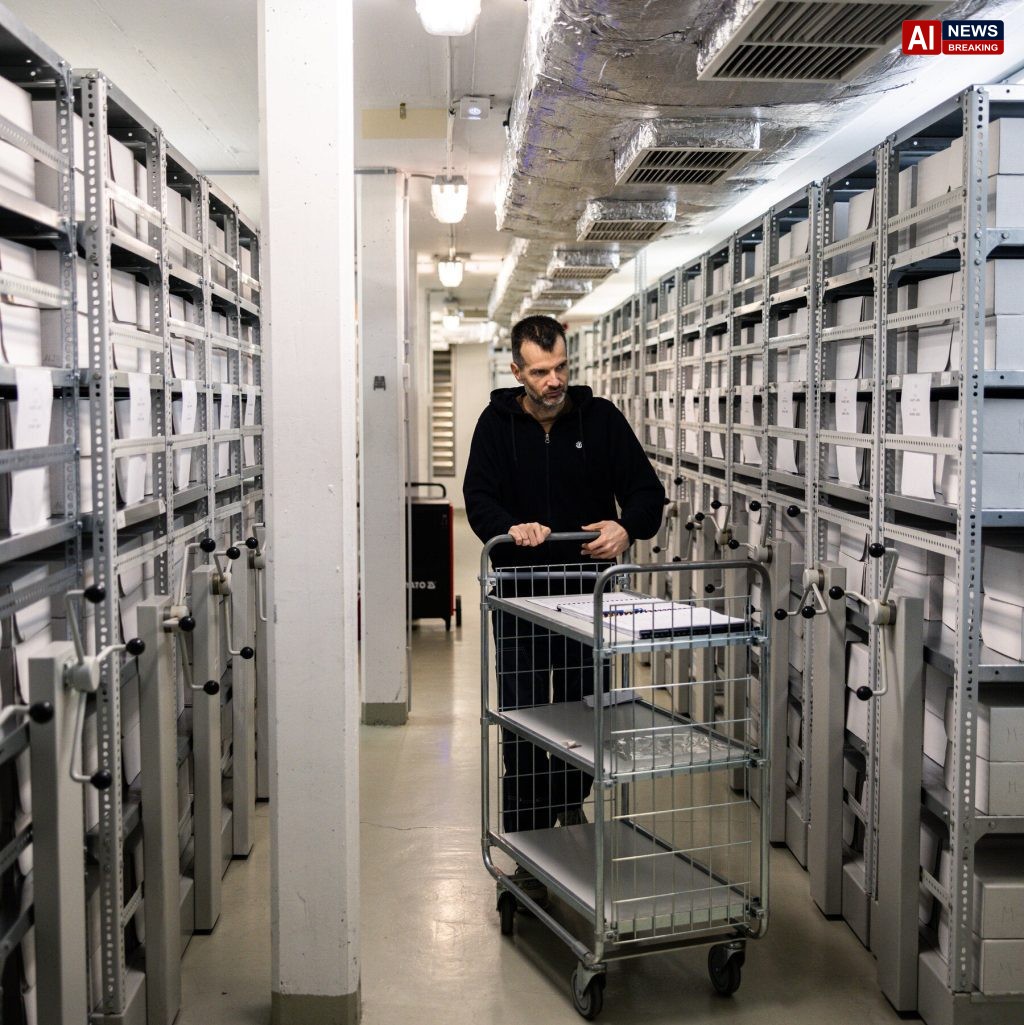
Hungary Threw Open Its Secret Police Files. Let the Finger Pointing Begin. - AI News Breaking
hungary releases police archives:
Hungary Threw Open Its Police Files. Let the Finger Pointing Begin The decision to publish the archives of the Hungarian police, the ÁVH, marks a watershed moment for the nation’s collective memory. For decades the documents remained locked behind a wall of bureaucracy and political sensitivity, but today they are being made available to scholars, journalists, and ordinary citizens..
The move, announced by the Ministry of Culture and supported by a coalition of civil‑society organisations, is intended to foster transparency and to confront the lingering shadows of the Communist era. However, the release has already sparked heated debate about the reliability of the material and the implications for contemporary politics. The archives contain more than two million pages of reports, interrogations, and surveillance notes, covering a period from the 1940s to the late 1980s..
Among the most startling revelations is the sheer scale of the informant network. Estimates suggest that at the height of its power, the ÁVH relied on as many as 50,000 covert agents, a figure that dwarfs the country’s population at the time. These informants, ranging from students to factory workers, were often recruited through promises of protection, career advancement, or, more sinisterly, through blackmail and intimidation..
Their reports were used to suppress dissent, shape public opinion, and maintain Soviet dominance over Hungarian affairs. Critics argue that the documents are riddled with inaccuracies and fabricated evidence. In many cases, the ÁVH relied on hearsay or unverified claims to build dossiers..
Some files reveal that officers exaggerated or invented charges against individuals simply to satisfy quotas imposed by higher authorities. Others show that the police sometimes colluded with foreign intelligence services, exchanging information that was later used to discredit political opponents. While historians recognise the value of these sources for reconstructing the period, they caution against treating every entry as an unchallenged truth..
The state’s decision to digitise the archives is part of a broader initiative to make them accessible online. The Ministry claims that the digital portal will include full-text search, translations, and contextual commentary. Yet the project has faced logistical challenges..
Digitisation of such a vast collection requires significant resources, and there are concerns about the preservation of fragile documents. Furthermore, the process about how to handle sensitive personal information, particularly in cases where individuals or their families are still alive and may be affected by the release of personal data. Public reaction has been mixed..
In cities such as Budapest and Debrecen, demonstrations have called for a national dialogue about how to deal with the legacy of the ÁVH. Supporters of the release argue that confronting the past is essential for democracy, citing similar efforts in Germany and Poland. Opponents fear that the new information could inflame ethnic and political tensions, especially given the current polarized climate..
The Hungarian Socialist Party has called for a cautious approach, warning that the files could be used for political vendettas rather than historical analysis. One of the most controversial aspects of the release concerns the identification of individuals who served as informants. Some reports name people by pseudonym or code, but the digitisation effort aims to match these to real identities..
This process has already led to the posthumous exoneration of some victims, while also implicating former public officials. The political fallout is already evident; former ministers have been forced to issue apologies, and new investigations are underway into alleged abuses of power during the Communist regime. The state has announced that it will provide legal support to those who wish to challenge the documents’ validity or to seek redress..
Scholars have urged a measured approach. Historians point out that the ÁVH’s methodology was often contradictory: while some reports were meticulously documented, others were hurried and unreliable. The sheer volume of material also means that contextual analysis is crucial..
A single entry cannot be understood without considering the broader political climate, the officer’s background, and the target’s social status. As a result, academic institutions are preparing to launch interdisciplinary research projects to sift through the data and produce balanced narratives. The release has also attracted international attention..
European Union bodies have praised the move as a step towards greater openness and historical reckoning. Yet the EU is cautious, noting that the interpretation of the archives could influence Hungary’s relationship with its neighbors. In particular, the documents reveal how the ÁVH collaborated with Soviet intelligence to monitor and suppress ethnic minority movements..
The findings could prompt diplomatic discussions on how to address unresolved grievances among Hungary’s Hungarian‑speaking minorities in Romania and Slovakia. The question of reliability extends to the methods used by the police. Some files suggest that the ÁVH employed psychological warfare techniques, including gaslighting and fabricated evidence..
The discovery that the police had a systematic programme to create false narratives against political opponents raises ethical concerns. If these practices were indeed widespread, they would undermine the legitimacy of the regime’s claims of legitimacy and rule of law. However, determining the extent of such practices requires rigorous verification, something that historians and legal experts are only beginning to undertake..
The impact on contemporary politics is already visible. Opposition parties have seized the opportunity to call for a comprehensive truth commission, reminiscent of the processes in South Africa and Argentina. They argue that a formal investigation into the ÁVH’s actions would help heal societal divisions and prevent the misuse of historical documents for partisan gain..
The ruling party, meanwhile, insists that the archives are being used responsibly and that any accusations of abuse are being scrutinised within the existing legal framework. The debate highlights the delicate balance between transparency and political stability. The archives also shed light on the role of the ÁVH in shaping media and culture..
Reports show that the police monitored writers, musicians, and artists, often.
Updated: November 25, 2026
The flood of ÁVH files turns Hungary’s past from a closed chapter into a living battlefield of memory, forcing a reckoning that could either heal old wounds or reopen them. By exposing a surveillance state built on fabricated charges, the archives risk turning historical truth into a tool for current power struggles, demanding a





