Pakistan’s leaders hail first astronaut aboard Chinese craft: ‘Proud one of us has gone into space’
 British tourist travels 29 hours from Mumbai to Amritsar for ₹5,461, rates Indian Railways 10/10 | Viral video
 The Supreme Court will decide whether assault weapons bans violate the Second Amendment
 A Critic of Beijing Falls Short in Taiwan’s Key Mayoral Election
 EPA says no rise in contamination after Army detonates lead azide stockpile in Iowa
In France’s Angry Autumn, TV News Channels Are Accused of Stirring the Pot
**
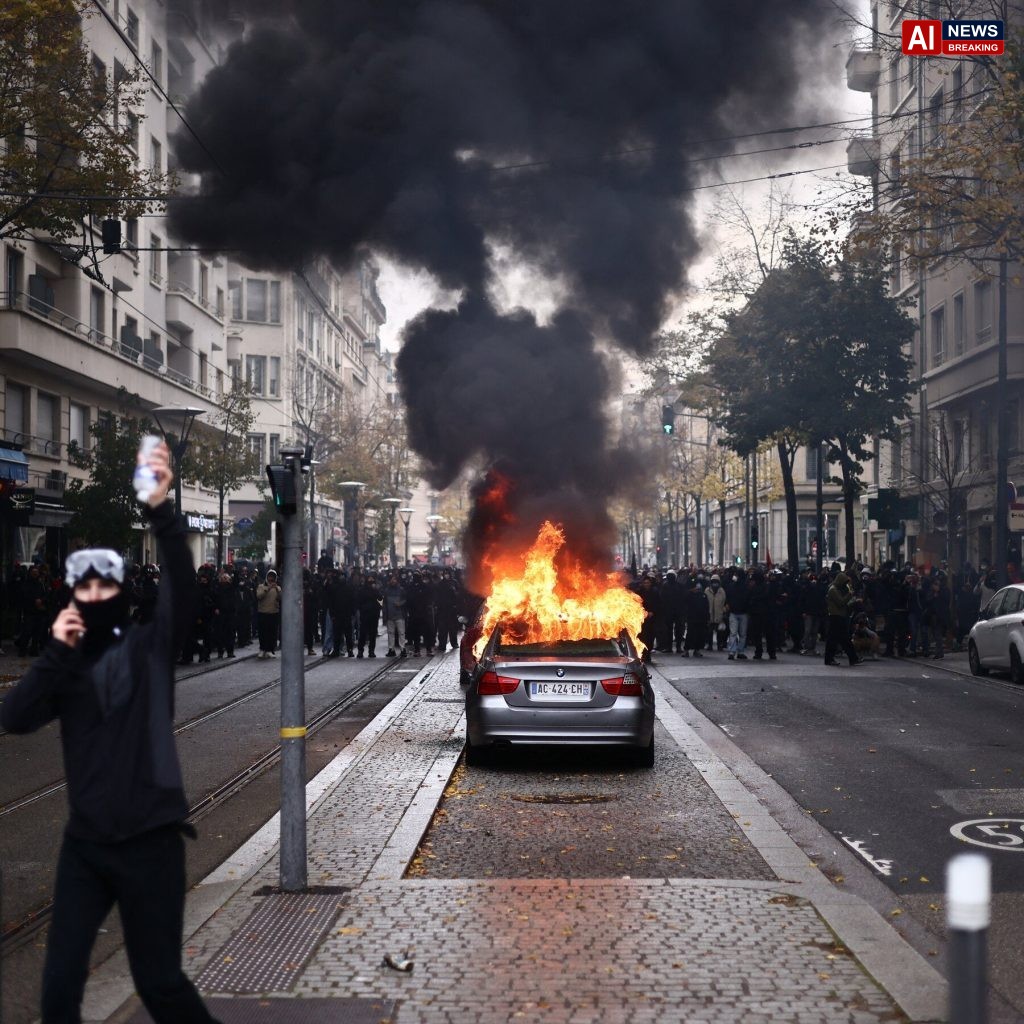
In France’s Angry Autumn, TV News Channels Are Accused of Stirring the Pot - AI News Breaking
frances angry autumn channels:
In the wake of the so‑called “Angry Autumn” protests that have swept through France since September, two of the country’s most watched television news channels, CNews and BFM TV, have come under fire for what critics allege is the use of racially charged language in their coverage of the demonstrations. The accusations have ignited a broader debate about the role of media in a highly polarized society, the limits of editorial freedom, and the responsibilities of broadcasters when reporting on social unrest that has frequently turned violent.The controversy began after a series of clips from the evening bulletins of both channels were examined by a coalition of civil‑rights groups, journalists’ unions and academic researchers. The analysis, published last week, claims that certain commentators repeatedly employed terms such as “suburban hordes” and “immigrant gangs” when describing participants in the protests, particularly those taking place in the banlieues of Paris, Lyon and Marseille..
The report argues that such phrasing reinforces negative stereotypes and contributes to a climate of hostility towards France’s minority communities, many of whom have been disproportionately affected by the economic downturn and the security measures introduced in recent months.CNews, owned by the Canal+ group, and BFM TV, part of the Altice Media conglomerate, responded swiftly to the allegations. In separate press releases, both outlets rejected the accusations, asserting that their coverage remains “fact‑based, balanced and in line with journalistic standards.” They pointed to the fact that their correspondents on the ground have documented instances of vandalism, looting and clashes with police, and argue that the language used reflects the reality of the events rather than any editorial bias. Both stations have also announced internal reviews of the disputed bulletins, promising to publish the findings within a fortnight.The debate has quickly moved beyond the confines of media criticism to the political arena..
Opposition parties in the National Assembly, particularly those on the left, have seized upon the reports as evidence of an entrenched media narrative that scapegoats immigrants and marginalised groups. In a statement on Tuesday, the parliamentary group of La France Insoumise called for the creation of an independent media regulator with the power to sanction outlets that breach standards of impartiality and non‑discrimination. The ruling centre‑right coalition, while acknowledging the need for vigilance, cautioned against any measure that might impede press freedom, arguing that “the press must be free to report on public disorder without fear of punitive oversight.”Legal experts note that French law does contain provisions aimed at combating hate speech in the public sphere, including on television..
Article 24 of the Law on Freedom of the Press of 1881 makes it an offense to incite discrimination, hatred or violence on the basis of race, ethnicity or nationality. However, they point out that the threshold for prosecuting media organisations is high, requiring a clear demonstration that the language used was intended to provoke hostility rather than merely describe events. “The line between reporting and inflammatory rhetoric is notoriously blurry,” said Professor Isabelle Dubois of the Sorbonne’s Faculty of Law..
“Courts tend to be reluctant to intervene unless there is a manifest and intentional breach of the law.”Public opinion appears divided. A poll conducted by the Institut français d’opinion publique (IFOP) last weekend found that 57 % of respondents believed the media had exaggerated the role of immigrants in the protests, while 38 % felt that the coverage was accurate and necessary to inform citizens about the seriousness of the unrest. Among younger respondents, those aged 18‑29, the scepticism was more pronounced, with 62 % expressing distrust in mainstream television news and a preference for online platforms and social media for their information.The protests themselves, which began as a response to a proposed pension reform and quickly escalated into broader expressions of discontent over economic inequality, have been marked by a mixture of peaceful rallies and violent confrontations..
Police reports indicate that over the past two months more than 2,000 arrests have been made, with a notable proportion of detainees being of North‑African or sub‑Saharan descent. Human‑rights organisations have raised concerns about alleged excessive use of force, while the interior ministry maintains that the security measures are proportionate to the threat posed by radical elements seeking to destabilise public order.In the midst of the controversy, journalists at both CNews and BFM TV have voiced their own concerns. A group of reporters from the two channels signed an open letter to their editors, urging a clearer editorial policy on the use of descriptive terms when covering protests..
“We are committed to informing the public without resorting to language that could be interpreted as vilifying entire communities,” the letter read. Some senior editors, however, have defended the choice of words, arguing that the terms used were sourced from police briefings and statements from local officials, and thus reflect the language employed by authorities on the ground.The incident has also prompted a re‑examination of how French broadcasters handle live coverage. Unlike many of their counterparts in the United Kingdom, where Ofcom imposes strict impartiality rules during election periods, French regulators such as the Conseil supérieur de l’audiovisuel (CSA) have traditionally focused more on technical standards and less on editorial content..
Nevertheless, the CSA announced on Wednesday that it would convene a special session to discuss whether existing guidelines sufficiently address the potential for racial bias in news reporting, especially during periods of heightened social tension.As the “Angry Autumn” shows few signs of abating, the scrutiny of CNews and BFM TV may prove to be a catalyst for broader reforms in French media practice. Whether the outcome will be a tightening of regulatory oversight, a shift in editorial culture, or simply a reaffirmation of the channels’ defensive stance remains uncertain. What is clear, however, is that the episode has heightened public awareness of the power of language in shaping perceptions of protest, and it has placed a spotlight on the delicate balance between informing citizens and inflaming societal divides..
Updated: November 21, 2026
French TV news giants CNews and BFM TV are under fire after civil‑rights groups say their “Angry Autumn” bulletins used racially charged terms to describe protestors, sparking a debate over media bias and regulatory oversight. Both stations deny wrongdoing, launch internal reviews, and face pressure from politicians and the public to curb language that may stigmatise minority communities.
Insight: The “Angry Autumn” saga shows that when broadcasters label unrest with racial shorthand, they don’t just report the story—they help script the nation’s prejudice, turning volatile streets into a media‑fuelled fault line.
If the outcry forces a tighter regulator or a newsroom culture shift, it will