
 Pakistan’s leaders hail first astronaut aboard Chinese craft: ‘Proud one of us has gone into space’
 British tourist travels 29 hours from Mumbai to Amritsar for ₹5,461, rates Indian Railways 10/10 | Viral video
 The Supreme Court will decide whether assault weapons bans violate the Second Amendment
 A Critic of Beijing Falls Short in Taiwan’s Key Mayoral Election
 EPA says no rise in contamination after Army detonates lead azide stockpile in Iowa
In French Election, Centrists Eye a Judo Star and a Central Banker
**
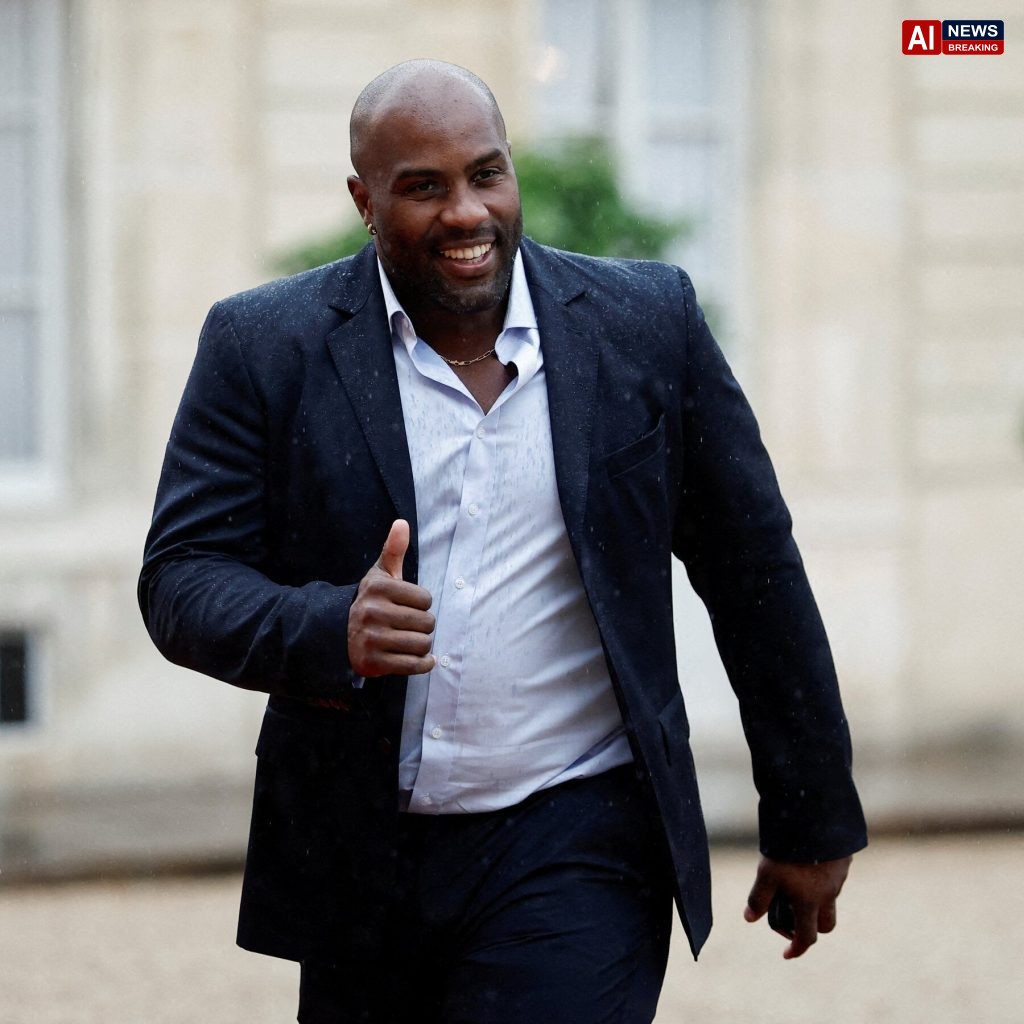
In French Election, Centrists Eye a Judo Star and a Central Banker - AI News Breaking
french election centrists judo:
Title: In French Election, Centrists Eye a Judo Star and a Central Banker In the run‑up to France’s 2027 presidential election, a growing coalition of centrists is actively seeking a candidate who can bridge the widening gap between the far right and the far left. Traditional political options have struggled to attract broad voter appeal, prompting a search for a figure whose public profile and reputation transcend partisan lines. The focus has sharpened on two unlikely candidates: judo legend Teddy Riner and former European Central Bank governor Christine Lagarde..
Each brings a distinct set of credentials that could resonate with an electorate weary of ideological extremes. Teddy Riner, the seven‑time Olympic gold‑medallist, has long been a national icon. His record in international judo, combined with his charismatic media presence, makes him a household name across France..
Riner’s outspoken support for social cohesion and his charitable work with underprivileged youth position him as a moral authority who could appeal to voters on both sides of the political spectrum. The centrists hope that his sporting success, coupled with a proven track record of discipline and resilience, could translate into political credibility. Christine Lagarde, meanwhile, commands global recognition as a former Managing Director of the European Central Bank and current President of the International Monetary Fund..
Her tenure has been marked by decisive action in navigating the Eurozone through crises, earning her respect among business leaders and economists. While her experience in finance is widely lauded, her perceived detachment from everyday concerns may limit her appeal to a broader electorate. Nonetheless, her international stature could lend weight to a centrist platform focused on economic stability and fiscal responsibility..
Both candidates are being evaluated against a backdrop of declining voter turnout, particularly among younger demographics. The French public’s frustration with the perceived polarization of the political arena has spurred centrist leaders to consider personalities who can unify. This phenomenon echoes trends across Europe, where traditional party structures are being challenged by figures who bring expertise or star power outside conventional politics..
Riner’s potential candidacy has attracted enthusiasm from a segment of the media that celebrates sports heroes stepping into public service. The hypothesis is that his disciplined training regimen and team-oriented mindset could serve as metaphors for national governance. Moreover, Riner’s close relationship with French President Emmanuel Macron’s administration, who previously celebrated his Olympic victories, could facilitate an easier transition into the political sphere..
Lagarde’s name, however, carries an aura of gravitas that might appeal to voters concerned with economic uncertainty. Her tenure at the ECB was marked by a cautious approach to monetary policy during the 2008 crisis, and her later leadership at the IMF focused on global financial reform. The centrists envision her as a stabilising force capable of negotiating complex policy matters while reassuring investors and international partners alike..
The decision, however, hinges on strategic calculations about electability and campaign logistics. Riner would need to rapidly build a robust policy platform, while Lagarde would face scrutiny over her perceived elitism and lack of domestic political experience. Both would need to navigate the French electoral system’s requirement for a two‑round run‑off, meaning they must secure an initial lead to avoid the final face‑off between far‑right Marine Le Pen and far‑left Jean‑Léon Moro..
The centrists are also weighing the risk of a “candidate as a brand” strategy versus a more traditional policy‑driven approach. Critics argue that a sports icon or financial chief could lack the depth required to tackle complex domestic issues such as education reform, healthcare, and climate policy. Proponents counter that the public’s appetite for charismatic leadership might outweigh the need for a comprehensive policy dossier..
In early polls, the public’s preference leans toward a candidate who can combine moral authority with practical governance. A survey by Ipsos in late February found that 36 % of respondents would consider voting for a former athlete if he could propose realistic solutions, while 29 % favoured a former central banker who could stabilize the economy. The remaining voters expressed skepticism about both options, citing concerns over experience and political baggage..
Within the centrist coalition, the debate is intensifying. Some factions advocate for a “homegrown” politician who could leverage existing parliamentary networks. Others push for a high‑profile outsider who could disrupt the status quo..
The selection process will involve consultations with local party chapters, business leaders, and grassroots activists, aiming to gauge grassroots support before making a formal announcement. As the campaign trail looms, both Riner and Lagarde have reportedly begun groundwork. Riner has been seen attending community events in Paris’s suburbs, while Lagarde is reportedly drafting a set of economic proposals aimed at boosting small‑business growth..
Neither has yet formally declared candidacy, but the centrists’ keen interest suggests that the political landscape may soon see a fresh face at the heart of France’s most consequential election. The choice between a judo champion and a central banker will not only shape the centrist narrative but could also alter the trajectory of French politics. Should a candidate emerge who successfully marries star power with substantive policy, it may herald a new era of French electoral dynamics—one in which personality and expertise are equally weighed against ideological purity..
As the election draws nearer, the world will be watching France’s attempt to chart a path between polar extremes and a more inclusive democratic future..
Updated: November 13, 2026
Centrist leaders gamble that a judo star or a former ECB governor will appeal to voters tired of ideological slog, hoping charisma can bridge policy gaps. If either succeeds, France may signal a shift toward personality‑driven politics, risking depth for electoral appeal.





