
 Trump administration offers mixed messages on limits to Ukraine’s Starshield access
  US Treasury proposes a rule to crack down on high-tech investments in China, other adversaries
  Calley Means, a key MAHA advocate, resigns as a top RFK Jr. adviser
  Spotify Tightens Family Plan Controls with QR Code Verification
  Use of Chief Minister C. Joseph Vijay’s deep fake videos to collect money: Rajasthan youth moves Madras High Court seeking bail
 India lifts ban on commercial wheat exports
** After more than two years of a strict export prohibition, India has lifted its ban on commercial wheat shipments. The move seeks to help farmers offload surplus grain, improve rural incomes, and re‑enter global markets, while the government vows to monitor domestic supply to protect food security.
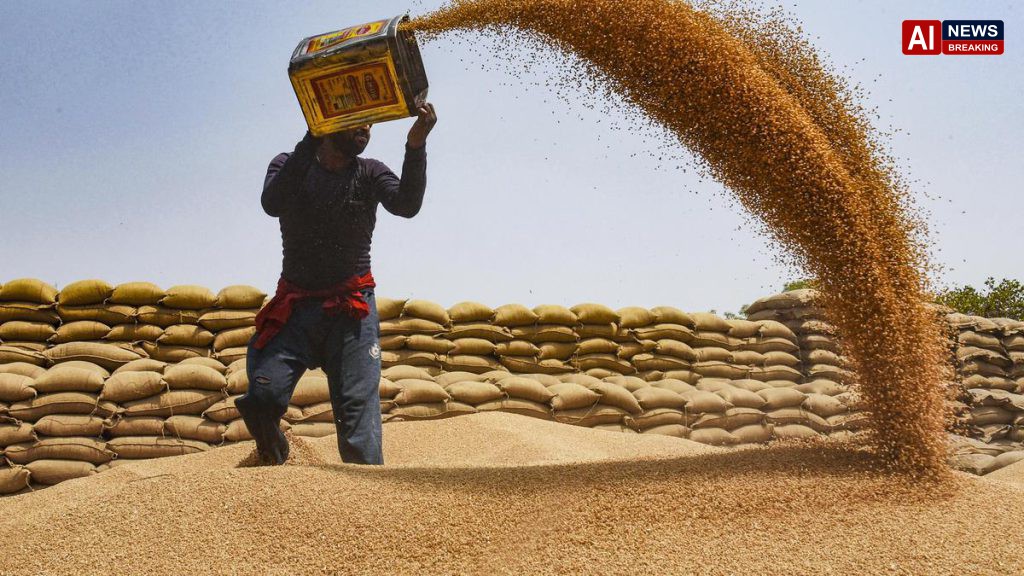
India lifts ban on commercial wheat exports - AI News Breaking
india lifts commercial wheat:
New Delhi, India has officially lifted its ban on the commercial export of wheat, a significant policy reversal that underscores the government’s commitment to supporting agrarian communities amid a period of depressed domestic grain prices. The decision, announced by the Ministry of Commerce and Industry, comes after more than two years of a strict prohibition that was initially imposed to ensure food security and stabilize internal markets during a period of global supply chain disruptions and inflationary pressures. By removing the restrictions, the administration aims to provide farmers with a alternative outlet for their surplus produce, thereby preventing a sharp decline in income that has emerged due to an unexpectedly robust harvest and a saturated local market.The original export ban, which took effect in May 2022, was one of the most drastic measures undertaken by any major grain-producing nation since Russia’s invasion of Ukraine triggered severe turmoil in global commodity markets..
At that time, India was grappling with record-breaking heatwaves that threatened crop yields, while simultaneously facing rising consumer prices that eroded public purchasing power. The government argued that retaining wheat within the country was essential to maintain the stability of its public distribution system, which provides subsidized food to hundreds of millions of citizens. However, the removal of the ban now signals a shifting geopolitical and economic landscape, where abundant domestic supply and stable global prices have created a favorable environment for Indian exporters to re-enter the international arena.Agricultural experts note that the timing of this decision is critical, as it coincides with the completion of the harvest season in several key wheat-growing states, including Punjab, Haryana, and Uttar Pradesh..
Farmers in these regions had reported significant distress in recent months, as excess supply drove down mandis, or wholesale market prices, below the minimum support price guaranteed by the government. In response to widespread petitions and complaints from farmer unions, the administration had previously stepped in to procure larger volumes of wheat for buffer stocks. Nevertheless, officials acknowledged that procurement alone was insufficient to absorb the entire surplus, leaving many small and marginal farmers with unsold inventory and diminished revenue..
Lifting the export ban is seen as a necessary structural adjustment to address this imbalance.The global wheat market has undergone a dramatic transformation since the imposition of the ban two years ago. Conflicts in Eastern Europe, which are major wheat exporters, have since stabilized somewhat, and favorable weather conditions in other parts of the world have led to increased production and improved supply chains. Consequently, international wheat prices have retreated from their historic peaks, making Indian wheat more competitive in price-sensitive markets in Africa and Asia..
Indian exporters, who had been largely sidelined during the prohibition period, are now preparing to restart shipments to countries such as the Philippines, Myanmar, and several West African nations. Industry analysts predict that domestic farmers will benefit from the price premium available in these international markets, which often exceeds the local procurement rates.This policy shift also reflects a broader strategic realignment in India’s agricultural export strategy. The government has historically viewed grain exports as a tool for managing domestic scarcity and political stability, often prioritizing self-sufficiency over commercial gains..
However, the current administration appears to be adopting a more balanced approach that recognizes the economic importance of agriculture as a source of foreign exchange and rural employment. By allowing commercial exports, the state is attempting to reinstate the confidence of trading firms and farmers alike, many of whom had invested heavily in infrastructure and logistics expectations that were suspended when the ban was enacted. The removal of trade barriers is expected to revitalize this sector and encourage private investment in storage and transportation facilities.Despite the positive outlook for farmers, the decision has not been without controversy..
Critics argue that lifting the ban too early could risk undermining the progress made in stabilizing domestic food prices, particularly in a country where inflation remains a sensitive political issue. Consumer rights groups and opposition political parties have raised concerns that allowing large volumes of wheat to leave the country could eventually lead to shortages and price hikes for the urban poor, who rely on the subsidized public distribution system. The government has attempted to allay these fears by emphasizing that exports will be subject to strict periodic review and that the primary focus remains on ensuring adequate domestic availability..
Authorities have stated that they will closely monitor stock positions and are prepared to reimpose restrictions if necessary to protect national food security.Furthermore, the logistics of restarting the export machinery present significant challenges for Indian traders. After a prolonged period of inactivity, supply chains have rusted, and buyers have established relationships with other suppliers such as Russia, Canada, and the European Union. Rebuilding trust and demonstrating reliability will require concerted efforts from the Indian government to provide clear guidelines, streamline paperwork, and ensure timely shipments..
The Ministry of Commerce has held several consultations with industry stakeholders to address these concerns and has promised to streamline regulatory processes to facilitate smoother transactions. It remains to be seen how quickly the industry can ramp up production and meet the demands of international buyers who have been cautious about relying on Indian sources after the abrupt halt in 2022.The implications of this decision extend beyond mere economics, touching upon the complex dynamics of global food security. As one of the world’s largest producers and historically one of the top exporters, India’s participation in the global market is vital for balancing supply and demand..
Its absence during the ban period contributed to volatility in international prices and heightened anxiety among import-dependent nations. The return of Indian wheat to the global stage is expected to contribute to market stability and provide a much-needed supply buffer for countries facing their own cultivation challenges. This move aligns with India’s broader diplomatic goal of positioning itself as a responsible major power that contributes to global welfare, rather than isolating itself during crises.Domestic political considerations also play a pivotal role in this timing..
With elections looming in various states, the government is keen to secure the support of rural voters, who constitute a significant voting bloc. Supporting farmers through favorable trade policies is a proven strategy for garnering political capital in agrarian districts. The narrative being constructed by government spokespeople emphasizes that the decision is a direct response to the cries of the farming community, framing the administration as responsive and empathetic to the plight of those at the grassroots level..
This political calculus underscores the intricate interplay between economic policy and domestic electoral strategies in India’s democratic framework.Looking ahead, the sustainability of wheat exports will depend on a variety of factors, including weather conditions, crop yields, and global demand trends. Meteorological agencies are currently predicting normal monsoon rains, which are crucial for the upcoming Rabi season, but any deviation could impact future harvests and necessitate another review of export policies. The government has indicated that it will maintain a watchful eye on global developments and domestic stock levels, retaining the flexibility to adjust policies as needed..
This adaptable approach aims to balance the competing interests of producers, consumers, and traders, ensuring that the agricultural sector remains robust and resilient.The lifting of the ban marks a significant chapter in India’s post-pandemic economic.
Updated: August 24, 2026
This pivot reveals India’s delicate tightrope walk between agrarian welfare and political expediency ahead of elections. The move suggests policy is now reacting to domestic pressure rather than solely global food security mandates.