Europe warns of Russia’s hybrid attacks but struggles to counter them
  Former chief election commissioner calls SIR scheme illegal.
  A Corruption Scandal Is Reshaping Brazil’s Presidential Election
  US citizen injured in Illinois after ICE agents mistook him for fugitive, tried to arrest him
  At 10 years old, Smithsonian’s Black museum is undaunted amid pressure from Trump administration
 India Says China ‘Must Reflect’ on Its Support to Pakistan During Operation Sindoor
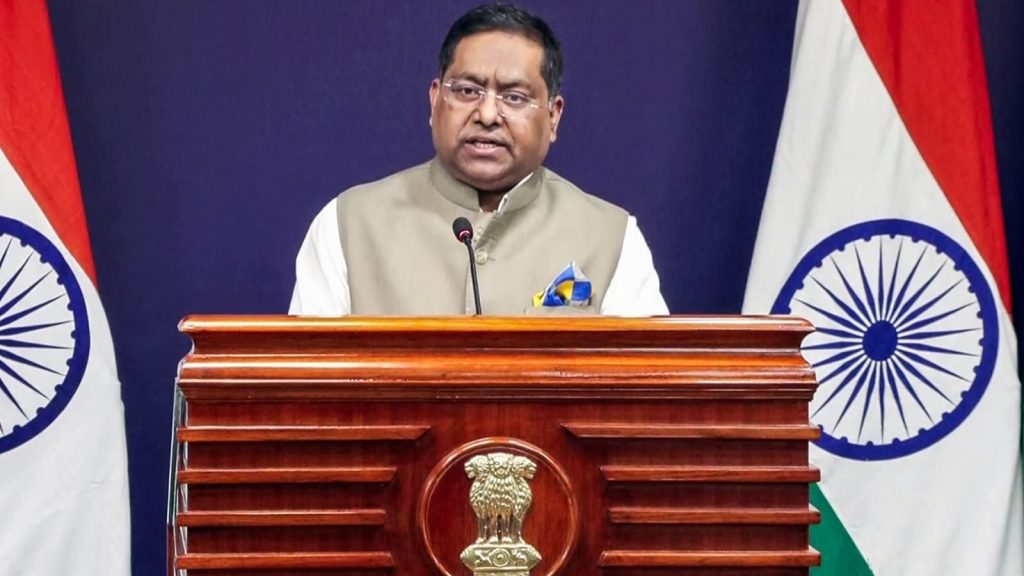
MEA clarifies passport purpose - AI News Breaking
india says china must:
India has sharply reacted to China’s reported support for Pakistan during Operation Sindoor, saying Beijing “must reflect” on its actions and regional responsibilities. The remarks come amid heightened tensions in South Asia and growing scrutiny over China-Pakistan strategic cooperation during the recent military standoff.
New Delhi’s statement signals rising diplomatic friction, with India warning that external backing to Pakistan during sensitive security operations undermines regional stability and trust.
India has issued a strong diplomatic message to China over its reported backing of Pakistan during Operation Sindoor, with officials asserting that Beijing “must reflect” on the implications of its actions for regional peace and bilateral relations. The comment marks one of the clearest public indications yet that New Delhi is closely examining the geopolitical dimensions of the recent India-Pakistan confrontation and the role played by external powers.
The statement comes at a time when India’s relations with both Pakistan and China remain deeply strained. While tensions with Pakistan escalated due to security and military developments linked to Operation Sindoor, India’s broader strategic concerns are increasingly centered around the growing alignment between Islamabad and Beijing.
India’s Sharp Message to Beijing
The phrase “must reflect” carries considerable diplomatic weight in Indian foreign policy language. It indicates dissatisfaction without formally escalating to a direct confrontation. Indian officials appear to be signaling that China’s conduct during the crisis has not gone unnoticed and could affect future engagement between the two Asian powers.
According to diplomatic observers, New Delhi believes China’s overt or indirect support to Pakistan during Operation Sindoor reinforced long-standing Indian concerns regarding the China-Pakistan strategic nexus. India has repeatedly argued that Beijing’s military, economic, and diplomatic support emboldens Pakistan at sensitive moments.
The latest remarks suggest that India views China not merely as a neutral observer in regional conflicts but as an active geopolitical actor whose policies influence the strategic balance in South Asia.
What Was Operation Sindoor?
Operation Sindoor emerged as one of the most significant military-security episodes between India and Pakistan in recent months. Though official operational details remain partly classified, the operation reportedly involved targeted Indian military actions and heightened border preparedness following security threats and militant-linked concerns.
The operation triggered strong reactions across the region, with Pakistan condemning India’s moves while simultaneously strengthening diplomatic coordination with allies, particularly China.
Indian strategic analysts argue that Beijing’s positioning during the operation once again demonstrated the depth of its “all-weather partnership” with Islamabad. Chinese statements during the period were closely monitored in New Delhi, especially any comments relating to sovereignty, regional security, and military restraint.
The China-Pakistan Strategic Axis
India’s concern over China’s role cannot be separated from the broader geopolitical landscape. Over the past decade, China and Pakistan have deepened cooperation across defense, infrastructure, intelligence, and diplomacy.
The China-Pakistan Economic Corridor (CPEC), a flagship component of China’s Belt and Road Initiative, has further cemented this partnership. India has consistently objected to parts of the corridor passing through Pakistan-occupied Kashmir, which New Delhi considers sovereign Indian territory.
Beyond economics, defense collaboration between the two countries has intensified significantly. Pakistan relies heavily on Chinese military hardware, including fighter aircraft, drones, missile systems, and naval assets. Joint military exercises and intelligence-sharing mechanisms have also expanded.
For India, this partnership creates a complex “two-front challenge,” where tensions with Pakistan increasingly intersect with competition against China.
Why India Is Concerned
Indian policymakers believe that Chinese backing gives Pakistan greater diplomatic confidence during periods of military confrontation. In New Delhi’s assessment, Beijing’s support can dilute international pressure on Islamabad and complicate crisis management.
There is also concern that China uses regional instability strategically to constrain India’s rise as a major power. Indian security experts frequently point to simultaneous border tensions with China and cross-border security concerns involving Pakistan as evidence of coordinated pressure.
The “must reflect” remark therefore appears aimed at warning China that its actions could further damage already fragile bilateral ties.
India-China Relations Remain Fragile
Relations between India and China have remained tense since the deadly Galwan Valley clash in 2020. Despite multiple rounds of military and diplomatic talks, trust between the two sides remains low.
Although both nations continue economic engagement and participate in multilateral forums such as BRICS and the Shanghai Cooperation Organisation, strategic suspicion dominates the relationship.
India has increasingly strengthened defense partnerships with countries such as the United States, France, Japan, and Australia. Simultaneously, China has continued expanding ties with Pakistan and increasing its regional influence.
Against this backdrop, any perceived Chinese support to Pakistan during a military-sensitive period is viewed in India through a much broader strategic lens.
Diplomatic Signaling Without Escalation
Interestingly, India’s language stopped short of direct accusations or formal condemnation. Analysts say this reflects New Delhi’s attempt to balance firmness with diplomatic restraint.
India appears keen to avoid simultaneous uncontrolled escalation with both Pakistan and China. Instead, the current approach focuses on signaling strategic displeasure while keeping diplomatic channels open.
This calibrated messaging is consistent with India’s recent foreign policy pattern—assertive rhetoric combined with controlled escalation thresholds.
Regional Implications
The controversy surrounding China’s support to Pakistan during Operation Sindoor could have wider implications for South Asian geopolitics.
1. Increased Strategic Polarization
India may deepen cooperation with Western and Indo-Pacific partners in response to closer China-Pakistan coordination.
2. Greater Military Preparedness
The Indian military is likely to continue planning for dual-front contingencies involving both Pakistan and China.
3. Diplomatic Realignment
Smaller regional nations may face growing pressure to balance relations carefully between India and China.
4. Impact on Bilateral Talks
Future India-China diplomatic engagements may become more complicated if New Delhi believes Beijing is actively undermining Indian security interests.
Pakistan’s Role in the Equation
Pakistan has long viewed China as its most reliable strategic ally. During periods of friction with India, Islamabad often turns to Beijing for diplomatic backing at international forums, including the United Nations Security Council.
China, in turn, sees Pakistan as a critical strategic partner that provides access to the Arabian Sea and helps counterbalance India’s growing regional and global influence.
This mutually reinforcing partnership has become one of the defining geopolitical realities of South Asia.
International Reactions
Global powers are closely watching the evolving dynamics between India, Pakistan, and China. Many countries remain concerned that simultaneous tensions among three nuclear-armed states could destabilize the region.
Western governments have generally encouraged restraint and dialogue, while also acknowledging India’s growing strategic importance in the Indo-Pacific framework.
At the same time, China continues presenting itself as a stabilizing regional actor, even as India questions Beijing’s neutrality.
Strategic Messaging Ahead of Future Crises
Experts believe India’s statement is not only about Operation Sindoor but also about setting the tone for future crises. By publicly asking China to “reflect,” India is effectively laying down a diplomatic marker.
The message appears designed to communicate three key points:
- India is monitoring China’s regional behavior closely.
- Support to Pakistan during sensitive periods will affect bilateral trust.
- New Delhi is prepared to respond strategically, diplomatically, and militarily to evolving regional alignments.
A Region Entering a More Competitive Era
South Asia is increasingly becoming a theater of strategic competition involving military preparedness, economic corridors, diplomatic influence, and technological rivalry.
India’s remarks on China’s support to Pakistan during Operation Sindoor underscore how regional crises are no longer purely bilateral. They are now embedded within larger geopolitical rivalries involving major powers and competing strategic blocs.
For New Delhi, the issue is not simply Pakistan’s actions but the broader ecosystem of support that sustains Islamabad during confrontations. For Beijing, maintaining strong ties with Pakistan remains central to its regional strategy.
The result is a more polarized and volatile strategic environment where every crisis risks drawing in wider geopolitical actors.
AI Insight
India’s “must reflect” remark is a carefully calibrated strategic signal rather than an emotional diplomatic response. It reflects New Delhi’s growing belief that future security challenges will increasingly involve coordinated geopolitical pressure from both Pakistan and China. The statement also highlights how South Asian conflicts are becoming intertwined with larger Indo-Pacific power rivalries. Going forward, India is likely to accelerate military modernization, deepen global strategic partnerships, and adopt a tougher diplomatic posture toward any external support perceived to undermine its national security interests.