
 Pakistan’s leaders hail first astronaut aboard Chinese craft: ‘Proud one of us has gone into space’
 British tourist travels 29 hours from Mumbai to Amritsar for ₹5,461, rates Indian Railways 10/10 | Viral video
 The Supreme Court will decide whether assault weapons bans violate the Second Amendment
 A Critic of Beijing Falls Short in Taiwan’s Key Mayoral Election
 EPA says no rise in contamination after Army detonates lead azide stockpile in Iowa
India’s C-Section Rate Raises Concern as Private Hospitals Report Higher Share of Surgical Births
**
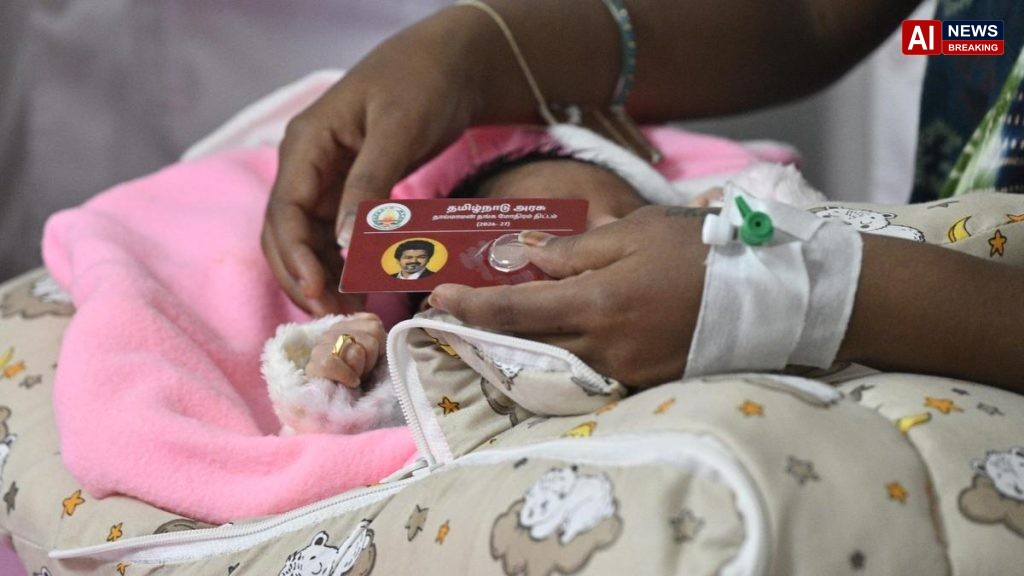
India study finds 58 % - AI News Breaking
indias csection rate raises:
A recent nationwide study has revealed that the majority of deliveries taking place in private‑sector hospitals across India are now being performed by caesarean section, a trend that has prompted renewed debate over the clinical, economic and ethical implications of surgical births. The research, commissioned by a leading public health institute and based on data collected from more than 1.2 million births between 2018 and 2022, found that 58 per cent of all deliveries in private facilities were carried out by C‑section, compared with 31 per cent in public hospitals. The disparity was even more pronounced in urban centres, where private hospitals accounted for roughly two‑thirds of all births and reported a caesarean rate of 62 per cent.The study’s authors caution that while some increase in surgical deliveries is expected as obstetric care becomes more advanced, the current figures suggest a systematic shift away from vaginal birth that is not fully justified by medical need..
The researchers used a combination of hospital records, insurance claim data and direct surveys of obstetricians to assess the indications for surgery. They concluded that only about 18 per cent of the private‑sector C‑sections could be linked to clear, evidence‑based obstetric complications such as placenta previa, fetal distress or obstructed labour. The remaining procedures were classified as “elective” or “maternal request”, categories that often reflect non‑clinical considerations such as convenience, perceived safety or financial incentives.Financial factors appear to play a significant role in the rising caesarean rates..
Private hospitals typically charge between three and five times more for a C‑section than for a vaginal delivery, and the higher reimbursement rates are reflected in the revenue streams of many for‑profit facilities. The study noted that in several metropolitan areas, the average cost of a caesarean delivery exceeded INR 150,000 (approximately USD 1,800), while a normal birth was billed at roughly INR 55,000. Insurance providers, especially those offering cashless cash‑out policies, often reimburse the higher amount without stringent verification of medical necessity, creating a financial environment that may inadvertently encourage surgical births.The geographic distribution of caesarean deliveries, however, is not uniform..
The four cities that recorded the lowest private‑hospital C‑section rates – Chennai, Coimbatore, Salem and Vellore – are all located in the southern state of Tamil Nadu. In these urban centres, the proportion of surgical births in private facilities ranged from 42 to 48 per cent, markedly below the national private‑sector average. The researchers attribute this variation to a combination of factors, including stronger adherence to clinical guidelines, higher public awareness of birth options, and the presence of a larger number of teaching hospitals that maintain a culture of evidence‑based obstetric practice.Tamil Nadu’s comparatively lower rates have been linked to long‑standing state policies that promote institutional delivery while simultaneously enforcing stricter oversight of private providers..
Since 2015, the state health department has required private obstetricians to submit detailed justification forms for each C‑section, a measure that has been credited with curbing unnecessary surgeries. Moreover, a robust network of community health workers in the region has facilitated prenatal education programmes that emphasize the benefits and safety of vaginal delivery when medically appropriate. The study highlights that in Chennai, for instance, 68 per cent of pregnant women reported receiving counselling on delivery mode during antenatal visits, compared with 42 per cent in the capital city of New Delhi.The implications of the findings extend beyond immediate health outcomes..
Caesarean sections, while generally safe when indicated, carry higher risks of infection, haemorrhage and longer hospital stays for mothers, as well as increased chances of respiratory complications for newborns. In the long term, children born by C‑section may face a greater likelihood of developing asthma, allergies and obesity, according to a body of epidemiological research. The financial burden associated with higher surgical rates also strains families and the broader health system, especially in a country where out‑of‑pocket expenditure still accounts for a substantial share of healthcare spending.Policy experts and professional bodies have responded to the study with calls for a multi‑pronged approach to address the surge..
The Indian Medical Association has urged the Ministry of Health and Family Welfare to update national guidelines on caesarean delivery and to introduce mandatory audit mechanisms for private hospitals. Meanwhile, the Ministry’s recently launched “Safe Birth Initiative” aims to standardise reporting of obstetric interventions and to incentivise facilities that achieve lower, evidence‑based C‑section rates. Some states, inspired by Tamil Nadu’s model, are considering the adoption of similar justification protocols and public awareness campaigns.Critics, however, warn against overly punitive measures that could limit patient autonomy or restrict access to surgical delivery when truly needed..
They argue that a blanket reduction target may overlook genuine medical indications and could lead to adverse outcomes if clinicians feel pressured to avoid necessary procedures. To balance these concerns, the study recommends the establishment of independent review committees that evaluate caesarean cases on a case‑by‑case basis, ensuring that decisions are grounded in clinical necessity rather than financial or convenience motives.The research also underscores the importance of strengthening public‑sector obstetric services as an alternative to private‑hospital births. In regions where public hospitals provide high‑quality, affordable care, families are less likely to seek private facilities solely for perceived safety or status reasons..
Investment in infrastructure, staff training and the expansion of maternal health programmes could therefore help to moderate the overall caesarean rate while preserving the right to choose the most appropriate mode of delivery.As India continues to grapple with the dual challenges of improving maternal and child health outcomes and containing rising healthcare costs, the study’s findings serve as a crucial data point for policymakers, clinicians and the public alike. By highlighting both the scale of the issue and the pockets of success exemplified by cities such as Chennai, Coimbatore, Salem and Vellore, the report offers a nuanced perspective that may guide future efforts to align surgical birth practices with evidence‑based standards, safeguarding the health of mothers and infants across the country..
Updated: November 20, 2026






