
 Pakistan’s leaders hail first astronaut aboard Chinese craft: ‘Proud one of us has gone into space’
 British tourist travels 29 hours from Mumbai to Amritsar for ₹5,461, rates Indian Railways 10/10 | Viral video
 The Supreme Court will decide whether assault weapons bans violate the Second Amendment
 A Critic of Beijing Falls Short in Taiwan’s Key Mayoral Election
 EPA says no rise in contamination after Army detonates lead azide stockpile in Iowa
Industry seeks tax breaks, stronger PLI push in pre-budget consultations
**
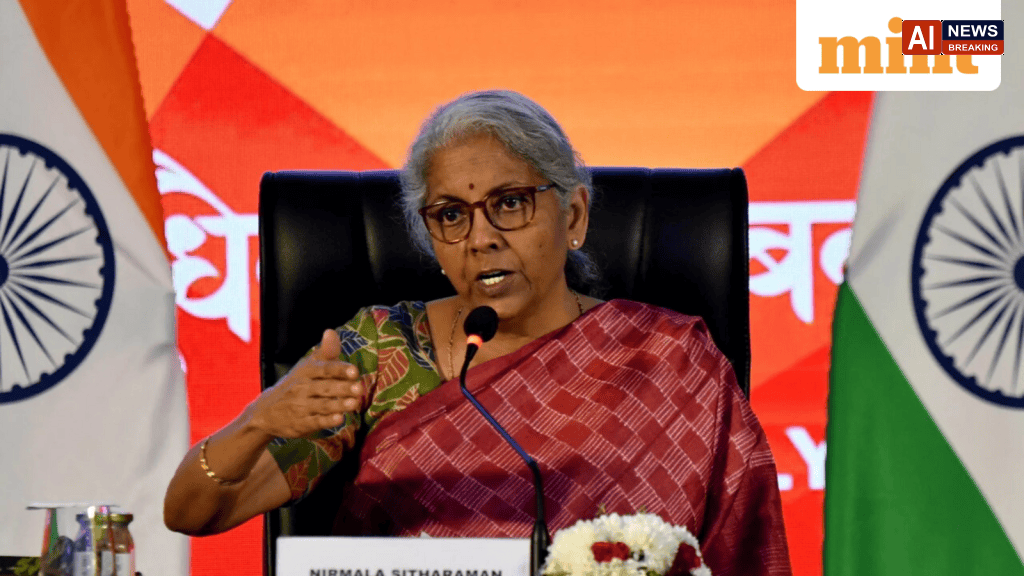
Industry seeks tax breaks, stronger PLI push in pre-budget consultations - AI News Breaking
industry seeks breaks stronger:
Industry leaders have called on the government to introduce targeted incentives in the forthcoming budget in a bid to lift manufacturing’s contribution to the national economy to 25 percent from its current 15 percent. In parallel, micro‑, small and medium enterprises (MSMEs) have pressed for lower borrowing costs, streamlined regulatory compliance and robust support mechanisms to enable scalable growth. These demands were voiced during a series of pre‑budget consultations hosted by the Ministry of Finance, which aimed to gather stakeholder input ahead of the fiscal event.The manufacturing sector, which has long been viewed as the engine of industrial growth, is currently constrained by a range of structural bottlenecks..
High input costs, limited access to capital and an uneven distribution of technology across regions hamper the sector’s competitive edge. In addition, the sector’s reliance on imported raw materials has left it vulnerable to global price swings. The industry’s chief lobbyists argue that a combination of tax relief, subsidies for technology adoption, and a re‑imposition of the Production Linked Incentive (PLI) scheme could help bridge these gaps..
They point to successful examples from neighbouring economies where PLIs have spurred significant investment inflows and job creation.The Production Linked Incentive scheme, which was introduced in 2020 to support the electronics, pharmaceuticals and auto components sectors, has delivered mixed outcomes. While the scheme has attracted foreign direct investment in certain niche areas, its scope remains limited to a handful of product categories. Stakeholders now contend that the scheme should be expanded to include a broader array of goods, especially those that can be assembled or manufactured within the country..
They also stress that the scheme’s eligibility criteria need to be simplified to allow a larger cohort of firms, including SMEs, to benefit.MSMEs, which contribute nearly a quarter of the country’s industrial output, are grappling with high interest rates on working capital and a labyrinth of compliance requirements that strain their limited resources. According to a survey conducted by the Confederation of Indian Industry, 68 percent of MSME owners cited high borrowing costs as the most significant hurdle to scaling their operations. In response, industry representatives urged the Ministry to introduce a credit guarantee scheme, provide preferential interest rates through public banks, and set up a dedicated MSME credit line that is accessible through a single‑window portal..
They also called for the consolidation of existing subsidy schemes to avoid duplication and reduce administrative burden.In addition to financial measures, the consultations highlighted the importance of skill development and workforce upskilling. The manufacturing workforce in many regions lacks the technical skills required to operate advanced machinery and software. Consequently, firms are forced to rely on expensive foreign labour or invest heavily in training programmes..
The industry panel suggested that the government introduce a blended funding model that couples tax credits with grants for training, thereby encouraging firms to invest in human capital. The Ministry responded that it had already earmarked funds for industry‑specific skill development programmes, but acknowledged the need for greater outreach and coordination with private training providers.Another key recommendation from the consultations was the creation of an “innovation corridor” that would bring together research institutions, industry hubs and technology parks. Such corridors could foster collaboration, reduce the time‑to‑market for new products and enable the diffusion of best practices..
The Ministry expressed a willingness to explore this concept, noting that the government had previously launched the ‘Industry 4.0’ initiative to promote digitalisation of manufacturing. However, industry leaders insisted that the corridor should be supported by fiscal incentives, such as tax holidays for research and development expenditure, and should provide a clear roadmap for scaling up production.The role of infrastructure in facilitating industrial growth also emerged as a recurring theme. Participants argued that inadequate power supply, unreliable logistics networks and insufficient warehousing options are major pain points for manufacturers..
In response, the Ministry reiterated its commitment to the “Make in India” infrastructure programme, which aims to upgrade transportation, logistics and energy infrastructure across industrial clusters. The government also announced plans to establish a national platform that would allow firms to book cargo space, access real‑time freight rates and monitor logistics performance. While industry leaders welcomed these initiatives, they urged the government to ensure that the platform is accessible to small and medium‑sized firms, not just large corporates.Tax reforms were also a focal point of the pre‑budget dialogue..
Industry representatives called for a reduction in the tax burden on capital goods and a simplification of the Goods and Services Tax (GST) regime for manufacturing inputs. They argued that a lower tax rate on capital equipment would incentivise firms to modernise their production lines and improve productivity. The Ministry, meanwhile, announced plans to introduce a 2 percent reduction in the GST rate for selected manufacturing inputs, but indicated that a comprehensive review of the tax framework would be undertaken in the forthcoming budget..
Industry leaders praised the announcement but urged the government to extend similar concessions to the entire manufacturing value chain, including software and design services.The consultations also shed light on the impact of global trade dynamics on the domestic manufacturing sector. Participants highlighted that protectionist policies in key markets, such as the United States and the European Union, could adversely affect export‑oriented manufacturers. To mitigate these risks, the industry panel called for the government to negotiate bilateral trade agreements that safeguard market access for Indian manufacturers and to establish a dedicated trade facilitation unit that offers real‑time monitoring of trade policy changes..
The Ministry acknowledged the urgency of these concerns and pledged to intensify diplomatic engagement to secure favourable terms for Indian goods.MSMEs, in particular, were keen to understand how the proposed tax measures would translate into tangible benefits. They argued that a universal tax incentive would dilute the impact on the smaller firms that already operate on tight margins. In response, the Ministry suggested a tiered tax incentive structure that rewards firms based on their scale, technology adoption and export orientation..
Industry leaders welcomed the idea but insisted that the criteria be transparent and easily verifiable to avoid administrative overhead. They also proposed the creation of a digital dashboard that would allow firms to track their eligibility status and access real‑time guidance on compliance.In closing, the pre‑budget consultations concluded on a note of cautious optimism. The government’s willingness to engage with industry stakeholders and its commitment to revisiting key tax and regulatory frameworks have been praised..
Nonetheless, industry leaders reiterated the urgency of implementing these reforms swiftly, emphasising that the manufacturing sector’s contribution to the economy is not merely a matter of growth metrics but also of national resilience and employment generation. As the budget deliberations move forward, the sector’s call for a robust and inclusive policy package will likely shape the fiscal agenda and influence the trajectory of India’s industrial future..
Updated: November 17, 2026
If the budget falls short on tangible incentives, the manufacturing sector’s rally will stall, leaving the country’s job market and supply chains exposed to global volatility.
A genuinely inclusive policy—simplified PLIs, tiered tax breaks and a unified credit line—could turn India into a self‑sufficient






