Pakistan’s leaders hail first astronaut aboard Chinese craft: ‘Proud one of us has gone into space’
 British tourist travels 29 hours from Mumbai to Amritsar for ₹5,461, rates Indian Railways 10/10 | Viral video
 The Supreme Court will decide whether assault weapons bans violate the Second Amendment
 A Critic of Beijing Falls Short in Taiwan’s Key Mayoral Election
 EPA says no rise in contamination after Army detonates lead azide stockpile in Iowa
Interior Dept. opens
**
Interior Dept. opens - AI News Breaking
interior dept opens:
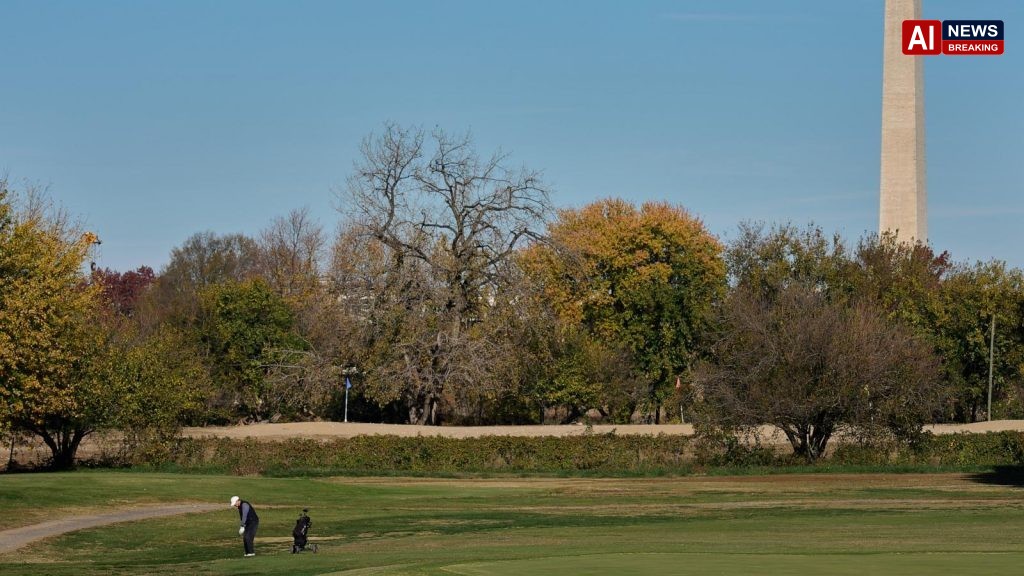
The Interior Department announced on Thursday that it will soon invite contractors to submit bids for work on the seawall surrounding the historic golf course at Rock Creek Park, a move that signals the Trump administration’s intention to proceed with the controversial redevelopment plan despite an ongoing legal battle. The proposal, outlined in a brief statement from the department’s Office of Real Estate Management, indicates that the agency is preparing the necessary procurement documents to award a contract for “critical shoreline stabilization and flood mitigation work” at the site, which is slated to become the centerpiece of a new, high‑profile sporting venue.The plan to transform the 18‑hole, 100‑acre public course—originally created in the 1930s as part of the New Deal’s Works Progress Administration—into a “world‑class” facility was first unveiled by the White House in early 2024. Supporters of the project argue that the redesign will attract international tournaments, generate significant revenue for the District, and revitalize a neglected portion of the capital’s green space..
Critics, however, contend that the redevelopment threatens an important historic and ecological resource, noting that the course is listed on the National Register of Historic Places and provides habitat for a variety of wildlife, including migratory birds and native fish in the adjacent Potomac River.Legal challenges to the project have already mounted. In June, a coalition of preservationists, environmental groups and local residents filed a lawsuit in the U.S. District Court for the District of Columbia, alleging that the administration failed to conduct a proper Environmental Impact Statement as required by the National Historic Preservation Act and the National Environmental Policy Act..
The plaintiffs contend that the seawall work, which would involve the removal of several hundred linear feet of the existing shoreline and the installation of new concrete barriers, would irreversibly alter the park’s historic landscape and increase runoff into the Potomac, exacerbating water‑quality concerns.Despite the pending litigation, Interior officials say the bidding process is a routine step that must continue to avoid delays in “essential infrastructure work” that has already been authorized by Congress through the 2022 Infrastructure Investment and Jobs Act. “We have a responsibility to ensure that the park’s shoreline is protected against flooding, especially given the increasing frequency of extreme weather events linked to climate change,” said a spokesperson for the department. The statement added that the agency would “adhere to all applicable environmental and historic preservation guidelines while moving forward with procurement.”The move has drawn sharp criticism from the plaintiffs’ attorneys, who argue that proceeding with the bidding process undermines the court’s authority and flouts the spirit of the lawsuit..
“This is a clear attempt to sidestep the judiciary and push the project forward before the courts have had a chance to weigh the merits of the case,” said Maria Lopez, lead counsel for the preservation coalition. Lopez warned that any contracts awarded now could be rendered void if the court ultimately blocks the seawall work, potentially wasting taxpayer dollars and creating further legal complications.In Washington, D.C., the debate has become increasingly politicised. Mayor Muriel Bowser, a vocal opponent of the redevelopment, has called for a moratorium on any construction until the legal matters are resolved..
“Our city’s parks belong to the people, not to private interests seeking profit,” she said at a recent press conference, urging the federal government to respect the community’s wishes. On the other side, the White House has defended the project as a “strategic investment” that will showcase America’s sporting heritage on the global stage. In a statement, the Office of the President’s liaison to the Department of the Interior said the seawall work is “a necessary component of a larger vision to bring world‑class events to our capital while preserving public access and safety.”Industry observers note that the contract, estimated to be worth between $15 million and $20 million, could attract a number of seasoned maritime construction firms, many of which have previously worked on similar shoreline stabilization projects in coastal cities..
The bidding window is expected to open within the next two weeks, with a deadline for proposals set for late November. If awarded, the contractor would be required to commence work in early 2025, aligning with the broader timeline for the golf course’s redesign, which aims for a soft opening in time for the 2028 Summer Olympics—a bid that the United States is currently pursuing.The potential impact on the surrounding neighborhood has also been a point of contention. Residents of the nearby Woodley Park and Adams Morgan districts have expressed concerns about increased traffic, noise, and the loss of open green space that the course currently provides..
A recent survey conducted by the D.C. Office of Planning indicated that 62 percent of respondents opposed the redevelopment, citing worries over environmental degradation and the displacement of long‑standing community activities, such as junior golf programs and local walking clubs.As the case proceeds, the court’s next hearing is scheduled for early January, where judges will consider a request from the government to lift an injunction that currently bars any construction on the seawall. Legal analysts predict that the decision could set a precedent for how federal infrastructure projects are handled when they intersect with historic preservation statutes..
“The outcome will likely influence not just this project but a host of other federal initiatives that sit on the edge of environmental and heritage protections,” said Dr. Alan Greene, a professor of environmental law at Georgetown University.Regardless of the legal outcome, the Interior Department’s decision to move forward with the bidding process underscores the administration’s resolve to advance its vision for the park. Whether the seawall work will ultimately be realized, and at what cost to the historic and ecological fabric of Rock Creek Park, remains to be seen..
The coming weeks promise to be a pivotal period for policymakers, preservationists and the residents of Washington, D.C., as they grapple with the competing demands of development, heritage conservation and climate resilience..
Updated: November 17, 2026
By green‑lighting the bid, the administration treats historic preservation and climate safeguards as negotiable footnotes to a branding exercise, risking costly legal reversals that could erode public trust in federal infrastructure promises.
If the courts ultimately block the seawall, the precedent will empower preservationists to stall future projects, forcing Washington to reconcile ambition with its legal and ecological obligations before the next Olympic bid.