Europe warns of Russia’s hybrid attacks but struggles to counter them
  Former chief election commissioner calls SIR scheme illegal.
  A Corruption Scandal Is Reshaping Brazil’s Presidential Election
  US citizen injured in Illinois after ICE agents mistook him for fugitive, tried to arrest him
  At 10 years old, Smithsonian’s Black museum is undaunted amid pressure from Trump administration
 Japan Passes Controversial Flag Desecration Law Under PM Sanae Takaichi’s Nationalist Agenda
Japan has passed a controversial law banning the public desecration of its national flag, with penalties including up to two years in prison, amid concerns over freedom of expression and national dignity, as part of PM Sanae Takaichi’s nationalist agenda.
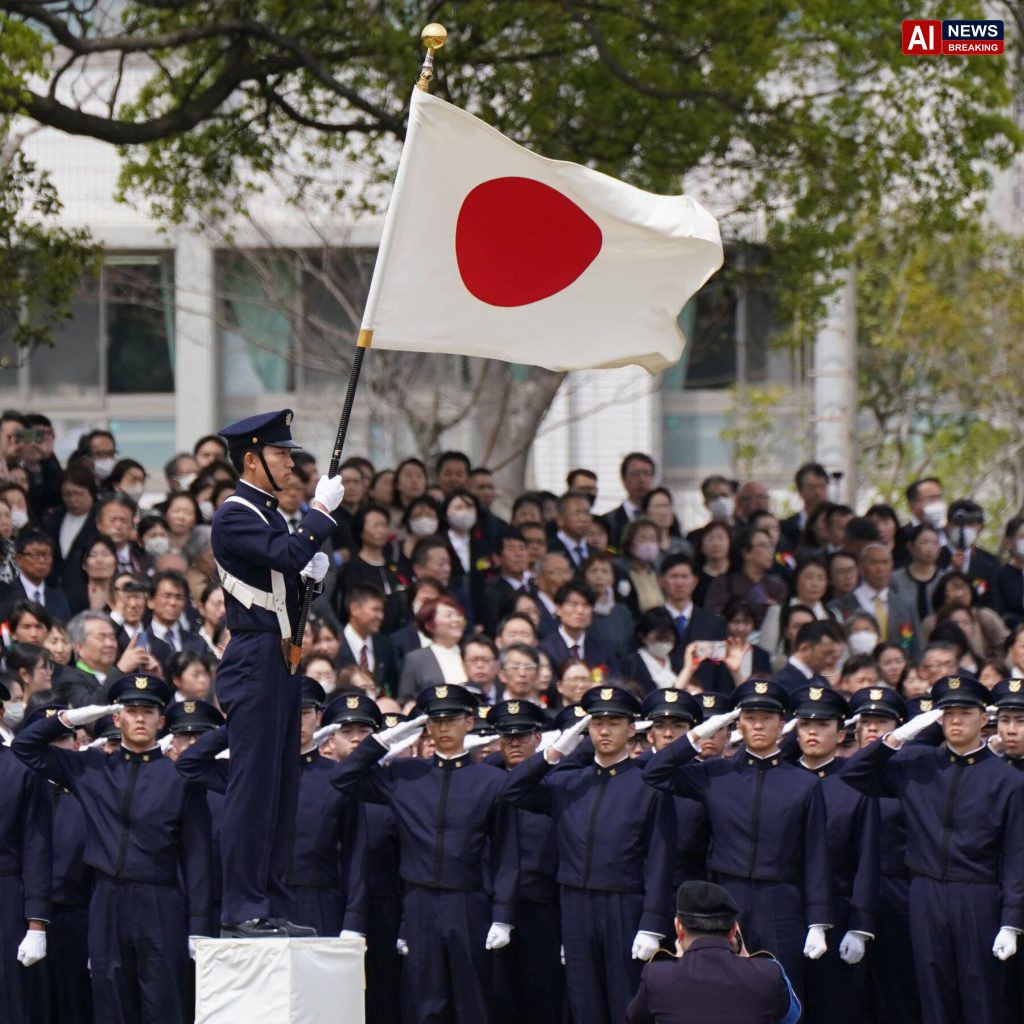
Japan Passes Controversial Flag Desecration Law Under PM Sanae Takaichi's Nationalist Agenda - AI News Breaking
News Summary:
- Japan has enacted a new law criminalizing the public desecration of its national flag, with penalties including up to two years in prison or fines of up to ¥200,000.
- Prime Minister Sanae Takaichi’s conservative government says the measure promotes national dignity, while critics argue it threatens freedom of expression and political dissent.
Japan has officially passed a controversial new law banning the public desecration of its national flag, marking one of the most significant nationalist policy initiatives under Prime Minister Sanae Takaichi’s administration. The legislation criminalizes acts such as publicly damaging, defacing, removing, or burning the Japanese flag—the Hinomaru—and imposes criminal penalties on violators.
The law has immediately sparked intense political and constitutional debate across Japan. Supporters argue that national symbols deserve legal protection and that Japan is merely bringing its laws in line with those of many other countries. Critics, however, warn that the legislation risks undermining freedom of expression and could be used to suppress political protest and artistic expression.
What Does the New Law Say?
Under the new legislation, individuals who publicly damage or desecrate Japan’s national flag in a manner considered offensive may face:
- Up to two years of imprisonment.
- A fine of up to ¥200,000 (approximately US$1,200).
- Criminal liability for publicly displaying or livestreaming acts of flag desecration under certain circumstances.
The law specifically targets acts that are deemed likely to cause “extreme discomfort or disgust” among the public. These include:
- Burning the flag.
- Tearing or damaging it.
- Defacing or staining it.
- Publicly removing or destroying it.
- Broadcasting or sharing such acts online in offensive contexts.
Legal assessments under the statute are intended to consider the surrounding circumstances and the objective nature of the act rather than relying solely on subjective interpretations.
Why Has Japan Passed This Law Now?
The legislation is closely associated with Prime Minister Sanae Takaichi, who has long advocated stronger protections for Japan’s national symbols and a more assertive national identity.
Takaichi has argued that it is inconsistent for Japan to criminalize the desecration of foreign national flags while offering no equivalent protection for its own flag. Existing Japanese law already punishes the desecration of foreign flags displayed at diplomatic facilities in order to prevent international disputes.
According to the Prime Minister, protecting the Hinomaru is an issue of national dignity and patriotic responsibility.
The law also aligns with broader conservative political goals pursued by Takaichi’s administration, including:
- Strengthening national identity.
- Promoting patriotic education.
- Expanding Japan’s defense capabilities.
- Pursuing constitutional and institutional reforms.
- Increasing public respect for national institutions and symbols.
Critics Warn of Free Speech Concerns
Opposition lawmakers, constitutional scholars, and civil rights advocates have strongly criticized the legislation.
Their primary concerns include:
- Restrictions on freedom of expression.
- Vague legal language regarding what constitutes offensive conduct.
- Potential misuse against political protesters.
- Chilling effects on artistic and academic expression.
- Increased government regulation of symbolic speech.
Legal scholars opposing the law argue that flag desecration—even when controversial—has historically been recognized in many democratic societies as a form of political expression.
More than one hundred constitutional and criminal law experts in Japan publicly opposed the legislation during parliamentary deliberations, warning that it may conflict with constitutional protections guaranteeing freedom of speech and expression.
The Historical Significance of the Hinomaru
The Japanese flag occupies a complex position within Japanese society and East Asian history.
The Hinomaru was officially designated as Japan’s national flag through legislation enacted in 1999. However, debates surrounding the flag predate that law and are closely tied to Japan’s wartime history during the first half of the twentieth century.
For many Japanese citizens, the flag represents:
- National unity.
- Cultural heritage.
- Sovereignty.
- Patriotism.
Others associate it with:
- Imperial Japan’s wartime expansion.
- Historical militarism.
- State nationalism.
- Political conservatism.
Because of these differing interpretations, disputes involving the flag have periodically emerged in schools, political demonstrations, and public institutions.
Will Artistic Expression Be Affected?
Government supporters have stated that the legislation is not intended to criminalize legitimate artistic or cultural uses of the flag.
According to lawmakers involved in drafting the bill, the following are generally not the intended targets of prosecution:
- Films and documentaries.
- Artistic performances.
- Historical exhibitions.
- Fictional portrayals.
- Certain digital and anime-related depictions.
Nevertheless, critics argue that ambiguity within the legislation may encourage self-censorship. Artists and activists could potentially avoid using national symbols in controversial or political contexts for fear of legal consequences.
Legal experts note that so-called “chilling effects” can arise even when prosecutions are rare if individuals remain uncertain about what conduct may ultimately be considered unlawful.
Political Implications for Prime Minister Takaichi
The passage of the flag protection law represents a significant political victory for Prime Minister Sanae Takaichi and Japan’s conservative political bloc.
Takaichi has become one of the country’s most influential conservative leaders and has advocated policies emphasizing:
- National security.
- Economic resilience.
- Constitutional reform.
- Stronger immigration controls.
- Greater military preparedness.
- Cultural and patriotic values.
Political analysts suggest that nationalist policies continue to resonate with segments of Japan’s electorate, particularly amid growing geopolitical tensions in East Asia and concerns about national security.
Supporters view the law as an overdue measure that aligns Japan with other nations that legally protect their national symbols. Critics, however, believe it reflects an increasingly nationalist political agenda that risks narrowing the space for dissent.
International Perspective
Japan joins numerous countries that impose legal restrictions on flag desecration.
However, democratic nations differ significantly in their approaches. Some countries criminalize acts against national symbols, while others—including certain jurisdictions that place greater emphasis on symbolic political speech—permit flag burning or desecration as constitutionally protected expression.
The Japanese legislation therefore contributes to broader international debates regarding:
- National identity.
- Constitutional freedoms.
- Patriotism.
- Symbolic speech.
- Democratic values.
How the law is interpreted and enforced will likely determine whether it becomes a narrowly applied measure protecting national symbols or a more controversial tool affecting political expression.
AI Insight: Japan’s new flag desecration law highlights a growing global trend in which governments are placing greater emphasis on national identity and symbolic politics. While protecting national symbols can strengthen social cohesion, democracies must carefully balance patriotic legislation with constitutional freedoms. The long-term significance of this law will depend less on its text and more on how fairly and narrowly it is enforced. In mature democracies, safeguarding both national dignity and the right to dissent remains an essential—and often difficult—constitutional challenge.