 France deploys patrol fleet to curb Channel migrant crossings
  From a Nepal in Pain, a Young Leader Makes a Case for Climate Reparations
  Ukraine transfers two North Korean POWs to South Korea.
  Australia probes AI‑driven breach of My Health Record portal
  Engineering student’s ‘suicide’ turns out to be murder two arrested
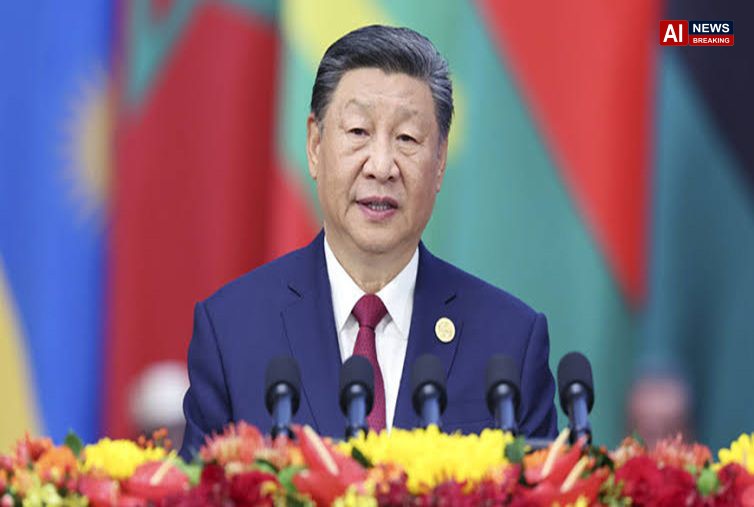
 Xi Jinping Unveils China’s Global AI Leadership Vision at World AI Conference 2026
** Chinese President Xi Jinping has announced China’s goal to become the global leader in artificial intelligence, outlining a vision for AI-driven economic growth, industrial transformation, and international cooperation at the World AI Conference 2026 in Shanghai.
jinping unveils chinas global:
News Summary:
- Chinese President Xi Jinping has announced China’s ambitious goal of becoming the global leader in artificial intelligence during the World AI Conference 2026 in Shanghai.
- China plans to accelerate AI innovation, strengthen international cooperation, and expand investments in AI research as part of its long-term technological and economic strategy.
Xi Jinping sets out China’s goal to be global AI leader In a significant development, Chinese President Xi Jinping has outlined his country’s ambitious plans to become the world leader in artificial intelligence (AI). According to reports, Xi made the announcement during a keynote speech at the opening ceremony of the 2026 World AI Conference, which is being held in Shanghai. The conference brings together top AI researchers, industry leaders, and government officials from around the world to discuss the latest advancements and applications of AI..
Xi’s speech marked a significant moment in China’s quest to assert its technological dominance on the global stage. Xi’s speech emphasized the importance of AI in driving China’s economic growth and global influence. He called for China to take a leading role in the development and application of AI, citing the technology’s potential to improve lives and transform industries..
The Chinese leader also emphasized the need for international cooperation in AI, calling on developing countries to join China in embracing the technology and its benefits. This move is seen as a deliberate effort by China to counter Western dominance and establish itself as a champion of global technological cooperation. The Chinese government has been investing heavily in AI research and development in recent years, with significant funding allocated to support AI startups, research institutions, and industry-led initiatives.
China’s Vision for AI Leadership
In his keynote address, Xi Jinping emphasized that artificial intelligence will play a fundamental role in driving economic growth, technological modernization, industrial transformation, and global competitiveness over the coming decades.
He described AI as a strategic technology capable of reshaping industries ranging from manufacturing and healthcare to finance, transportation, education, and national security. China’s leadership, according to Xi, views AI as an essential component of the country’s broader development agenda.
China’s long-term objectives include:
- Becoming a global hub for AI innovation.
- Developing world-class AI technologies and infrastructure.
- Expanding AI applications across industries.
- Establishing international standards and governance frameworks.
- Enhancing cooperation with developing nations on AI adoption.
- Strengthening China’s technological self-reliance.
The Chinese government has repeatedly identified artificial intelligence as one of its highest strategic priorities, alongside semiconductors, quantum computing, and advanced manufacturing technologies.
The country has also implemented policies to encourage AI adoption across various sectors, including finance, healthcare, and education. While China’s progress in AI has been rapid, the country still faces significant challenges in developing advanced AI capabilities, particularly in areas such as natural language processing, computer vision, and machine learning. Xi’s speech also touched on the risks and security concerns associated with AI..
He warned of the potential consequences of unregulated AI development, including job displacement, social unrest, and national security threats. The Chinese leader emphasized the need for AI to be developed and used responsibly, with a focus on benefits for humanity and the environment. This cautionary approach is seen as a key aspect of China’s AI strategy, which seeks to address concerns about the ethics and governance of AI..
In a move that is likely to resonate with many developing countries, Xi also pitched China as a partner in the global AI agenda. He called on nations to work together to address the challenges and opportunities presented by AI, and to benefit from the technology’s development and application. This appeal is seen as an effort by China to present itself as a leader in global AI governance and cooperation, rather than simply a rival to the United States.
China’s Technological Self-Reliance Strategy
Artificial intelligence forms a crucial component of China’s broader strategy of technological self-reliance.
Geopolitical tensions and technology export restrictions have accelerated Beijing’s efforts to strengthen domestic capabilities in:
- AI chips.
- Cloud computing.
- Advanced semiconductors.
- Large language models.
- High-performance computing.
- Robotics.
- Intelligent manufacturing.
China aims to reduce its dependence on foreign technologies while simultaneously expanding its influence within global technology markets.
The country’s AI strategy aligns closely with its broader industrial modernization objectives and long-term economic planning initiatives.
The United States has long been considered the world leader in AI research and development, with many top AI researchers and companies based in the country. However, China’s rapid progress in AI has forced the US to reevaluate its position, with many experts now predicting a shift in the balance of power in the global AI landscape. Xi’s speech marked the latest salvo in this high-stakes competition, which has implications for national security, economic influence, and global governance..
China’s AI ascendance gives Xi a platform to project China’s influence and vision on the global stage. However, the rise of AI also poses significant challenges and dilemmas for the Chinese leader. Xi must balance the competing demands of promoting AI growth and ensuring its responsible development, while also addressing concerns about the technology’s impact on jobs, security, and social stability..
The World AI Conference, which is being held in Shanghai, has attracted top AI researchers and industry leaders from around the world. The event has created an opportunity for China to showcase its AI capabilities and plans to global audiences, as well as to build partnerships and collaborations with international partners. Xi’s speech marked a major milestone in this process, as China seeks to establish itself as a leader in the global AI agenda..
Xi Jinping’s speech has sparked significant interest and debate among international observers. Some see China’s AI plans as a positive move for global development, which could bring benefits to millions of people around the world. Others are more skeptical, warning of the risks associated with China’s rising AI influence, including national security threats and social stability issues..
The competition for global AI leadership is unlikely to be resolved anytime soon. Both the US and China will continue to invest heavily in AI development, with implications for national security, economic influence, and global governance. Xi Jinping’s speech marks an important moment in this unfolding drama, as China seeks to assert its leadership in the global AI agenda.
Competing in the Global AI Race
The global competition for AI leadership has intensified significantly over the past several years.
Countries and regions investing heavily in artificial intelligence include:
- United States
- China
- European Union
- United Kingdom
- Japan
- South Korea
- India
- Singapore
- United Arab Emirates
The United States currently maintains significant advantages in frontier AI research, semiconductor design, and leading AI companies. Meanwhile, China possesses strengths in large-scale data ecosystems, manufacturing capabilities, government-backed investments, and rapid technology deployment.
China’s strategy focuses on leveraging these advantages to narrow technological gaps while pursuing leadership in AI applications and industrial implementation.
The success of China’s AI plans will depend on various factors, including the country’s ability to develop cutting-edge AI capabilities, promote AI adoption across industries, and address concerns about the technology’s impact on jobs and security. Xi Jinping’s speech emphasized the importance of global cooperation and responsible AI development, but also underscored China’s determination to assert its leadership in the global AI agenda. The global implications of China’s AI ascendance are far-reaching and complex..
The shift in the balance of power in the global AI landscape has significant implications for national security, economic influence, and global governance. While many experts remain optimistic about the potential benefits of AI, others warn of the risks associated with China’s rising AI influence, including national security threats and social stability issues. As the world looks on, it remains to be seen how China’s AI plans will play out, as well as the implications for global development and cooperation..
The competition for global AI leadership has entered a new phase, with significant implications for national security, economic influence, and global governance..
Updated: July 17, 2026
Insight: Xi’s AI ambitions signal a broader shift in China’s global strategy, where technological prowess becomes a key tool for economic and diplomatic influence, raising questions about the West’s ability to maintain its technological superiority.