
 Pakistan’s leaders hail first astronaut aboard Chinese craft: ‘Proud one of us has gone into space’
 British tourist travels 29 hours from Mumbai to Amritsar for ₹5,461, rates Indian Railways 10/10 | Viral video
 The Supreme Court will decide whether assault weapons bans violate the Second Amendment
 A Critic of Beijing Falls Short in Taiwan’s Key Mayoral Election
 EPA says no rise in contamination after Army detonates lead azide stockpile in Iowa
Kulgam anti-terror ops continue; body of LeT terrorist Latteef Bhat’s ‘accomplice’ retrieved from encounter site
**
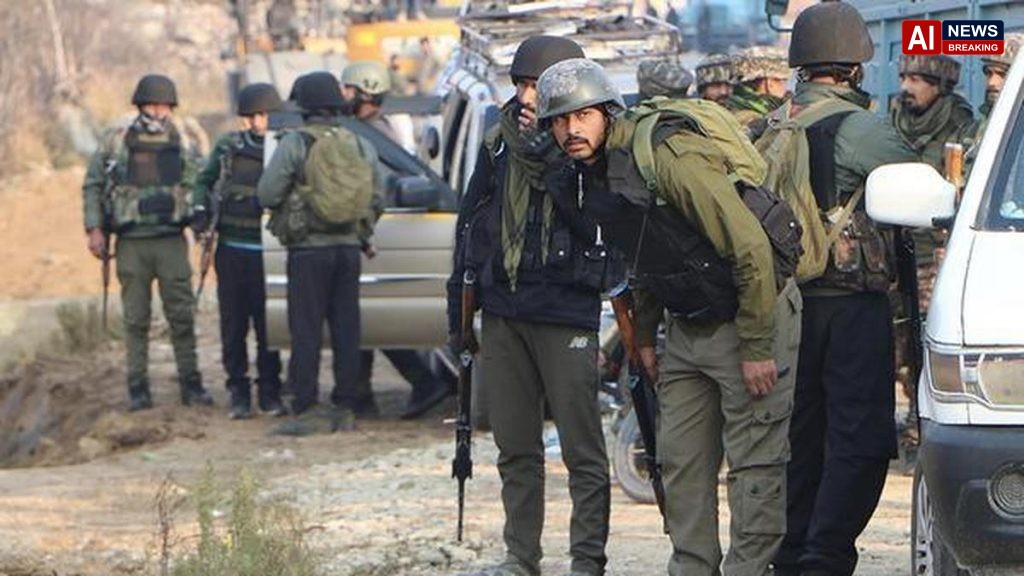
Kulgam anti-terror ops continue; body of LeT terrorist Latteef Bhat’s ‘accomplice’ retrieved from encounter site - AI News Breaking
kulgam antiterror continue body:
Kulgam anti‑terror operations have entered a new phase as security forces disclosed the recovery of a body believed to be that of a Lashkar‑e‑Taiba (LeT) operative linked to the recent encounter that killed militant Latteef Bhat. The retrieval, carried out on Monday, marks the first tangible evidence emerging from the dense forests of the district since the deadly clash on 9 November. Officials say the remains will undergo forensic examination to confirm identity and to establish the circumstances surrounding the death, a step they deem essential for both legal closure and operational learning..
The encounter, which unfolded in the remote village of Hanjipora, involved a joint task force of the Jammu and Kashmir Police, the Indian Army’s Rashtriya Rifles and the Jammu and Kashmir Special Operations Group. According to the police, a tip‑off led the units to a concealed hideout where Bhat, identified as a senior LeT commander, was allegedly coordinating attacks on security installations. The militants opened fire, prompting a protracted exchange that resulted in Bhat’s death and the apprehension of a second suspect, later described as his “accomplice”..
Security agencies released CCTV footage from the days preceding the clash, showing two men, later identified as Bhat and an associate named “Dar”, moving together across several locations in Kulgam on 10 and 11 November. The grainy recordings capture the pair walking along a narrow lane, pausing near a small shop, and later inspecting a vacant house that investigators now suspect was used as a reconnaissance point. Analysts say the footage underscores the methodical nature of the militants’ planning, highlighting their attempts to map out police routes and security outposts..
Investigators have linked Dar to a network of LeT operatives active in the Kashmir valley for over a decade. Intelligence reports indicate he has previously facilitated the movement of weapons and ammunition across the Line of Control, and was under surveillance for his alleged role in prior attacks on security forces. The recent CCTV evidence, authorities claim, reinforces the theory that Dar was acting as a logistical coordinator for Bhat, scouting potential targets and safe houses before the fatal encounter..
The recovery of the body was carried out by a specialised forensic team dispatched from Srinagar, who arrived at the site early on Monday morning. Using a combination of ground‑penetrating radar and canine units, the team located a shallow burial pit near the outskirts of the village, where the remains were concealed beneath a layer of earth and foliage. The body, described by officials as partially decomposed, was retrieved with utmost care to preserve any possible DNA and ballistic evidence..
Forensic experts have begun the meticulous process of DNA extraction, comparing the sample against the database of known LeT militants. Preliminary findings, released in a brief statement, suggest a high probability that the remains belong to the individual identified as Dar. The team is also examining bullet fragments and clothing fibres recovered from the site, hoping to piece together a clearer picture of the encounter’s dynamics and the exact sequence of events that led to the deaths..
The operation’s success has been hailed by senior officials as a testament to inter‑agency coordination and the effectiveness of intelligence‑driven counter‑terrorism measures. A senior police officer, who requested anonymity, said that the joint effort between local police, army units and the Special Operations Group was pivotal in locating the body, a task that would have been considerably more challenging without the CCTV leads and human intelligence gathered over the past weeks. However, the incident also about the broader security environment in the volatile Kashmir region..
Human rights observers have cautioned that while the removal of high‑ranking militants is a priority, the methods employed in such operations must adhere to legal standards and respect civilian safety. They point to past instances where anti‑terror raids resulted in collateral damage and call for transparent investigations into any alleged excesses. Local residents of Kulgam, many of whom have endured repeated curfews and lockdowns, expressed a mixture of relief and apprehension following the news..
Some families, who lost members in earlier insurgent attacks, welcomed the removal of a known terrorist figure, hoping it would deter further violence. Others, wary of the continued military presence, voiced concerns over the impact on daily life, including restrictions on movement and economic activities. The government’s response to the incident includes a promise of continued vigilance in the valley, with the Home Ministry confirming that additional resources will be allocated to strengthen surveillance capabilities in the region..
A spokesperson for the Ministry of Defence emphasized that operations like the one in Kulgam are part of a larger strategy to dismantle LeT’s infrastructure, disrupt recruitment pipelines and prevent the planning of future attacks against civilian and security targets. Political leaders from both the state and central administrations have used the episode to underscore their commitment to combating terrorism. The Chief Minister of Jammu and Kashmir, in a televised address, lauded the bravery of the security personnel and urged the public to cooperate with ongoing investigations..
Meanwhile, a senior Union Minister highlighted the importance of intelligence sharing among agencies, noting that the CCTV footage was instrumental in piecing together the militants’ movements. As the forensic analysis proceeds, families of the deceased militants are expected to be notified, a step that may trigger further legal proceedings. The identification of the body will also feed into the larger counter‑terror database, potentially aiding future operations against LeT cells operating in the region..
For now, the focus remains on ensuring that the evidence collected is processed thoroughly, and that any lessons learned are integrated into policy to enhance the safety and security of the Kashmir populace..
Security forces in Kulgam have recovered what is believed to be the body of a Lashkar‑e‑Taiba operative linked to the November 9 encounter that killed senior militant Latteef Bhat, marking the first concrete evidence from the forested district since the clash. Forensic teams will confirm the identity and analyse ballistic and DNA samples, while the operation underscores inter‑agency coordination amid calls for transparent investigations and continued vigilance in the volatile Kashmir region.
The body’s recovery confirms the depth of LeT’s network in Kulgam, turning a hit‑and‑run raid into a data‑rich case that can harden future intel‑driven strikes. Yet it also reminds residents that each victory risks tipping the fragile balance between security and everyday life in






