The Supreme Court will decide whether assault weapons bans violate the Second Amendment
 A Critic of Beijing Falls Short in Taiwan’s Key Mayoral Election
 EPA says no rise in contamination after Army detonates lead azide stockpile in Iowa
 Israeli Strike Kills 2 Workers at Gaza Clinic, Doctors Without Borders Says
 McQueen Pre-Fall 2027
Lok Sabha seat freeze is no longer linked to population stabilisation
** The 132nd Constitutional Amendment Bill, passed in early 2024, ends the half‑century‑old freeze that tied Lok Sabha seat allocation to the 1971 census, allowing the upcoming delimitation to use the 2021 Census data and potentially reshuffle parliamentary representation in favor of fast‑growing states.
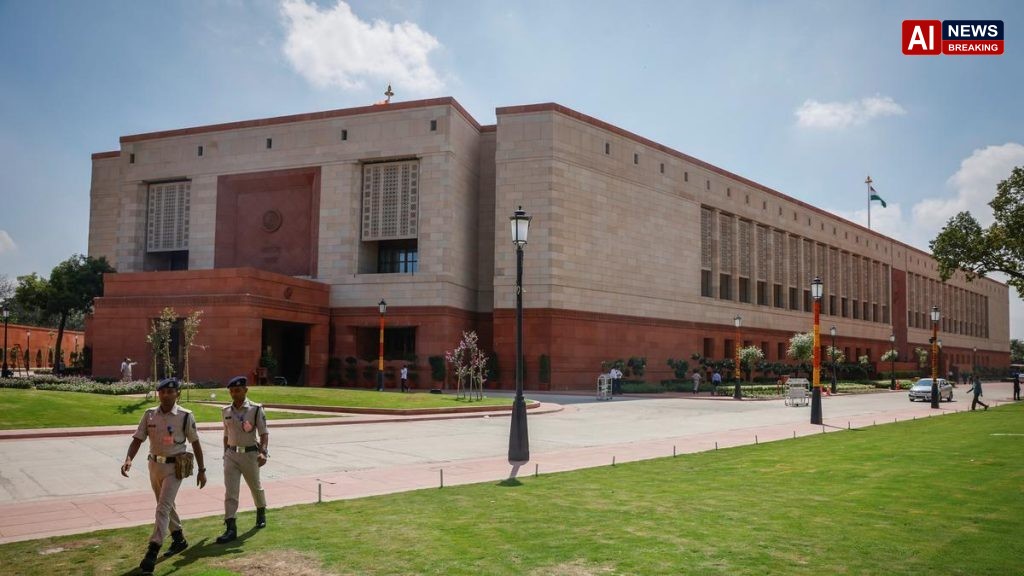
Lok Sabha seat freeze is no longer linked to population stabilisation - AI News Breaking
sabha seat freeze longer:
The 132nd Constitutional Amendment Bill, passed by Parliament in early 2024, severs the long‑standing link between the allocation of Lok Sabha seats and the objective of population stabilisation that was embedded in the Constitution after the 1971 Census. For five decades, the number of seats assigned to each state and union territory has been frozen on the basis of the 1971 population figures, a decision taken to protect states that had successfully curbed population growth from losing parliamentary representation as their growth rates lagged behind faster‑expanding regions. The amendment removes that safeguard, opening the door to a fresh delimitation exercise that will reflect the demographic realities captured in the most recent census.The original freeze was introduced through the 42nd Amendment in 1976, at a time when the central government sought to incentivise family planning programmes and reward states that achieved lower fertility rates..
By anchoring the distribution of seats to the 1971 data, the Constitution effectively insulated states such as Tamil Nadu, Kerala and West Bengal from a reduction in their share of Lok Sabha seats, even as their populations grew more slowly than the national average. Critics argued that the freeze entrenched historical inequities, while supporters maintained that it was a necessary tool for encouraging responsible population policies.The 132nd Amendment, formally titled the “Constitution (One Hundred and Thirty‑Second Amendment) Act, 2024”, repeals Article 81(3) and the related proviso that tied the seat‑allocation formula to population stabilisation. It also amends Article 330, which deals with the representation of the Union Territories, to align the same principle..
By doing so, the amendment restores the constitutional provision that seats shall be allocated in proportion to the population as recorded in each decennial census, without the earlier condition that a state’s share could not be reduced as a punitive measure for failing to stabilise its population.The practical implication of the amendment is that the next delimitation commission, mandated by the Delimitation Act, 2002, will be able to use the 2021 Census data – the first census after the pandemic‑induced delay – to redraw constituency boundaries and reassign seats among the states. The commission, chaired by a retired Supreme Court judge, is expected to submit its report to the President within eighteen months of its formation. Once the President issues a notification, the changes will take effect at the next general election, scheduled for 2029 under the current electoral calendar.Political analysts anticipate that the redistribution will benefit high‑growth states such as Uttar Pradesh, Bihar, Maharashtra and the newly formed union territories of Jammu and Kashmir and Ladakh, which have seen substantial population increases since 1971..
Uttar Pradesh, already the most populous state, could gain additional seats, further consolidating its dominance in the Lok Sabha. Conversely, states that managed to keep their population growth low, like Kerala and Tamil Nadu, may see a modest reduction in their parliamentary representation, a scenario that has already sparked debate among regional leaders.The central government, led by the ruling party, has defended the amendment as a necessary step to ensure “fair and equitable representation” in the world’s largest democracy. In a statement released after the bill’s passage, the Ministry of Law and Justice highlighted that the freeze had become “anachronistic” in the face of stark demographic shifts and that the amendment aligns India’s electoral map with contemporary realities..
The statement also underscored that the move does not diminish the importance of population control policies, which remain a priority for the Ministry of Health and Family Welfare.Opposition parties, however, have voiced concerns that the amendment could exacerbate regional imbalances and undermine the incentive structure that encouraged family planning in the 1970s and 1980s. Leaders from the Dravida Munnetra Kazhagam (DMK) and the All India Trinamool Congress (AITC) warned that their states could lose political clout in the lower house, potentially affecting the allocation of central funds and development projects. They have called for a broader national dialogue on how to balance demographic fairness with the need to reward states that achieve lower fertility rates.Civil society groups have also entered the debate, with some organisations urging the Election Commission to ensure that the delimitation process remains transparent and insulated from partisan pressures..
The Centre for Policy Research released a briefing note suggesting that the commission should adopt a clear, data‑driven methodology and publish its draft proposals for public comment before finalising the seat distribution. Such calls for openness echo past controversies over delimitation, notably the 2008 exercise that led to protests in several states over perceived gerrymandering.Legal scholars note that the amendment raises interesting constitutional questions about the balance between democratic representation and social policy objectives. While the Constitution originally embedded population control as a public policy goal, the removal of that clause signals a shift towards a purely demographic basis for representation..
Professor Ananya Mukherjee of the National Law School of India University observes that “the amendment reflects a pragmatic recognition that demographic realities cannot be ignored indefinitely, but it also removes a tool that once aligned political incentives with national health priorities.”The coming months will see the formation of the delimitation commission, the publication of its interim reports and a period of public consultation that could shape the contours of Indian parliamentary politics for the next decade. As the nation prepares for the 2029 general election, the debate over seat allocation underscores the complex interplay between population dynamics, federal balance and democratic representation in the world’s most populous democracy..
Updated: November 27, 2026