The Supreme Court will decide whether assault weapons bans violate the Second Amendment
 A Critic of Beijing Falls Short in Taiwan’s Key Mayoral Election
 EPA says no rise in contamination after Army detonates lead azide stockpile in Iowa
 Israeli Strike Kills 2 Workers at Gaza Clinic, Doctors Without Borders Says
 McQueen Pre-Fall 2027
Karnataka government serves show-cause notice to IOCL terminal in Bengaluru over ethanol measurement discrepancies
** The Karnataka government has served a formal show‑cause notice to IOCL’s Bengaluru terminal, accusing the company of falling short of the 10% ethanol blend required by law. Laboratory tests revealed ethanol levels of only 6‑8%, prompting a 15‑day deadline for the oil major to explain the discrepancy and outline corrective actions.
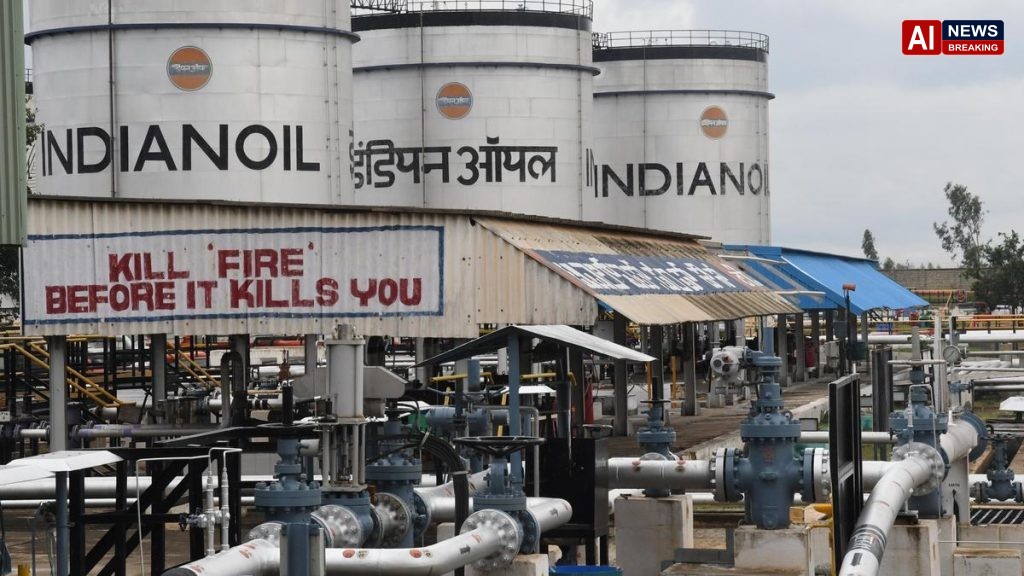
Karnataka government serves show-cause notice to IOCL terminal in Bengaluru over ethanol measurement discrepancies - AI News Breaking
karnataka government serves showcause:
The Karnataka government on Tuesday issued a formal show‑cause notice to Indian Oil Corporation Ltd (IOCL) over alleged discrepancies in the measurement of ethanol content at its Bengaluru terminal, a move that underscores mounting regulatory scrutiny of fuel quality across the state. The notice, dispatched by the Department of Legal Metrology, Karnataka, alleges that the oil marketing company failed to adhere to prescribed standards for ethanol blending in petrol, prompting a demand for an explanation within fifteen days. The department’s action follows a series of surprise inspections conducted at the terminals of major oil marketing companies, which have been intensified since the central government mandated a 10 per cent ethanol blend in all gasoline sold in India.The legal metrology officials, acting on a directive from the state’s chief minister, visited the IOCL terminal in the city’s outskirts last week..
During the inspection, they collected multiple fuel samples from storage tanks and loading points, subjecting them to laboratory analysis at a state‑approved testing facility. The results reportedly indicated that the ethanol proportion in the sampled petrol fell short of the 10 per cent benchmark required by the Ethanol Blended Petrol (EBP) policy. According to the department’s preliminary report, the measured ethanol content ranged between 6 and 8 per cent, a shortfall that could translate into significant deviations from the intended environmental and energy‑security objectives of the blending programme.IOCL, which operates a network of over 1,300 fuel stations nationwide, has defended its compliance record, asserting that the samples were taken under conditions that may not reflect routine operational realities..
In a statement released after the notice was served, the company said it had “initiated an internal audit” to verify the findings and would cooperate fully with the authorities. It also highlighted that the terminal in question supplies fuel to a limited number of retail outlets in the Bengaluru metropolitan area and that any variation in ethanol content could be attributable to factors such as temperature fluctuations, sampling errors, or temporary logistical constraints in sourcing ethanol from the state’s distilleries.The controversy arrives at a time when Karnataka, a leading producer of sugarcane‑derived ethanol, has been aggressively promoting the use of bio‑fuel to curb vehicular emissions and reduce dependence on imported crude oil. The state’s ethanol policy, unveiled in 2022, aims to increase the ethanol blend to 20 per cent by 2027, a target that hinges on a reliable supply chain and strict adherence to measurement standards..
Legal metrology officials have warned that any laxity in blending practices could undermine the state’s climate commitments and erode public confidence in the efficacy of the programme.Experts say that accurate ethanol measurement is technically challenging, requiring calibrated flow meters, precise blending protocols, and regular verification to account for ethanol’s hygroscopic nature. “Ethanol absorbs moisture from the air, which can affect its density and consequently the volume measured during blending,” explained Dr. Arvind Rao, a professor of chemical engineering at the Indian Institute of Science..
“If the equipment is not regularly calibrated, or if the blending process is rushed, the final product can deviate from the intended ratio, leading to the kind of discrepancies highlighted by the legal metrology team.” He added that while occasional minor variances are expected, systematic shortfalls could indicate deeper procedural gaps.The show‑cause notice obliges IOCL to submit a detailed response outlining the reasons for the alleged shortfall, corrective measures undertaken, and a timeline for compliance. Failure to provide a satisfactory explanation could result in penalties, including fines, suspension of the terminal’s operating licence, or a directive to halt ethanol blending until corrective actions are verified. The department has also signalled the possibility of extending the inspection regime to other terminals in the state, signaling a broader crackdown on compliance across the fuel supply chain.Industry observers note that the incident may have wider repercussions for the Indian oil sector, where several major players have faced similar allegations in recent months..
Last year, a rival oil marketing company was fined after a state regulator in Gujarat reported ethanol content below the mandated level in its fuel blends. Such enforcement actions are part of a national push, spearheaded by the Ministry of Petroleum and Natural Gas, to ensure that the blending mandate does not become a mere formality. The ministry has recently issued new guidelines mandating real‑time monitoring of ethanol blend ratios using advanced sensor technology, a move that could reduce reliance on periodic sampling.Consumer groups have welcomed the Karnataka government’s decisive response, arguing that transparent enforcement is essential to protect motorists from substandard fuel that can impair engine performance and increase emissions..
“When ethanol content is lower than advertised, drivers not only lose out on the fuel‑efficiency benefits promised by the blend but also risk higher pollutants,” said Priya Menon, spokesperson for the Consumer Rights Forum of Karnataka. “Regulatory vigilance ensures that the public gets the environmental and economic advantages that the blending policy is supposed to deliver.”The episode also highlights the complex interplay between state and central authorities in India’s fuel governance framework. While the central government sets the overarching blending targets, state agencies like Karnataka’s Department of Legal Metrology are tasked with on‑the‑ground verification and enforcement..
This dual‑layered oversight can sometimes lead to jurisdictional friction, especially when discrepancies arise. In a recent meeting convened by the Ministry of Petroleum, officials from several states, including Karnataka, agreed to harmonise testing protocols and share data more effectively to avoid duplication of effort and ensure uniform standards across the country.As the deadline for IOCL’s response approaches, the oil marketing company is expected to present its audit findings and outline remedial steps, which may include recalibrating blending equipment, enhancing staff training, and instituting more frequent internal quality checks. The outcome of this case could set a precedent for how strictly ethanol blending standards are enforced in Karnataka and potentially influence policy implementation in other states..
With the nation’s climate agenda increasingly linked to bio‑fuel adoption, the pressure on oil marketers to deliver accurate blends is likely to intensify, making regulatory compliance not just a legal obligation but a strategic imperative for the industry..
Updated: November 27, 2026
Karnataka’s legal metrology department has served Indian Oil Corp a show‑cause notice after lab tests showed its Bengaluru terminal’s petrol ethanol blend falling short of the mandated 10 percent. The oil firm says it will audit the findings, while the state warns non‑compliance could trigger fines or licence suspension amid a broader crackdown on fuel‑quality standards.
Karnataka’s crackdown on IOCL reveals that ethanol‑blend mandates are turning into a litmus test for oil majors’ operational rigor, not just a policy checkbox. If regulators keep tightening real‑time monitoring, firms that can’t perfect their blending math may find their market foothold eroding faster than