
 The Supreme Court will decide whether assault weapons bans violate the Second Amendment
 A Critic of Beijing Falls Short in Taiwan’s Key Mayoral Election
 EPA says no rise in contamination after Army detonates lead azide stockpile in Iowa
 Israeli Strike Kills 2 Workers at Gaza Clinic, Doctors Without Borders Says
 McQueen Pre-Fall 2027
Mayor Mamdani plans
**
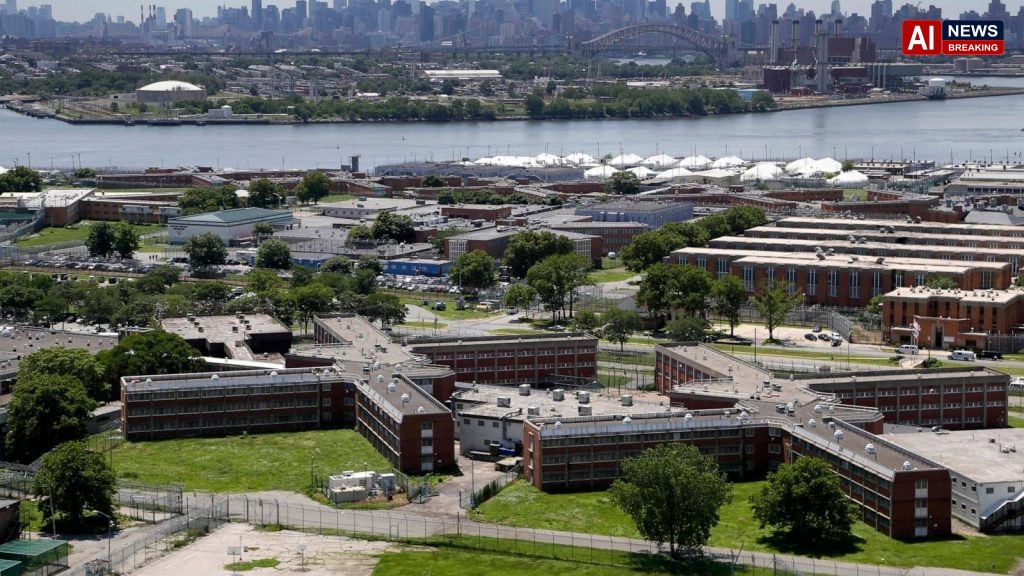
Mamdani sets plan to close NYC's notorious Rikers Island jail - AI News Breaking
Mamdani sets plan to close NYC’s notorious Rikers Island jail Mayor Zohran Mamdani has unveiled a comprehensive strategy to dismantle New York City’s infamous Rikers Island detention complex by 2032, a move that has stirred both hope and debate among criminal‑justice reform advocates and city officials. The proposal, announced during a press conference in Brooklyn’s City Hall, outlines a phased relocation of detainees to smaller, community‑based facilities across the five boroughs. It also includes a budget allocation of $2.4 billion over the next decade to support construction, staff retraining and rehabilitation programs..
The mayor’s decision follows years of criticism over Rikers’ overcrowding, alleged human‑rights violations and the between the jail’s reputation and the city’s progressive policing agenda. In 2021, the New York City Police Commissioner had already pledged a “sustainable end” to Rikers, citing a decline in detainee numbers and a surge in alternative detention options. Mamdani’s plan builds on that commitment, aiming to shift the focus from incarceration to rehabilitation..
Key to the proposal is the construction of 12 modular detention units, each with a capacity of 600 inmates, to be located in Queens, Brooklyn, the Bronx, Manhattan and Staten Island. These units will feature modern amenities, such as on‑site mental‑health clinics, educational workshops and vocational training centres. Officials argue that smaller, decentralized facilities will reduce incidents of violence and provide inmates with better access to support services..
A central element of the strategy is the “Community Reentry Initiative,” a partnership between city agencies, non‑profit organisations and private firms. The initiative will offer job placement, housing assistance and substance‑abuse treatment to inmates upon release. According to city statistics, more than 65 % of Rikers detainees are arrested for drug‑related offences, and the mayor’s office estimates that up to 40 % of released inmates return to the city’s courts within two years if they lack adequate support..
Opposition voices, however, caution that the proposed timeline may be overly ambitious. “A ten‑year plan is a good start, but the infrastructure required is massive,” warned Dr. Lena Ortiz, a criminology professor at Columbia University..
“Without rigorous oversight, we risk creating new sites that simply mirror Rikers’ failures.” Critics also point to budgetary constraints, noting that the city’s projected debt for 2025‑26 already exceeds $20 billion. The mayor has pledged to secure federal grants to offset some costs, citing the Justice Department’s $500 million allocation for “jail transformation” in 2024. Additionally, the proposal calls for a 10 % reduction in the city’s overall jail population by 2028, achieved through expanded use of electronic monitoring and pre‑trial diversion programmes..
Proponents say this will ease the financial burden of maintaining the ageing Rikers infrastructure. City council members have mixed reactions. Councilmember Mariah Brooks, chair of the Finance Committee, expressed support for the fiscal responsibility of the plan but urged for more transparent auditing..
“We need to see clear metrics on how funds are spent,” she said. Meanwhile, Councilmember Ahmed Patel, an advocate for criminal‑justice reform, highlighted the importance of community involvement in designing the new facilities, suggesting a task force that includes former inmates. The mayor’s announcement also prompted a reaction from the New York County District Attorney’s office, which has long pushed for reforms in the jail system..
Attorney General Eric Adams released a statement applauding the move but urged the city to maintain high standards of oversight. “Closing Rikers is a milestone, but we must ensure that the replacement facilities uphold the law and protect residents,” he added. From a logistical perspective, the plan entails relocating current detainee populations in a staggered manner, starting with the most vulnerable inmates in 2025..
The city will also invest in staff retraining, ensuring that former Rikers officers can adapt to new roles in the smaller facilities. Training will include de‑escalation techniques and cultural competency workshops, reflecting broader efforts to modernise police practice across New York City. Community response has been largely positive, especially from organisations that have campaigned for years against the conditions at Rikers..
The New York Families for Prison Reform (NYFPR) welcomed the mayor’s pledge, saying it would finally address the “systemic injustices” that have plagued the boroughs for decades. They plan to monitor the transition closely, ensuring that the new facilities meet the standards promised by the city. In the broader context of national criminal‑justice reform, the mayor’s plan aligns with a growing trend to rethink large, centralized jails..
Across the United States, several cities—including San Francisco and Seattle—have closed or reconfigured their primary detention sites in favour of community‑based alternatives. Critics argue that such moves must be paired with systemic changes to policing and sentencing to avoid simply shifting problems elsewhere. The next steps involve detailed site surveys, public hearings and the finalisation of construction contracts..
City officials have scheduled a series of community forums over the next six months to solicit feedback on facility design and location. They also intend to release a progress report every six months, detailing milestones achieved and any adjustments to the original timeline. As the city moves forward, all eyes will be on how effectively it balances fiscal responsibility with the promise of a humane, rehabilitative detention system..
Whether Rikers Island’s legacy can be erased entirely or merely re‑imagined will depend on sustained political will, community engagement and transparent oversight over the coming decade..
Updated: November 20, 2026
Summary: Mayor Zohran Mamdani has outlined a $2.4 billion, ten‑year plan to dismantle Rikers Island and replace it with 12 modular, community‑based detention units across the five boroughs, aiming for a 10 % drop in the city’s jail population by 2028. The proposal, met with cautious optimism, hinges on federal grants, expanded pre‑trial diversion, and a “Community Reentry Initiative” that promises job
Rikers’ demolition is less an end than a gamble: it offers a blueprint that, if shackled by robust audit and community‑led design, could transform a punitive relic into a rehabilitative hub; without that, the city risks replacing one monolithic failure with another.
The mayor’s ten‑year horizon demands not just capital but a cultural shift—training staff, re‑engineering justice, and ensuring every new brick is built on accountability, lest the city simply relocate its problems to the suburbs.





