A Critic of Beijing Falls Short in Taiwan’s Key Mayoral Election
 EPA says no rise in contamination after Army detonates lead azide stockpile in Iowa
 Israeli Strike Kills 2 Workers at Gaza Clinic, Doctors Without Borders Says
 McQueen Pre-Fall 2027
 Mushfiqur Rahim to retire from Test cricket in February 2027
Cheetah brought from Botswana gives birth to four cubs at Kuno
**
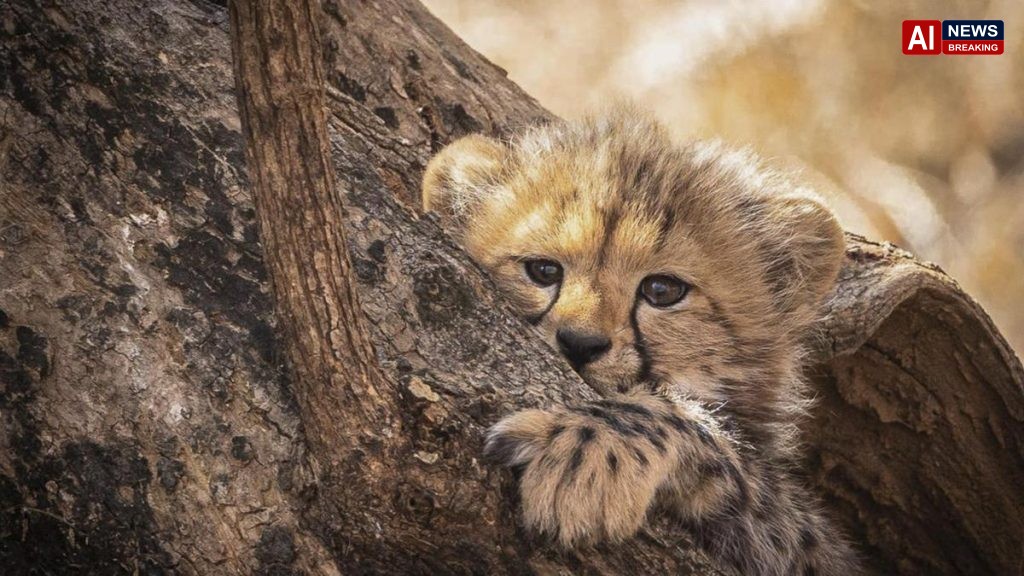
Cheetah brought from Botswana gives birth to four cubs at Kuno - AI News Breaking
cheetah brought botswana gives:
A cheetah that was rescued from the wild in Botswana has given birth to four cubs at the Kuno National Park reintroduction centre, officials said on Monday. The births mark the first successful litter from an imported adult female in the Indian cheetah‑reintroduction programme and bring the total number of cheetahs in the country to 62, of which 43 were born in India. The newborns are the latest addition to a small but growing population that has been carefully monitored since the first release in 2022.The mother, a five‑year‑old female named “Kali”, was captured in the Okavango Delta in 2021 as part of a collaborative effort between the Botswana Department of Wildlife and National Parks and the Indian Ministry of Environment, Forest and Climate Change..
After a period of quarantine and health screening, she was air‑lifted to Kuno in March 2022, where she underwent a six‑month acclimatisation programme designed to familiarise her with the park’s climate, vegetation and prey base. The programme, overseen by wildlife biologists from the Wildlife Institute of India, also included training to reduce human‑wildlife conflict, a key concern for the park’s management.Kuno National Park, located in the central Indian state of Madhya Pradesh, was earmarked as a potential sanctuary for the endangered Asiatic cheetah after the species was declared extinct in the country in the 1950s. The park’s extensive grasslands and a robust herd of antelopes provide an ideal habitat for the predator..
Since the first batch of eight cheetahs – four males and four females – were released in September 2022, the park has seen a gradual increase in successful breeding, with a second litter of three cubs born in 2023 and a single cub from a different female in early 2024.The four cubs, now under the watchful eye of park rangers, are expected to stay within the protected enclosure for the next twelve to eighteen months, receiving supplemental feeding and veterinary care while they develop essential hunting skills. “The cubs are thriving,” said Dr Anjali Mehta, the chief veterinarian at Kuno. “Their weight gain and activity levels are within the normal range for cheetah cubs of this age, and there are no signs of disease or abnormal behaviour.” The veterinary team will conduct regular health checks and will gradually reduce human intervention to encourage natural predation.The births have been welcomed by conservationists who see them as a tangible sign that the reintroduction strategy is bearing fruit..
The programme, funded jointly by the Indian government and international donors, aims to establish a self‑sustaining wild cheetah population of at least 30 individuals within the next decade. “Each successful litter brings us closer to that target,” said Dr Ramesh Singh, senior wildlife ecologist at the Ministry of Environment. “It also validates the scientific protocols we have put in place for habitat preparation, anti‑poaching measures and community engagement.”Local communities around Kuno have been involved in the project through a series of outreach initiatives that include compensation schemes for livestock losses, employment opportunities in park management and educational programmes in schools..
While some residents remain wary of a top‑predator returning to the landscape, recent surveys indicate a gradual shift in perception, with 68 per cent of respondents expressing support for the cheetah’s presence. “People are beginning to understand that the cheetah can coexist with agriculture if we manage it responsibly,” noted Arvind Patel, a community liaison officer.Despite the optimism, experts caution that the cheetah’s future in India remains fragile. Habitat fragmentation, poaching and competition with larger carnivores such as leopards and tigers could threaten the fledgling population..
To mitigate these risks, the Ministry has proposed the creation of wildlife corridors linking Kuno with adjacent protected areas, as well as the deployment of advanced camera‑trap networks and drone surveillance to monitor movements and deter illegal activity. “Conservation is a long‑term commitment,” Dr Singh added. “We must remain vigilant to ensure these animals can thrive without constant human interference.”The success of the Kuno programme is also being watched closely by conservationists in other range countries, particularly Namibia and South Africa, where cheetah numbers have similarly been bolstered through managed breeding and reintroduction..
International bodies such as the IUCN Cat Specialist Group have praised India’s approach as a model for transboundary wildlife management, noting the importance of rigorous scientific assessment before translocating individuals across continents. However, they also warned that genetic diversity must be maintained, urging the continued import of unrelated individuals to avoid inbreeding depression.In the meantime, the four cubs have already become a source of fascination for visitors to Kuno. The park’s visitor centre has set up live‑stream cameras that broadcast the young cheetahs’ daily activities, attracting thousands of viewers on social media platforms..
“It is a rare opportunity for the public to connect with a species that was once thought lost from this land,” said Priya Sharma, the park’s communications officer. “These stories help build the broader support needed for long‑term conservation.”As the cheetah population in India climbs to 62, officials are preparing for the next phase of the project, which includes the planned release of two additional adult males from South Africa later this year. The goal is to establish a balanced sex ratio that will facilitate natural breeding without over‑reliance on a few individuals..
“Our aim is not just to have cheetahs on paper, but to see a thriving, genetically healthy population that can sustain itself,” Dr Mehta concluded. “The birth of these four cubs is a hopeful step towards that vision.”.
Kali’s four‑cub litter proves that rigorous acclimatization and community buy‑in can turn a trans‑continental rescue into a viable breeding nucleus, shifting India’s cheetah story from symbolic reintroduction to a genuine demographic foothold.
If corridors and genetic refreshes keep pace, the fledgling