Pakistan’s leaders hail first astronaut aboard Chinese craft: ‘Proud one of us has gone into space’
 British tourist travels 29 hours from Mumbai to Amritsar for ₹5,461, rates Indian Railways 10/10 | Viral video
 The Supreme Court will decide whether assault weapons bans violate the Second Amendment
 A Critic of Beijing Falls Short in Taiwan’s Key Mayoral Election
 EPA says no rise in contamination after Army detonates lead azide stockpile in Iowa
Mexican cartel architect dies in Alcatraz
** Miguel Ángel Félix Galliano, the architect of Mexico’s modern drug cartels and former head of the Guadalajara Cartel, has died at the Federal Social Readaptation Center No 1 (“Alcatraz”) after serving almost three decades of a life sentence. His death reignites discussion on the enduring influence of cartel founders, the challenges of incarcerating high‑profile criminals, and the ongoing battle against organized crime in Mexico and the United States.
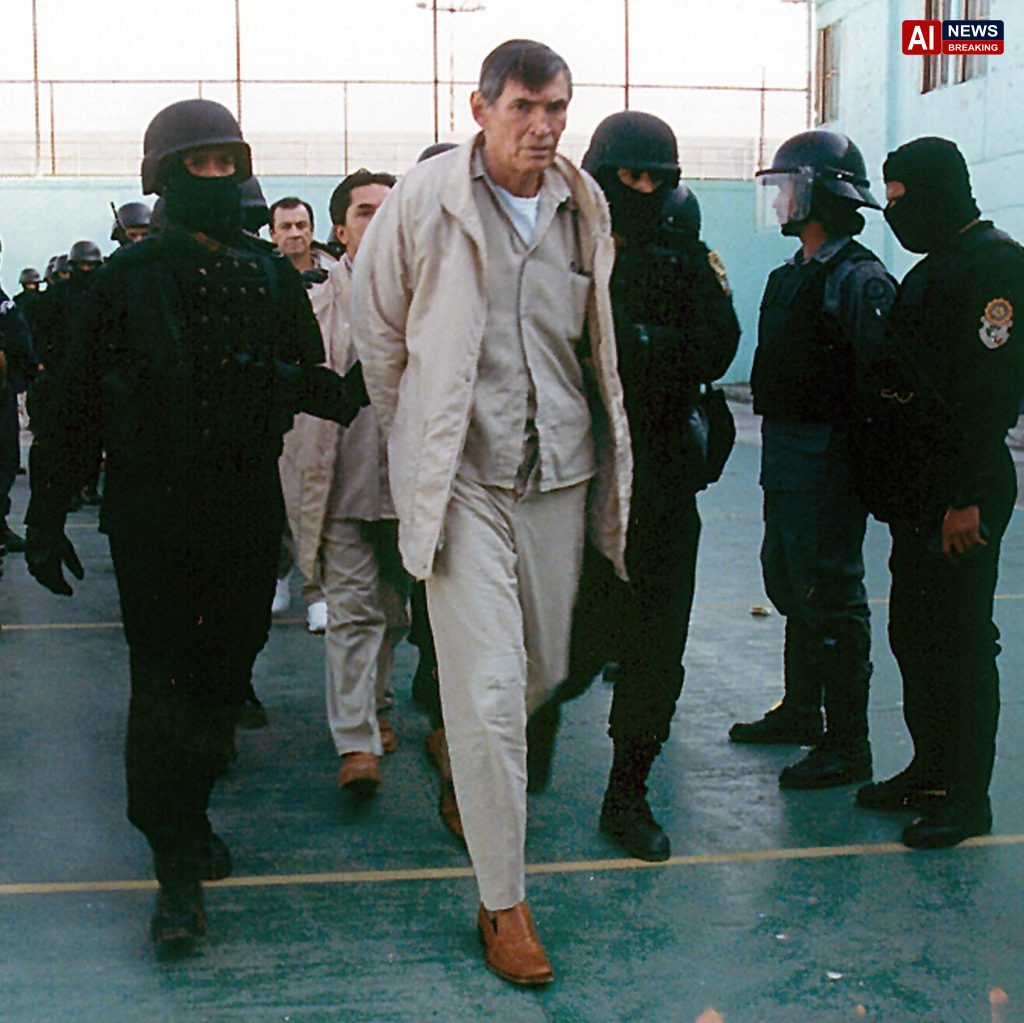
Miguel Ángel Félix Gallardo, Mexican Drug Lord, Dies in Prison - AI News Breaking
Miguel Ángel Félix Galliano, the architect of Mexico’s modern drug cartels, died on Thursday at the Federal Social Readaptation Center No 1, more commonly known as “Alcatraz,” after serving nearly three decades of a life sentence for drug trafficking, homicide and organized crime. His death, confirmed by the Mexican government’s ary of Security, marks the end of a figure whose influence stretched from the streets of Sinaloa to the corridors of power in the United States, prompting renewed reflection on the legacy of the criminal empire he built and the relentless pursuit that finally brought him to justice. Born in Culiacán in 1946, Félix Galliano rose from a modest background to become a key player in the nascent Mexican drug trade of the 1970s..
He forged alliances with Colombian cocaine suppliers and established a sophisticated distribution network that linked Mexican ports to U.S. By the early 1980s, he had consolidated power under the banner of the Guadalajara Cartel, a conglomerate that coordinated the shipment of narcotics, money laundering, and violent enforcement across borders, setting the template for the sprawling cartels that dominate today’s illicit trade. Félix Galliano’s notoriety surged after the 1985 murder of DEA special agent Enrique “Kiki” Camarena, whose investigation into Mexican drug operations threatened to expose the cartel’s operations..
Camarena’s death ignited a massive U.S. manhunt, drawing the attention of both American and Mexican law enforcement agencies. In 1989, after a prolonged pursuit that spanned continents, Félix Galliano was apprehended in Puerto Vallarta, an arrest that was hailed as a watershed moment in the bilateral war on drugs..
The trial that followed was a landmark in Mexican judicial history. Charged with multiple counts of drug trafficking, homicide, and organized crime, Félix Galliano was sentenced to 37 years in prison, a term later reduced to a life sentence after appeals. The case deep-rooted corruption within law‑enforcement agencies and spurred reforms aimed at curbing the influence of cartels on public officials, prompting a series of high‑profile arrests and the eventual fragmentation of the Guadalajara Cartel into the Sinaloa, Tijuana and Sonora factions..
While incarcerated, Félix Galliano remained a figure of fascination and fear. Prison officials reported that his influence extended beyond the barbed wire, with communications intercepted suggesting he continued to direct operations through intermediaries. Despite strict segregation measures, rumors persisted that rival cartels sought his endorsement for cease‑fire agreements, illustrating the lingering respect he commanded among criminal networks even as he aged behind steel doors..
Human rights groups have raised concerns about the conditions of Félix Galliano’s confinement, noting that the Alcatraz facility, though one of Mexico’s most secure prisons, has been plagued by overcrowding and inadequate medical care. Advocates argue that the state’s failure to provide sufficient health services may have contributed to his demise, a claim that the authorities have dismissed, insisting that his death resulted from natural causes associated with advanced age and chronic illness. The Mexican government’s official statement highlighted Félix Galliano’s death as a reminder of the ongoing battle against organized crime, emphasizing the need for continued cooperation with U.S..
Officials cited recent successes in dismantling cartel leadership, including the capture of several high‑ranking figures linked to the successors of the Guadalajara Cartel, underscoring a broader strategy that combines intelligence sharing, financial sanctions and community‑based prevention programs. International reactions have been measured but pointed. The United States Department of State issued a brief comment, acknowledging the death as “the conclusion of a long‑standing pursuit of a man whose actions caused immeasurable harm.” Analysts in Washington note that while Félix Galliano’s passing closes a symbolic chapter, it does little to alter the operational capabilities of the fragmented cartels that now dominate the drug landscape across the Americas..
Experts caution that the vacuum left by Félix Galliano’s death may accelerate internal power struggles among remaining cartel leaders. Ana María López, a criminologist at the National Autonomous University of Mexico, warned that “the removal of a patriarchal figure often triggers a scramble for territory, leading to spikes in violence as factions vie for dominance.” She added that law‑enforcement agencies must anticipate possible retaliatory attacks and adapt tactics accordingly. Families of victims, particularly those of DEA agents killed in the 1980s, have expressed a mixture of relief and lingering sorrow..
A spokesperson for the families of the slain agents said that while justice was finally served, the pain of loss endures, and the memory of the sacrifices made by law‑enforcement officers should not be eclipsed by the passing of the man they pursued for decades. In the broader context of Mexico’s drug war, Félix Galliano’s life and death embody the paradox of a nation battling an adversary that has become deeply interwoven with its social and economic fabric. The government’s ongoing reforms, including the recent overhaul of the public security system and the introduction of new anti‑money‑laundering statutes, aim to dismantle the structural foundations that allowed cartels to flourish, yet the challenge remains formidable..
As Mexico mourns the end of a notorious chapter, the international community watches closely, hopeful that the demise of Miguel Ángel Félix Galliano will serve as a catalyst.
Updated: November 16, 2026
Insight: His death may lull policymakers into complacency, yet the power vacuum threatens to ignite fresh turf wars that could eclipse the violence of his own era.
The episode underscores that dismantling a cartel’s mythic patriarch does little to erase the systemic corruption and economic dependencies that keep the drug empire alive.