The Supreme Court will decide whether assault weapons bans violate the Second Amendment
 A Critic of Beijing Falls Short in Taiwan’s Key Mayoral Election
 EPA says no rise in contamination after Army detonates lead azide stockpile in Iowa
 Israeli Strike Kills 2 Workers at Gaza Clinic, Doctors Without Borders Says
 McQueen Pre-Fall 2027
Na’kuset wins Supreme Court case on Canadian genocide.
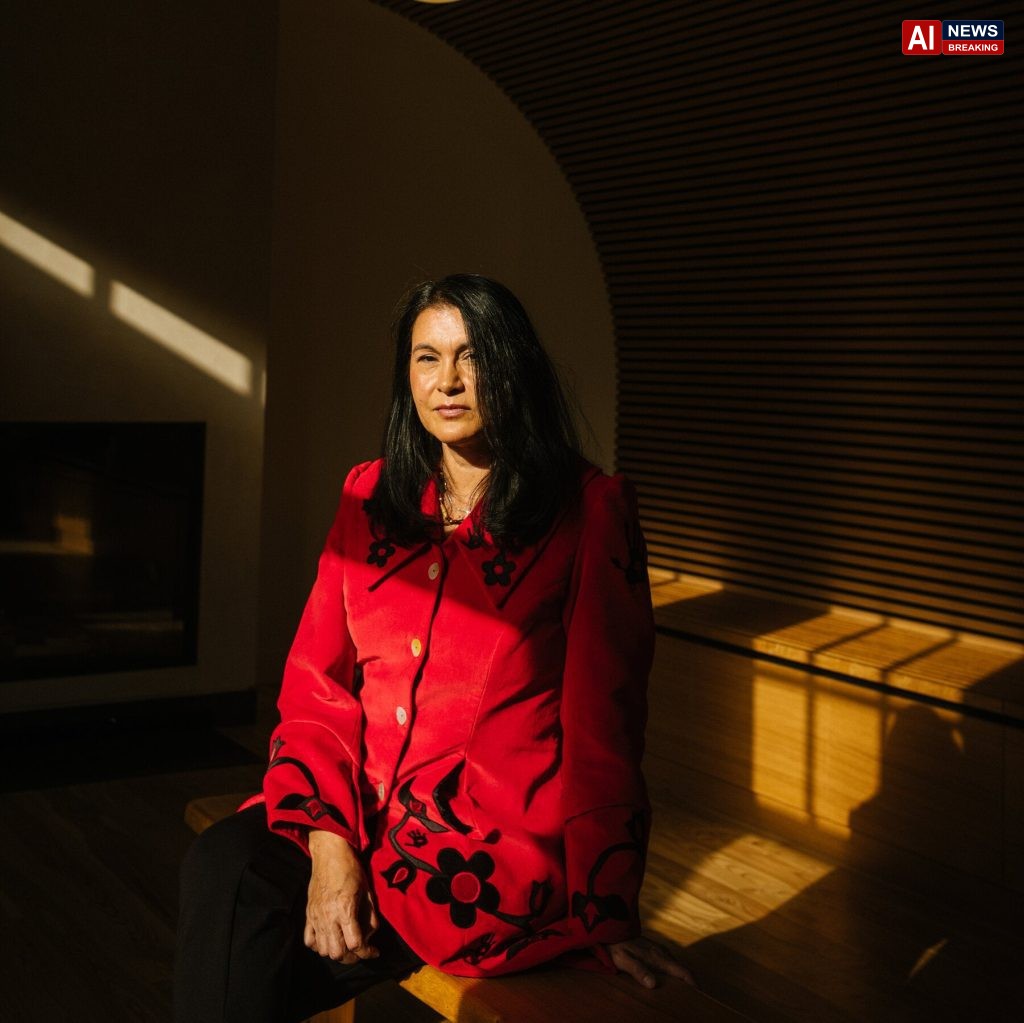
The Woman Who Took Canada to Court Over Genocide - AI News Breaking
nakuset wins supreme court:
The Woman Who Took Canada to Court Over Genocide Na’kuset, a steadfast advocate for Indigenous rights, has become a symbol of resistance and hope for communities across Canada. Born and raised in the Kainai Nation of the Blood Tribe in southern Alberta, she grew up hearing stories of her great‑grandmother’s time in a residential school, where children were stripped of their language, culture, and family ties. These early memories shaped Na’kuset’s lifelong mission: to confront the lingering shadows of Canada’s colonial past and to hold the nation accountable for its systemic injustices..
In 2014, Na’kuset joined the National Indian Brotherhood (now the Assembly of First Nations) as a community liaison, where she coordinated educational programs aimed at empowering youth to claim their rights. She quickly gained a reputation for her meticulous research and relentless determination. When the Truth and Reconciliation Commission released its final report in 2015, Na’kuset saw an opportunity to push beyond symbolic apologies, demanding concrete legal redress for the survivors of residential schools and the broader Indigenous population..
Her legal strategy began with a coalition of Indigenous leaders, legal scholars, and human rights activists who shared a common view: Canada’s failure to fully implement the United Nations’ Declaration on the Rights of Indigenous Peoples (UNDRIP) amounted to ongoing genocide. In 2018, Na’kuset led a coalition that filed a case in the Supreme Court of Canada, arguing that the Crown had breached the nation’s duty of care. The case hinged on a series of systemic violations, including inadequate education, healthcare, and the erosion of traditional land rights..
The Supreme Court’s hearing, held in Toronto, drew a nationwide audience. The courtroom buzzed as Na’kuset presented a compelling narrative, juxtaposing statistical evidence with heart‑wrenching testimonies of survivors. She highlighted the 2006 “Truth and Reconciliation Commission” findings that declared residential schools “a genocide of the First Nations people.” Her passionate plea underscored that the Canadian state, through its policies and neglect, had perpetuated the conditions that allowed this violence to continue..
The decision, issued in 2020, was a landmark. The Court ruled that Canada had indeed committed acts of genocide under the United Nations Convention on the Prevention and Punishment of the Crime of Genocide. While the ruling did not award reparations, it established a legal precedent that forced the government to reassess its responsibilities..
The decision also mandated the creation of a new reparations framework, designed to be co‑crafted with Indigenous communities, ensuring that the process reflected their cultural and legal frameworks. In the aftermath, Na’kuset spearheaded a national reparations commission, working alongside federal and provincial governments. Her role involved negotiating compensation packages that ranged from financial restitution to land restitution and educational scholarships..
She also pushed for the restoration of cultural sites, insisting that the healing of Indigenous peoples required the revival of their sacred spaces. The commission’s 2021 report called for an annual monitoring mechanism, guaranteeing ongoing oversight of the implementation process. Beyond reparations, Na’kuset has been a vocal champion for systemic change..
She lobbied for the federal government to ratify UNDRIP in full, which Canada did in 2016, though its implementation has been uneven. By leveraging media coverage and public forums, she brought Indigenous issues into the mainstream conversation, demanding that the nation recognize the historical injustices and the continuing impact of colonization. Her work has also focused on the intersection of environmental stewardship and Indigenous sovereignty..
In 2022, she led a campaign against the construction of a new pipeline through traditional Kainai territory. The campaign combined legal action with public advocacy, highlighting the pipeline’s threat to water sources and sacred lands. The Supreme Court ultimately blocked the pipeline, citing Indigenous rights and environmental concerns—an outcome that many credit to Na’kuset’s relentless campaigning..
Critics argue that her approach is too confrontational, but supporters say it is necessary to disrupt the status quo. Maya Singh notes that “Na’kuset’s legal battles have shifted the narrative from passive acknowledgment to active accountability.” In Parliament, several Members of Parliament have cited her case as evidence of the urgency to reform Indigenous policy. The Indigenous community’s response has been overwhelmingly positive..
A recent survey of First Nations youth indicates that 82% feel empowered by Na’kuset’s efforts, seeing her as a role model who bridges traditional knowledge with contemporary advocacy. Her work has also inspired a new generation of Indigenous lawyers, many of whom cite her as their primary influence. Internationally, Na’kuset’s case has been referenced by the World Court and the UN Human Rights Council as a model for addressing colonial-era injustices..
In a 2023 briefing, the UN’s Special Rapporteur on the rights of Indigenous peoples praised Canada for “taking a significant step toward truth and reconciliation,” noting that the legal precedent could influence other colonial powers. As Canada continues to grapple with the legacies of residential schools, Na’kuset remains at the forefront of the movement. She has recently announced a new project—an Indigenous-led digital archive that preserves oral histories, treaties, and cultural artifacts..
The initiative aims to prevent the loss of intangible heritage and to empower communities to document their narratives autonomously. While her work is far from over, Na’kuset’s journey from a small community in Alberta to the Supreme Court’s highest chambers epitomises a broader struggle for justice. Her story reminds us that the path to reconciliation is paved not only with apologies but with decisive, legally binding actions that honor the rights and dignity of those.
Na’kuset’s landmark Supreme Court victory established that Canada had committed genocide under UN law, forcing a reparations framework that blends financial and cultural redress. Her relentless advocacy has reshaped national policy, spurred a new Indigenous‑led digital archive, and set a precedent for colonial‑era justice worldwide.
Na’kuset’s triumph shows that legal victories can transform apology into action, forcing a state to reckon with the very law it has neglected. By turning historical trauma into a concrete reparations framework, she redefines reconciliation as an ongoing, community‑driven process rather than a one‑off gesture.