
 Pakistan’s leaders hail first astronaut aboard Chinese craft: ‘Proud one of us has gone into space’
 British tourist travels 29 hours from Mumbai to Amritsar for ₹5,461, rates Indian Railways 10/10 | Viral video
 The Supreme Court will decide whether assault weapons bans violate the Second Amendment
 A Critic of Beijing Falls Short in Taiwan’s Key Mayoral Election
 EPA says no rise in contamination after Army detonates lead azide stockpile in Iowa
Nearing 3 years as Rajasthan CM, Bhajan Lal Sharma seeks to assert his authority
**
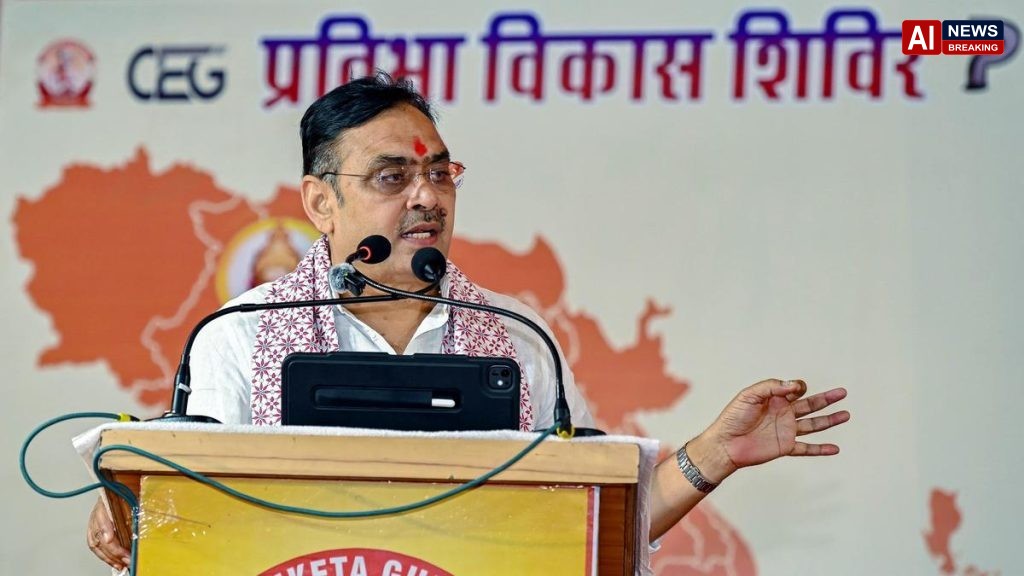
Nearing 3 years as Rajasthan CM, Bhajan Lal Sharma seeks to assert his authority - AI News Breaking
nearing years rajasthan bhajan:
Rajasthan’s political landscape has entered a new phase as Bhajan Lal Sharma approaches the three‑year mark of his tenure as chief minister. The former journalist, who stepped into the role in March 2024 after a swift rise through the ranks of the Bharatiya Janata Party (BJP), has spent the bulk of his time navigating the delicate balance between the expectations of the party’s central command and the imperative to forge a distinct administrative identity in a state known for its volatile electoral history.Sharma’s ascent to the chief minister’s office was marked by a conspicuous lack of prior executive experience. Prior to his appointment, he had served as a member of the state legislative assembly and as a spokesperson for the BJP, roles that honed his public‑facing skills but offered little exposure to the intricacies of governance..
Critics, both within and outside the party, questioned whether a media‑savvy politician could effectively manage the complex bureaucracy of Rajasthan, a state grappling with water scarcity, agrarian distress and an emerging industrial sector. Yet, the central leadership, keen on rewarding loyalty and ensuring a pliant ally in the region, backed Sharma’s candidacy, signalling confidence in his capacity to align state policies with national priorities.In the early months of his administration, Sharma embarked on a series of high‑visibility initiatives aimed at consolidating his standing among the electorate. The “Jal Suraksha Yojana,” launched in June 2024, promised the construction of 10,000 new check dams and the rejuvenation of traditional water‑conservation structures known as johads..
While the scheme attracted praise for its ambitious scope, independent audits later highlighted delays in fund disbursement and a shortfall in the projected number of completed structures. Agricultural unions expressed frustration, noting that the promised irrigation benefits had yet to materialise for many smallholder farmers in the arid districts of Jaisalmer and Barmer.Parallel to these development programmes, Sharma has sought to tighten the party’s organisational grip on the state machinery. In September 2024, a reshuffle saw several senior bureaucrats replaced with officers perceived to be more sympathetic to the BJP’s ideological line..
The move was defended by the chief minister as a necessary step to eliminate “administrative lethargy” and to accelerate the implementation of central schemes such as the Pradhan Mantri Awas Yojana and the Skill India Mission. However, opposition parties and some veteran civil servants warned that the reshuffle risked politicising the bureaucracy, potentially eroding the merit‑based ethos that underpins the Indian Administrative Service.The internal dynamics of the BJP have further complicated Sharma’s tenure. While the central leadership under Prime Minister Narendra Modi has publicly lauded the chief minister’s efforts to promote “developmental nationalism,” reports from party insiders suggest a growing impatience with his perceived cautiousness on certain ideological issues..
The recent controversy surrounding the proposed renaming of a historic monument in Jaipur sparked a debate within the party’s state unit. Pro‑renaming factions argued that the change would honour regional heritage, whereas moderates cautioned that the move could alienate minority communities and distract from pressing socioeconomic concerns. Sharma’s decision to postpone the renaming, citing the need for broader consultation, was interpreted by some as an attempt to maintain communal harmony, while others viewed it as a reluctance to fully endorse the party’s cultural agenda.Sharma’s relationship with the central leadership has also been tested by fiscal considerations..
Rajasthan’s budget for the 2025‑26 fiscal year reflects a modest increase in expenditure, with a notable emphasis on renewable energy projects, particularly solar farms in the desert belt. While the central government has pledged to fund a portion of these initiatives under the National Solar Mission, the state has been required to contribute a larger share of capital than initially anticipated. Economic analysts point out that this financing structure places additional strain on Rajasthan’s already stretched finances, potentially limiting the scope for welfare spending in sectors such as health and education.Public perception of Sharma’s performance remains mixed..
Opinion polls conducted by independent agencies in October 2025 indicate that approximately 38 % of respondents view the chief minister’s governance positively, while 45 % express dissatisfaction, and the remainder are undecided. The chief minister’s communication strategy, rooted in his journalistic background, continues to rely heavily on frequent press briefings and social media outreach. Critics argue that this focus on messaging sometimes overshadows substantive policy dialogue, especially on issues like land reform and the implementation of the Right to Education Act in remote villages.Looking ahead, Sharma faces a series of strategic choices that will shape his political legacy and the BJP’s fortunes in Rajasthan..
The upcoming municipal elections in early 2026 present an opportunity to gauge grassroots support for his administration. Success at the municipal level could bolster his standing within the party hierarchy, whereas setbacks might embolden internal challengers seeking a more assertive leader. Moreover, the looming monsoon season will test the efficacy of the “Jal Suraksha Yojana” and other water‑management projects, with potential repercussions for agricultural output and rural livelihoods.In the broader national context, Sharma’s tenure exemplifies the challenges faced by leaders who must simultaneously satisfy a centralised party apparatus and address localized governance demands..
As the BJP continues to consolidate power across India, the ability of state chief ministers to navigate these dual pressures will likely determine the durability of the party’s dominance. For Bhajan Lal Sharma, the next twelve months will be decisive, offering a window to either cement his authority through tangible development outcomes and adept political manoeuvring, or to falter under the weight of expectations from both his constituents and the party’s upper echelons..
Updated: November 19, 2026
Sharma’s media‑savvy façade masks a deeper dilemma: his reliance on central patronage leaves Rajasthan’s fiscal levers stretched, making any developmental win a fragile band‑aid for an electorate already skeptical.
If the upcoming municipal polls and monsoon‑season water tests expose policy gaps, the BJP’s






